
- Home
- Live Blog
- Breaking News
- Top Headlines
- Cities
- NE News
- Sentinel Media
- Sports
- Education
- Jobs
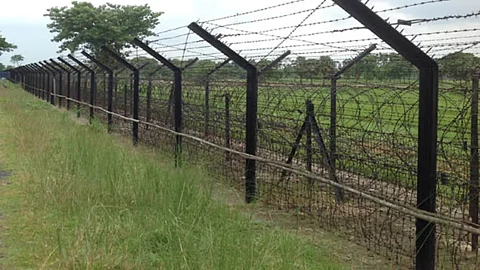
Rising anti-India rhetoric and repeated threats by radical Bangladeshi elements to cut off India’s Northeast region are ominous signs of growing threats to sovereignty and territorial integrity, which India can least afford to ignore as stray provocations. The Ministry of External Affairs summoning the Bangladesh High Commissioner to India, Riaz Hamidullah, on Wednesday and apprising him of India’s strong concerns at the deteriorating security environment in Bangladesh is a strong signal that India has not taken the developments lightly. India drew the attention of the Bangladesh envoy to the activities of some extremist elements who have announced plans to create a security situation around the Indian Mission in Dhaka. The Indian move followed the warning issued by a leader of Bangladesh’s National Citizen Party that Bangladesh could provide shelter to separatist and anti-India forces in Northeast India, dangerously suggesting cutting off the region from India. The radical Bangladeshi leader desperately sought to falsely accuse India of providing shelter to anti-Bangladeshi elements. Although MEA had not specifically referred to such rhetoric by radical Bangladeshi political outfits while summoning the Bangladesh envoy, the timing of the move suggested that India is not only keeping a close watch of anti-India activities by extremist and radical elements in the troubled neighbourhood but also conveying a strong message to Bangladesh to take effective measures to stop such rhetoric by such extremist elements. Earlier, the Bangladesh Foreign Ministry summoned Indian High Commissioner Pranay Kumar Verma two days after a prominent leader of the uprising against the ousted Sheikh Hasina regime was critically injured when he was shot at by unidentified gunmen in Dhaka and sought India’s cooperation to prevent suspects linked to the incident from fleeing to India and arrest any such suspects who have already entered and extradite the arrested persons. MEA, however, told the Bangladesh envoy in unequivocal terms that it “completely rejects the false narrative sought to be created by extremist elements regarding certain recent events in Bangladesh.” The MEA statement also highlighted that the interim Bangladesh government has neither conducted a thorough investigation nor shared meaningful evidence with India regarding the incidents. Assam Chief Minister Himanta Biswa Sarma, while responding to the threat to cut off the Northeast region, reminded Bangladesh that India is a nuclear-armed nation and that the neighbouring country must understand that India will respond if anyone attempts to destabilise the Northeastern states. This is a stern warning against such a sinister plot. Recent anti-India rhetoric is not stray development, as the head of Bangladesh’s interim government, Muhammad Yunus, himself made a provocative and unwarranted reference to India’s Northeastern States in his economic pitch to China. In the past, during the Khaleda Zia regime, Bangladesh became a safe haven for several militant outfits from the northeast region, but the Sheikh Hasina regime, which was friendly to India, took strong steps to put an end to Bangladesh soil being used for anti-India activities. A hostile regime in power and the rise of radical Islamic forces in Bangladesh are sobering reminders that the threat to provide shelter to separatist anti-India elements must not be taken lightly and seen as empty rhetoric but as a calculated scheme. Bangladesh indulging in anti-India rhetoric is a strategic blunder, but India is staring at a serious internal security threat posed by Bangladeshis who have entered illegally and are staying in Northeastern states. Over one lakh Bangladeshis declared as foreigners by Foreigners Tribunals and their progenies roaming in Assam for years, as highlighted in Wednesday’s edition of this newspaper, have been posing a serious internal security threat. Ironically, the issue has not gained the serious national attention it deserves and calls for tougher and more determined measures to send back these declared foreigners without further delay before it is too late. While anti-India elements taking forward their diabolic game plan of targeting the Chicken Neck corridor will remain a fantasy, attempts to radicalise Muslim youths belonging to families of declared foreigners in Assam – and their supporters – are a reality too serious to be dismissed as a growing internal security threat. Bangladesh under the current interim regime deepening ties with Pakistan has precipitated such a rising internal security threat in the northeast region. Arrests of a number of activities of Ansarullah Bangla Team (ABT), a Bangladesh-linked terror outfit linked to Al Qaeda in the Indian Subcontinent (AQIS) in Assam, are ominous signals of growing internal security threats in the region. India telling the Bangladesh envoy that it is in favour of peace and stability in Bangladesh and has consistently called for free, fair, inclusive and credible elections conducted in a peaceful atmosphere is a clear message that the restoration of democracy in the neighbouring country is an urgent and strategic necessity for peace and stability in the sensitive geopolitical region. For India, strengthening border security and strengthening internal security in the northeast region against any external and internal destabilising threat has become a pressing strategic imperative.