
- Home
- Live Blog
- Breaking News
- Top Headlines
- Cities
- NE News
- Sentinel Media
- Sports
- Education
- Jobs
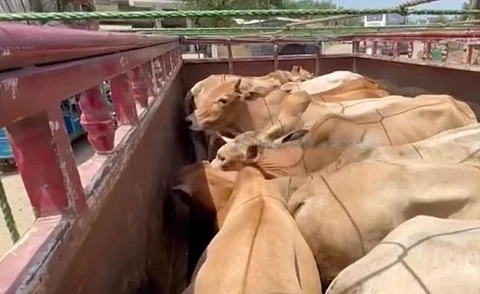
The Supreme Court’s judgement asking the Central and state governments to frame a clear compensation mechanism for victims of road accidents caused by stray cattle/bovine is a landmark judicial intervention to compel the governments to treat stray-cattle-related road fatalities as a public-safety crisis and take structured measures to prevent them. The judgement presents an opportunity for the Assam government to enforce regulatory measures that compel owners of cattle, buffaloes, and goats to prevent their domestic animals from roaming on highways and roads, thereby reducing the risk of fatal accidents involving pedestrians or vehicles, which can also result in the animals being killed or injured. The authorities and animal owners’ indifference to the rising number of fatal road accidents caused by stray animals on highways and roads is apparent from the fact that animal owners continue their irresponsible and unlawful acts despite these accidents. The expansion of national highways in the state to four lanes, which allows vehicles to travel at speeds of up to 80 km/h, has made highway travel hazardous due to the sudden appearance of stray cattle in front of these speeding vehicles, leaving drivers with little opportunity for emergency manoeuvring and making collisions, often fatal, inevitable. Non-enforcement of the legal provisions to penalise the erring animal owners speaks volumes about the critical governance gap. The SC judgement will now require the municipal and other authorities concerned in the state to institute a time-bound liability framework to identify, penalise and recover costs from negligent owners to ensure that compensation to victims of such road accidents is quickly processed and transferred to the bank accounts of the next of kin. The SC observed that owners let go their animals after they cease to serve a useful economic purpose but ruled that the owners choosing to make such a decision should be held responsible and ensure safe transfer of such animals to shelters run by the appropriate authority. The authorities at such shelters should issue a receipt acknowledging such a transfer and cause the details of such animals to be entered or altered in the tagging database. The SC directive to the states to mandate tagging of all animals to keep track of them, ensuring their long-term health services, and linking to veterinary check-ups and vaccinations demands that state governments strengthen monitoring measures against violations of regulatory norms laid down to curb negligence of domestic animals. The observation by the SC bench that there are also animals who are still high on utility but are let out for the day to graze and forage for food, and they too can cause accidents, highlights the worsening of the stray cattle menace across the country. The Bench, however, pointed out harsh realities of not all farmers and dairymen possessing the wherewithal to feed all the animals in their possession, as some of them are hardly able to make both ends meet and secure two meals a day. Strengthening the dairy sector and ensuring remunerative prices of fresh milk and milk products to augment the income of farm households or dairy farmers is the pragmatic option to ensure that owners of animals look after them through their whole life with a rise in income from dairy farming. Strict enforcement of land laws to protect the Professional Grazing Reserve and Village Grazing Reserve, as well as the removal of all encroachments on such land, is crucial to ensure the availability of adequate grazing areas for cattle/bovine owners. The SC pointed out that the Section 289 of Indian Penal Code, 1860 and section 291 in corresponding new code, provide that if a person is unable to take steps to protect human lives from harm being caused by animals in their care, they may pay a fine or be imprisoned but this legal provision is not adequate to compensate the loss of the injured or the family of the deceased. Strengthening the Gaushalas with adequate budgetary support can create more space for providing shelter to infirm, aged cattle abandoned by their owners and roaming on highways and roads. As the capacity of such registered animal shelters is limited while the population of bovine animals has increased due to the expansion of the dairy business, the economic upliftment of dairy farmers remains crucial to ensure that they continue to shoulder lifelong care of animals brought home or raised, irrespective of whether they remain productive as milch cattle or not. Various legal provisions related to cattle preservation are important to strengthen the regulatory ecosystem, but unless the implementation is anchored in consistent field-level enforcement at municipal and panchayat levels and strict actions against violations, the regulatory provisions alone will not curb the menace. Framing of clear compensation rules, as directed by SC, will provide justice to injured or families of victims, but it is largely a reactive response. A robust preventive regime is essential to address the stray-cattle menace and prevent road accidents it causes.
