
- Home
- Live Blog
- Breaking News
- Top Headlines
- Cities
- NE News
- Sentinel Media
- Sports
- Education
- Jobs
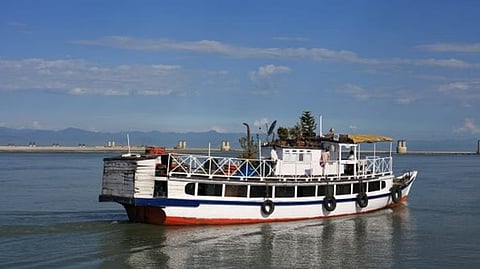
The tragic drowning of a young passenger of a Kamalabari-Nimati ferry on Thursday lays bare the persistent gaps in safety compliance in river transport in Assam. Strengthening the oversight mechanism for enforcing safety norms is crucial to ensuring that compliance is genuinely preventive rather than perfunctory. Safety instructions on the online ferry ticket booking site advise passengers to wear a life jacket at all times while on the vessel. The apex regulatory authority, Assam Inland Water Transport Regulatory Authority (AIWTRA), must do more than merely issue such instructions; it is essential to establish a foolproof mechanism to ensure that every passenger strictly adheres to them. Ironically, the life jackets on ferries plying between Nimati and Majuli ferry ghats, both run by the government and private owners, are mostly kept piled up in one corner of the vessels. Neither the crew members nor any staff of the vessel would advise passengers to wear life jackets before boarding. When passengers neither wear nor ask for life jackets after boarding, it is a grim reminder of the harsh reality that public memory of past ferry and boat tragedies fades too soon. Availability of an adequate number of life jackets was made mandatory on ferries, and passenger safety guidelines were updated in the aftermath of the 2021 tragedy of a Kamalabari-bound ferry carrying passengers to the Majuli River island capsizing after colliding with a cargo vessel. The regular sight of private ferries transporting motorbikes on rooftops, with many owners also travelling atop the roof without wearing life jackets during trips between Jorhat and the river island, highlights the total disregard for passenger safety on the Jorhat-Majuli route, where safety norms have been allowed to remain on paper. While enforcement of safety measures can be strengthened in respect to ferries and registered boats, Thursday’s incident is a wake-up call to take stock of the safety audit of all mechanized and non-mechanized boats ferrying passengers across the state. An office memorandum issued by the AIWTRA in 2023 revealed that in many of the navigable waterways in the state, unregistered mechanized and non-mechanized boats had been running without load line indications, i.e., how many passengers the boat can safely carry without risking stability or risk of capsizing; without life jackets or inflated tubes; with engine hulls locally made or of improvised versions; and not checked for fitness. It also highlighted that lack of communication facilities deprives such boat operators of adverse weather and flood warnings. It noted that such boats have few safety measures, yet daily passengers commuting by these must travel in such dangerous conditions, as they have no other means of transport. The prime factors behind recurring boat accidents in the state flagged in the office memorandum include unskilled crew, severe overcrowding, aging boats, and faulty boat design and stability. The AIWTRA insisted that it has become extremely necessary to put in place a rigorous mechanism by deploying vigilance officers at the field level for detecting faults and insisting on corrective actions for eliminating these factors causing boat accidents. The AIWTRA conducting a comprehensive safety audit for all ferries and boats and placing the data in the public domain and the measures initiated to enforce the safety norms are crucial to boost the confidence of daily passengers about the safety of their river travel. As river transport has also gained prominence in the tourism industry, transparency in safety enforcement is vital to boost confidence among tourists about the safety of boat and ferry rides. Enforcement of the mandatory wearing of life jackets by every tourist enjoying a boat ride in many tourist sites across the Northeast region demonstrates that the responsibility of safety norms can be effectively enforced by people who ply the ferries and boats, and there can be no excuse of passing the buck on passengers lacking the awareness to put on the life jacket when a boat tragedy occurs. In several such tourism sites, the boat owners refuse to allow passengers without life jackets. As even daily passengers show reluctance to wear the life jackets, ferry staff giving briefings to every single passenger about the importance of wearing life jackets, use of life buoys, and other standing instructions on safety measures during an emergency remains the effective preventing measure. Surprise inspections of ferry services, especially during the routine trips in all the notified routes, can go a long way in ensuring that safety briefings become a standard operational practice and an integral part of ferry services. Use of digital technology such as uploading timestamped photos of passengers in life jackets in the AIWTRA portal and CCTV recording of safety briefings to passengers can strengthen the oversight mechanism. Without conducting regular safety audits and surveillance against violations of safety norms, Assam is only waiting for more ferry or boat tragedies.
