
- Home
- Live Blog
- Breaking News
- Top Headlines
- Cities
- NE News
- Sentinel Media
- Sports
- Education
- Jobs
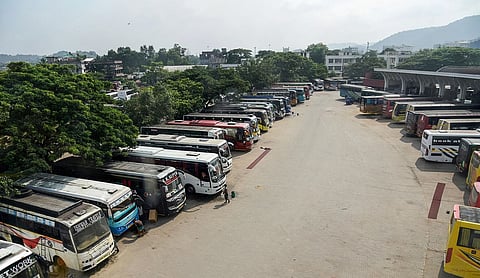
The introduction of city bus services in central Assam's Nagaon town is a laudable initiative. Strengthening public transport is crucial for keeping the number of private vehicles on the road in check and facilitating faster mass transport. Efficient running of buses is essential for boosting commuters' confidence to keep availing the services regularly. Growth in economic activities has led to rapid expansion of various towns in the state. The economic growth comes with sustainability challenges, as workers and employees travelling from their places of residence to their workplaces and economic hubs need faster mobility solutions. In urban areas, where public transport is weak, the working population depends on private mobility solutions. As town roads are narrow, even a small increase in the number of private vehicles gives rise to the problem of traffic congestion. The traffic situation worsens as more and more people go for private mobility solutions. Apart from slowing down transportation, traffic congestion also aggravates air pollution due to a rise in vehicular emission. Easy bank loans for vehicle purchases and automobile showrooms moving closer to customers in towns have resulted in more vehicles hitting the roads. Public transport systems such as city buses adhering to announced timetables are vital for retaining daily commuters, as people plan their day's work schedule in advance, which they would not like to be disrupted. Inefficient city bus service in Guwahati is a major factor behind the surge in private vehicles and the worsening traffic situation on most of its main thoroughfares. Nevertheless, the introduction of electric buses in the capital city has a positive impact on reducing vehicular carbon emissions. Lessons must be learnt from gaps in city bus services in Guwahati so that the city bus services in Nagaon or any other towns do not repeat the same mistakes. Due to the absence of effective monitoring and inspection, most city buses are seen waiting at some stoppages for longer durations, which makes arrival and departure unpredictable for passengers. Longer waiting at stoppages also leads to crowding in buses during peak hours, adding to passengers' discomfort. An increase in unpredictability and discomfort during regular journeys compels many passengers, who are eligible to avail bank finance, to buy a motorbike or a four-wheeler. It is important for bus owners to operate without losses, which requires a steady flow of daily passengers. Building awareness among the residents of a city or town on the importance of using public transport for making their cities and towns climate resilient can motivate them to use city buses and can ensure a minimum number of passengers for bus services to remain commercially viable. The challenge is to not allow city bus services to suffer from the chicken and egg dilemma. If the bus owners wait for passengers to turn up in adequate numbers first and stop adhering to the announced time schedule at different stoppages, then for those passengers who have come forward to avail themselves of the services, it turns out to be unreliable service. However, if the buses stick to the timetables even with fewer passengers, then apart from those loyal passengers, gradually it will also attract other commuters to avail the services when they find the services reliable to reach destinations in time and enjoy a comfortable journey. The migration of people from rural Assam to Guwahati city and various towns to cater to the growth of service sectors such as shopping malls, hospitals, nursing homes, and real estate, apart from various government services and educational institutions, has already put all urban growth centers across the state under different stresses, such as transport overload, housing shortages, non-availability of safe drinking water, poor waste management, etc. Ironically, while these problems have posed serious sustainability challenges, the importance of strong public transport systems in the fast-developing towns has long been neglected. It is better late than never. Unplanned growth of Guwahati and various towns has precipitated the problems. While scopes are limited in Guwahati, with the city missing deadlines of master plans and these plans becoming obsolete due to rapid vertical and horizontal expansion, there is still time and scope for regulating the growth in various towns by enforcing planned growth and retrofitting solutions. As resources of the state are limited, the central government's "PM-eBus Sewa" scheme can strengthen city bus operations if the norms are relaxed for towns like Nagaon. The central government launched the scheme in 2023, which aims to augment city bus operations in urban areas with central assistance under the public-private partnership model. The cities with a population between 3 and 40 lakhs and other state capitals with less than 3 lakh population are eligible under this scheme. Relaxing this population-based eligibility norm can help ensure sustainable growth in small towns. Efficient operation of city bus services in Nagaon can strengthen the case for relaxing this norm and making public transport a core sector of urbanisation.
