
- Home
- Live Blog
- Breaking News
- Top Headlines
- Cities
- NE News
- Sentinel Media
- Sports
- Education
- Jobs
Dr Sudhir Kumar Das
(dasudhirk@gmail.com)
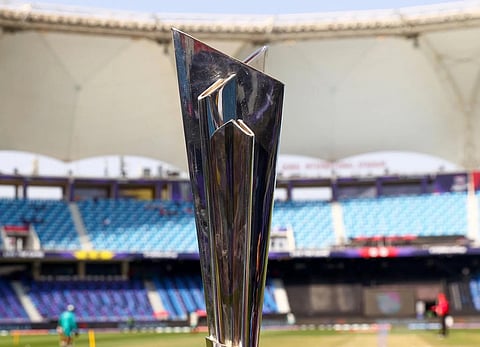
The regional geopolitics of South Asia has overshadowed the upcoming T20 Cricket World Cup co-hosted by India and Sri Lanka. When one of the oldest regional fault lines between India and Pakistan was at a peak of hostility, a new one in the form of a recalcitrant Bangladesh got added to it. Pakistan and Bangladesh appear to be competing to embarrass the host, India, more. This game of geopolitical brinkmanship has relegated cricket to the background. The genesis of the whole controversy started with the release of Bangladeshi player Mustafizur Rahman, bought by Shah Rukh Khan’s IPL (Indian Premier League) franchise KKR under the instruction of the BCCI (Board of Control for Cricket in India) as a symbolic expression of disapproval by India for the atrocities Hindus were subjected to in Bangladesh. Since the BCCI feels that many Indians empathise with the suffering of minority Hindus in Bangladesh, it becomes untenable to allow a Bangladeshi player to play in the IPL. The tenability of the BCCI’s decision is certainly open to debate. The Bangladesh cricket board was not the one to take this lying low. They announced a ban on the IPL broadcasting in their country and demanded that the ICC (International Cricket Council), the governing body of the game, shift their venues for the T20 World Cup from India to Sri Lanka, citing the security of their players. The ICC convened a meeting to discuss BCB’s (Bangladesh Cricket Board) demand, and in the voting by member nations, Bangladesh’s demand for a venue reschedule was rejected by a 14 to 2 margin, with only Pakistan supporting them. Bangladesh was told to play all their matches in India as scheduled earlier because, according to the independent security body reports, the threat to the Bangladeshi cricket team in India is only low to moderate. Accordingly, Bangladesh was conveyed the message and given a deadline to confirm their participation in the tournament. But the Bangladesh board rejected the ICC decision and remained stubborn on the issue of not playing in India. ICC, left with no other alternative, in the face of paucity of time, replaced Bangladesh with Scotland.
The Bangladesh Cricket Board, instead of reacting emotionally, could have handled the situation in a more pragmatic way. Banning IPL broadcasts in Bangladesh has already served the purpose of a symbolic as well as a substantive protest against Mustafizur’s expulsion from IPL. The BCB’s demand for a venue reschedule at such short notice would definitely have been a logistical nightmare for the ICC so late into the tournament preparations. The Bangladesh board’s security threat reason does not hold water. It sounds more like a fabricated election season claim. BCB’s argument that India has been given this privilege in the past for not playing in Pakistan also stands on clay feet. India and Pakistan have a history of not playing against each other bilaterally, and in ICC tournaments they play in neutral venues, and this usually gets decided from the day the tournament schedule is conceived. But in the case of Bangladesh, the case has never been so. This stubborn and unyielding stance of BCB clearly points to the fact that it is driven by sheer politics in an election season rather than any cricketing sense. At present it pays to be anti-India in Bangladesh, and the BCB, oblivious of the imminent threat to its existence, has jumped onto the bandwagon of this anti-India bogey.
When the matter between a recalcitrant BCB and a firm ICC with regard to change of venue came to a close after replacing Bangladesh with Scotland, at the cost of the huge and passionate cricket lovers and cricketers of that country, a twist in the tale was still awaiting. Out of nowhere Pakistan took a plunge into the fray as an uninvited guest to fish in the troubled waters. The Pakistani government announced that since Bangladesh’s request for a change of the venues was not met, as a mark of solidarity with aggrieved Bangladesh, it will boycott the match against India to be played on the 15th of February in Colombo. When the cricketing world was yet out of the shock of the ouster of Bangladesh, this undefinably preposterous decision from the Pakistan Cricket Board (PCB) came as a bolt from the blue. The Pakistani PM Shabaz Sharif reiterated that they have taken a considered decision to show solidarity with Bangladesh. The PM further insisted that there should not be any politics in the field of sports, oblivious of the fact that PCB is run by none other than the Interior Minister of Pakistan, Mohsin Naqvi, a die-hard politician.
With this shadow boxing between India and Pakistan over Bangladesh, the focus has now unfortunately shifted from a sporting event like the T20 World Cup to the geopolitical wranglings of the subcontinent. The boycott of the India match by Pakistan will result in a loss of approximately $250 million in commercial terms to the ICC. Many former cricketers in Pakistan have stated that the Indian board acts like an unfettered bully and it needs to be restrained. However, Pakistan cannot escape the financial wrath of the ICC, which will definitely impose huge penalties on the PCB. A financially strong Indian board has the means to withstand the financial shock of the Pakistani boycott, but the loss of annual ICC funding will create an existential question for the PCB as well as the BCB. According to the ICC board-wise revenue distribution data of 2024-25, the Indian board receives the lion’s share of 38.5% ($231 million) annually of the ICC’s total revenue. On the contrary, Pakistan’s share from the ICC is 5.75% ($34 million) annually. Bangladesh’s share from the ICC is 4.46% ($26.74 million). In such a financial background, Pakistan and Bangladesh are both heavily dependent on the ICC largesse for their survival. Any financial penalty imposed on them or ICC share withheld will sound the death knell for these two boards.
The India-Pakistan cricketing rivalry is in fact a sham hype solely created by the broadcasting companies to enhance their revenue generation. In reality, there is no rivalry, let alone the so-called ‘greatest rivalry’, so far as the cricketing skills of cricketers of both the countries are concerned. In the ODI World Cup matches, Pakistan has never been able to defeat India in their last 8 encounters (1992, 1996, 1999, 2003, 2011, 2015, 2019, 2023). In T20 WC encounters too, it is 7 to 1 in favour of India. In ODI ranking, India stands at No. 1, whereas Pakistan is at No. 4. In T20 world rankings, India stands at No. 1, and Pakistan is at lowly No. 6. Where is the rivalry? Rivalry is where two opponents fight neck to neck on equal terms and where the results vary on the thin scale of skills shown by equally strong players. In India-Pakistan matches there are no such close fights; an Indian victory becomes a foregone conclusion even before the match starts. It is the marketing wizardry of the broadcasting companies that sells the match between an apparently much stronger team and a comparatively weaker team as a match of the greatest rivalry to jingoistic fans on both sides of the border. This has given Pakistan a disproportionate sense of self-importance to think delusionally that they are a force to reckon with in the cricketing world. What the politicians running the PCB forget is that Pakistan is relevant to the world of cricket only when it plays against India. On its own it can generate only a very meagre amount as revenue, not even sufficient for their survival, and is perpetually dependent on ICC doles. The revenue earning skyrockets only when it plays against India and loses the match. Think of a reverse scenario: had India been continuously losing to Pakistan in the World Cup matches, would it have generated the same frenzy among the Indian fans? Definitely not. It is the broadcasting companies that market this intense hatred between Indians and Pakistanis towards each other that gets manifested in a cricket match. Players and fans equally come under pressure because of the hype created by the marketing wizards ahead of the match. The T20 World Cup is starting on the 7th of February, with a miffed Bangladesh and a brat Pakistan out to create mischief, as always. However, cricket fans the world over are eager to witness some quality cricket from international stars during this 36-day bonanza.
