
- Home
- Live Blog
- Breaking News
- Top Headlines
- Cities
- NE News
- Sentinel Media
- Sports
- Education
- Jobs
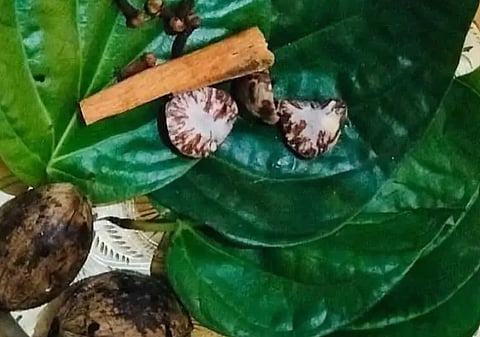
Some people may consider tamul-paan to be a part of Assamese culture; but it is time tamul-paan be given a farewell for good. Studies conducted by the All India Institute of Medical Sciences (AIIMS) Bhopal have brought to light that long-term consumption of betel-nut significantly increases the risk of developing oral submucous fibrosis (OSF), a precancerous condition that can progress to oral cancer. A recent groundbreaking study led by Dr Anshul Rai of AIIMS Bhopal, which focused on the treatment of Oral Submucous Fibrosis - a condition that causes restricted mouth opening – revealed that long-term consumption significantly increases the likelihood of developing OSF. Important to note, the World Health Organization and its cancer research agency called the International Agency for Research on Cancer (IARC) have meanwhile classified areca nut or betel nut as a Group 1 carcinogen. This means, areca nut or betel nut – the apparently humble tamul or kwai so dear to the Assamese and other communities of the Northeast – is definitely cancer-causing to humans, even when consumed without tobacco. There are also some studies which claim that betel nut chewing causes several dangerous health issues, including high risks of head, neck, and esophageal cancers. The primary alkaloid in betel nut, arecoline, and the nitrosamines formed during chewing are genotoxic, causing DNA damage and promoting cancer development at a cellular level. Some key findings from research and health organizations, including studies presented by AIIMS Bhopal and published in various medical journals, while highlighting the specific risks, say that betel nut itself, when chewed, is an independent and strong risk factor for oral cancer, cancer of the pharynx, and cancer of the esophagus. OSF on the other hand has been found to progress to malignant oral cancer over a period of time. A sizable section of people in Assam in particular chew tobacco and lime with tamul-paan. This significantly heightens the risk of developing cancer, because the combination of these ingredients – tobacco, lime, pan, etc – has a synergistic effect on cancer risk. India, it may be noted, accounts for nearly a third of all global oral cancer cases, a high incidence rate directly linked to the widespread use of smokeless tobacco and betel nut products like gutkha and paan masala.
