
- Home
- Live Blog
- Breaking News
- Top Headlines
- Cities
- NE News
- Sentinel Media
- Sports
- Education
- Jobs
Chandan Kumar Nath
(chandankumarnath7236@gmail.com)
An economy poised for a monumental leap is often analysed through a multitude of high-frequency indicators, from equity market fluctuations to service sector expansions. Yet, beneath the daily financial noise lies the true industrial scaffolding of the nation: India's eight core industries. Comprising coal, crude oil, natural gas, petroleum refinery products, fertilizers, steel, cement, and electricity, this consortium accounts for a commanding 40.27 per cent of the Index of Industrial Production (IIP). Observing the mid-2026 landscape, tracking these sectors is akin to taking the pulse of the nation's foundational health. Their growth dictates the momentum of the broader economy, serving as both a leading indicator of industrial vigour and a fundamental driver of macroeconomic stability.
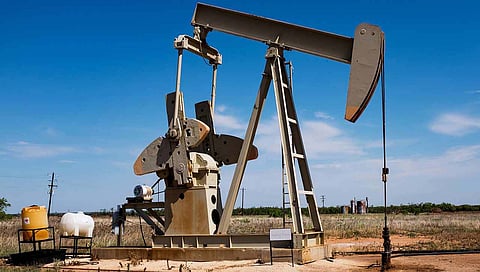
The recent data from May 2026 offers a sobering yet deeply insightful snapshot of our current economic trajectory. The combined index of eight core industries expanded by a modest 0.5 per cent year-on-year, a sharp deceleration from the 1.8 per cent growth recorded in the previous month. However, a solitary headline figure rarely captures the nuanced reality of an economy as vast as India's. A deeper analytical dive reveals a tale of two distinct trajectories operating within these essential sectors. On one side of the spectrum, we witness remarkable resilience and expansion, while on the other, we see the palpable vulnerabilities exposed by global volatility. The infrastructure and utility trio - cement, electricity, and steel - emerged as the undisputed bright spots of the season. Cement production surged by an impressive 8.4 per cent, and steel expanded by 5 per cent. This robust performance does not occur in a vacuum; it is the direct manifestation of the Indian government's sustained capital expenditure barrage targeting highways, railways, and urban infrastructure projects. When cement and steel move aggressively, it signals that the physical building blocks of the economy are being actively deployed. Simultaneously, electricity generation soared by 8.7 per cent. This underscores a dual narrative: the unrelenting demand spurred by severe summer temperatures across the subcontinent and the structural expansion of power consumption in a rapidly industrialising nation where renewable integration is increasingly taking the spotlight. Conversely, the narrative darkens when we turn our gaze to the energy and fertiliser segments. The mid-2026 data highlighted a steep contraction across coal, crude oil, natural gas, and refinery products. Refinery products, which hold the highest individual weightage within the core index, witnessed a sharp contraction of 8.7 per cent, while coal output plummeted by 9.3 per cent.
These declines are not mere statistical blips; they reflect a complex amalgamation of external geopolitical frictions and internal strategic recalibrations. The ongoing crisis and disruptions in West Asia have undoubtedly fractured the supply chains of raw materials and petroleum components. Furthermore, a broader global softening of prices and a strategic pivot toward higher crude imports have inadvertently pressured domestic production paradigms. Even fertiliser output dipped slightly, reminding us of the delicate balance required to maintain agricultural inputs amid international supply shocks. The divergence is clear: while domestic policy successfully insulates infrastructure materials, our energy sectors remain acutely tethered to global headwinds. Understanding why the synchronous growth of these eight industries is non-negotiable requires acknowledging their inherently symbiotic nature. These are not isolated industrial silos; they are deeply intertwined dominoes. Coal remains a primary feedstock for a vast majority of our baseload electricity generation. Electricity is essential for forging steel and operating energy-intensive cement plants. The petroleum refinery sector dictates the cost of transport and logistics, which in turn influences the economic viability of moving that cement and steel to massive construction sites across the country. Fertilisers directly dictate agricultural yields, which drive rural income and subsequent domestic consumption demand. When the core sector experiences robust, broad-based growth, it sets off a virtuous macroeconomic cycle. It signals strong underlying industrial demand, prompts the private sector to ramp up capacity utilisation, and eventually triggers the much-awaited private capital expenditure cycle. Job creation at the grassroots and intermediate manufacturing levels accelerates, pouring disposable income back into the broader economy. However, when a significant portion of this index stutters, as seen in the recent energy sector contractions, the downstream effects can be severely restrictive. Supply chain bottlenecks begin to appear, input costs become volatile, and the overall industrial output inevitably drags, pulling down the potential for higher GDP growth. The sharp divergence seen in the 2026 data serves as a critical policy barometer. The government's infrastructure push has successfully created a robust domestic demand buffer for heavy materials, but ensuring long-term stability requires shielding the contracting energy sectors. For India to sustain its high-growth trajectory, policy interventions must urgently address the friction in these vital areas. This involves aggressively expanding domestic exploration and production capabilities in oil and gas to reduce import dependency, while simultaneously streamlining the logistics for raw material procurement. Furthermore, as the global economic paradigm shifts toward sustainability, these legacy sectors must evolve without compromising output. The robust growth in electricity is increasingly being supported by renewable sources, but our transitional reliance on coal requires strategic inventory optimisation to prevent sudden supply shocks. The objective is not merely to extract and produce more but to build resilient, shock-proof production ecosystems.
Ultimately, the eight core industries are the bedrock upon which the edifice of India's economic aspirations is built. Services and digital technology may provide high-margin acceleration, but it is the physical infrastructure, energy security, and industrial base that offer the necessary traction to move the nation forward. The subdued 0.5 per cent growth is a clarion call for targeted intervention. Ensuring a synchronized, robust expansion across all eight pillars is not just a statistical goal; it is a fundamental prerequisite for India to secure its destiny as a formidable global economic powerhouse.
