
- Home
- Live Blog
- Breaking News
- Top Headlines
- Cities
- NE News
- Sentinel Media
- Sports
- Education
- Jobs
Sujata Gautam
(sujatagautam2017@gmail.com)
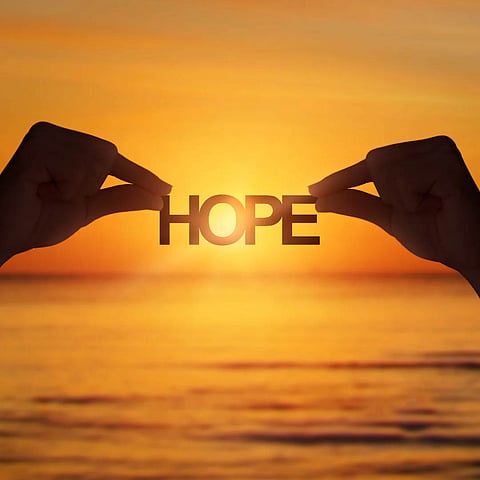
Hope' is one of the softest words we know, and yet it carries a strength that few forces can rival. It does not announce itself loudly, nor does it demand attention. Often, it arrives quietly, almost unnoticed, sitting patiently in the corners of our minds during moments of uncertainty, grief, or exhaustion. But when everything else begins to fall apart, hope is what remains, holding us together in ways we do not always understand. At its simplest, hope is the belief that tomorrow can be better than today. It is not blind optimism or denial of reality. In fact, hope often exists most powerfully when reality is harsh. It does not pretend that pain is absent; instead, it whispers that pain is not permanent. In this sense, hope becomes a bridge between what is and what could be, allowing us to keep moving even when the path ahead is unclear. Human history is filled with stories where hope has been the quiet force behind survival and change. Communities devastated by war, families shattered by loss, and individuals crushed by failure all have leaned on hope to take the next step. Not because they were certain of success, but because giving up entirely felt like a deeper loss. Hope does not guarantee outcomes; it guarantees effort. It gives us a reason to try again, even when past attempts have failed. In everyday life, hope plays a subtler but equally vital role. It is present when a student studies despite repeated setbacks, trusting that understanding will eventually come. It appears when a patient endures long treatment, believing in the possibility of healing. It lives in the heart of someone searching for work, love, or meaning, refusing to believe that their present situation defines their entire future. These small acts of hope rarely make headlines, yet they shape lives far more deeply than dramatic moments ever could. Hope also has a profound connection with resilience. When people face prolonged hardship, what often determines whether they endure is not physical strength or intelligence, but the ability to imagine a future beyond the struggle. Hope creates that image. It allows people to say, "This is hard, but it is not the end." Without hope, resilience collapses into mere survival. With hope, survival turns into growth. There is a common misunderstanding that hope makes people passive, encouraging them to wait for miracles instead of taking action. In reality, genuine hope is deeply active. It motivates people to work, to plan, to change, and to persist. Hope is what pushes someone to wake up early and try again after a long day of failure. It is what fuels social movements, drives innovation, and inspires people to care for one another. Hope does not replace action; it gives action a purpose.
Equally important is the way hope connects us to others. Shared hope can strengthen relationships and communities. When people believe together that change is possible, they support one another through difficulties. A kind word, a listening ear, or a shared dream can revive hope in someone who has almost lost it. In this way, hope becomes contagious. One person's belief can reignite another's, creating a quiet chain of strength that travels farther than we expect. Hope is especially crucial in times of uncertainty, when answers are unclear and control feels limited. Modern life, with its rapid changes, global crises, and constant pressure, often leaves people feeling overwhelmed. In such moments, hope does not mean having all the answers. It means trusting that answers can be found, that adaptation is possible, and that meaning can emerge even from confusion. Hope allows us to sit with uncertainty without being consumed by fear. There is also a deeply personal side to hope. It shapes how we see ourselves. When we hold hope, we allow ourselves the possibility of becoming more than we currently are. We accept that growth is not linear and that setbacks do not erase our worth. Hope teaches self-compassion. It reminds us that failure is not proof of inadequacy but part of the process of learning and becoming.
Yet hope is not indestructible. It can be worn down by repeated disappointment, neglect, or isolation. This is why nurturing hope matters. It grows through small, deliberate acts: setting realistic goals, celebrating small progress, surrounding ourselves with supportive people, and allowing ourselves moments of rest. Hope does not require grand gestures. Often, it survives on simple routines, honest conversations, and the courage to keep showing up. Perhaps the most beautiful thing about hope is that it does not demand certainty. It does not ask us to know exactly how things will turn out. It only asks us to believe that effort, kindness, and perseverance are worthwhile. In a world that often emphasizes instant results and clear answers, hope gently reminds us that some of the most important things unfold slowly. In the end, hope is not about escaping reality but engaging with it more fully. It gives us the strength to face life as it is, while still believing in what it can become. When everything else feels fragile, hope remains a quiet, steady presence, reminding us that as long as we can imagine a better tomorrow, we have a reason to keep going.
