
- Home
- Live Blog
- Breaking News
- Top Headlines
- Cities
- NE News
- Sentinel Media
- Sports
- Education
- Jobs
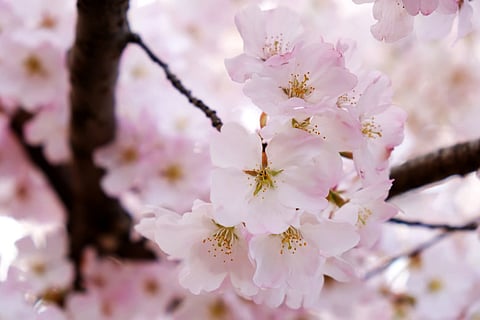
Every Spring, tens of thousands of cherry trees start blossoming all over Japan. It is the signal for families to gather in April to observe the tradition of hanami or cherry blossom viewing. Under huge canopies of the small, delicate pink flowers blooming in profusion, families hold elaborate feasts with music and contemplate on life. For cherry blossoms, called sakura, signify death as much as renewal.
Tied to the Buddhist themes of mortality, mindfulness and living in the present, cherry blossoms are a timeless metaphor for human existence. The springtime bloom is a glorious spectacle, an explosion of pale pink exhilarating to behold. But it is tragically brief; after only two weeks, they drop gently to the ground and wither away, the petals scattered on the ground like snow by the capricious wind. It is a visual reminder that human lives, too, are fleeting.
In Japanese culture, cherry blossoms as the embodiment of beauty and mortality can be traced back over centuries. The floral imagery permeates Japanese poetry, paintings, film and other visual art forms. Even the fierce samurai, who lived by bushido — the way of the warrior with strict discipline and morals, honour and chivalry — personified the metaphor of sakura. It was their duty to not only exemplify and preserve these virtues in life, but to appreciate the inevitability of death without fearing it in battle. A fallen cherry blossom or petal symbolized the end of their usually short lives.
During World War II, cherry blossoms took on similar meaning for Japanese kamikaze pilots who painted their warplanes with the sakura imagery before taking to the skies on suicide missions ‘to die like beautiful falling cherry petals for the Emperor’.
But the tradition of hanami is not just a celebration of life in all its beauty and brilliance, fragility and transience — it is also the welcoming of rebirth that Spring symbolizes all over the world. Believed to represent the mountain deities who transformed into the gods of rice paddy in Japanese folk religion, cherry blossom trees signified agricultural reproduction. It was during this time the Japanese travelled to the mountains to worship the trees every Spring, then transplanted them to inhabited areas. The season heralded the beginning of the Japanese New Year, bringing hope and new dreams as students start their first day of school and employees their first day of a new job.
So when the Japanese gather under the cherry blossom trees every April, they’re not just admiring the aesthetic attributes of a flower. Over tables of sake-filled glasses, bento boxes and sweet mochi, they’re seizing the day. They’re commemorating the loss of loved ones, reflecting on their own precious lives with a sense of wonder, shedding the past to usher in the future. They’re wringing the beauty out of life.
And the message of sakura has been spreading — to China, South Korea, India, Australia, New Zealand, Canada, the US and other places. They now captivate an international viewership, valued for aesthetic and philosophical reasons that go beyond beauty. When cherry blossoms are in full bloom, the future is bursting with possibilities.
— the harbinger