
- Home
- Live Blog
- Breaking News
- Top Headlines
- Cities
- NE News
- Sentinel Media
- Sports
- Education
- Jobs
Dr. Dharmakanta Kumbhakar
(The writer can be reached at drkdharmakanta@yahoo.com)
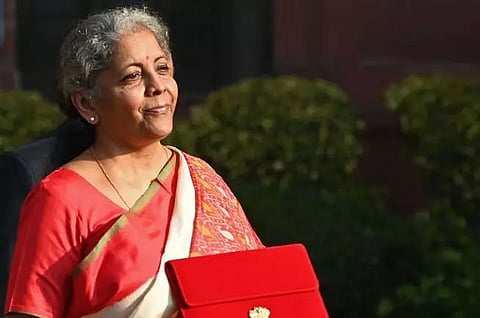
Union Finance Minister Nirmala Sitharaman presented the general budget 2023-24 in the Lok Sabha on February 1, 2023, allocating 1.98 percent of the total budget (Rs 45 lakh crore) to the health sector. The budget allocation to the health sector for FY 2023–24 is Rs 89,155 crore. This is an increase of around 3.4 percent compared to the budget estimates of Rs 86,200 crore and around 12.6 percent compared to the revised estimates of Rs 79,145 crore for the 2022–23 fiscal year. If this increase is adjusted for GDP growth, inflation, and population growth in the same period, the allocation for the health sector has effectively been reduced by around six percent in comparison to FY 2022–23. The Ministry of Ayush has been allocated Rs 3,647.50 crore separately in the budget, which will also contribute to the health sector.
Of the total health sector outlay for fiscal 2023–24, Rs 86,175 crore has been allocated to the Department of Health and Family Welfare. The allocation for the National Health Mission (NHM) for 2023–24 has been increased to Rs 29,085.26 crore from the previous year’s budgetary allocation of Rs 28,974.29 crore. A host of health schemes are bundled under the NHM. Considering the need for more funds for public healthcare, which caters to poor people, the allocation should have been increased.
The allocation for the government’s flagship insurance scheme, Ayushman Bharat-Pradhan Mantri Jan Arogya Yojana (AB-PMJAY), under which nearly 50 crore Indians receive cashless hospitalisation benefits of up to Rs 5 lakh, is marginally raised to Rs 7,200 crore from the last year’s budgetary allocation of Rs 6,412 crore. The scheme aims to reduce the out-of-pocket private expenditure on health that has been pushing several people into poverty. From FY 2023–24, the Pradhan Mantri Swasthya Suraksha Yojana (PMSSY) has been bifurcated into two schemes, the first being the PMSSY itself, for which Rs 3,365 crore has been allocated, and the second being the establishment expenditure of 22 new AIIMS, for which Rs 6,835 crore has been allocated.
In the budget speech for FY 2021–22, the FM made the big announcement on the launch of a new centrally-sponsored scheme, “PM Atmanirbhar Swasth Bharat Yojana,” now renamed “Pradhan Mantri Ayushman Bharat Health Infrastructure Mission” (PMABHIM), with a total outlay of Rs 64,180 crore over a period of six years. This year, the FM has allocated Rs 645.68 crore in her budget to this scheme. The allocation will be utilised to support wellness centres, the setting up of integrated public health laboratories, and critical care hospital blocks in districts with a population of more than 5 lakh. The scheme will change the picture of Indians’ health if it is implemented in letter and spirit.
For the National Tele Mental Health Programme, which was launched by the government last year for better access to quality mental health counselling and care services, the budget allocation has been increased to Rs 133.3 crore this year from last year’s budgetary allocation of Rs 125 crore. Significantly, the National Digital Health Mission has been allocated Rs 341.02 crore in the budget, more than doubling the amount spent in FY 22–23, which stood at Rs 140 crore. The FM last year launched the National Digital Health Mission to bring the entire healthcare network under one umbrella to help healthcare providers have better access to the public and vice versa.
In her budget speech, the Finance Minister said that the government aims to focus on skilling, research, and innovation in the health sector as the pandemic heightened the need. The minister announced plans to establish 157 new nursing colleges in co-location with the existing 157 medical colleges established since 2014 to produce sufficient numbers of skilled nurses. Investment in establishing nursing colleges is a progressive move in view of the severe shortage of nurses in India. This will definitely improve the nurse-patient ratio and make quality healthcare accessible to a larger population. However, the current state of existing nursing colleges must be evaluated for upgradation and better job opportunities for nurses to be identified to curb international migration. Also, the proposed multidisciplinary courses for training on medical devices will reduce the skill gap in diagnostics. It is expected that this will enable skilled personnel to be developed to operate, research, and manufacture the future’s most cutting-edge medical technologies.
She also announced that a mission to eliminate sickle cell anaemia by 2047 will be launched, which will entail creating awareness, universal screening of seven crore people in the age group of 0–40 years in affected tribal areas, and counselling through the collaborative efforts of central ministries and state governments. This is a great initiative to have a healthier population. The mission will immensely benefit a large population in India. However, success will depend on the effective implementation of the programme.
The department of health research, which played a key role in the development of the COVID-19 vaccine in India, has been allocated Rs 2,980 crore. It will help in medical and biotechnological research. The use of new machines and artificial intelligence in detecting and preventing diseases, which will arise from medical and biotechnological research, will be a great help for healthcare practitioners. On medical research, the minister said that facilities in select Indian Council of Medical Research (ICMR) laboratories will be made available for research by public and private medical college faculty members and private sector R&D teams to encourage collaborative research and innovation. The allocation for ICMR has been increased from Rs 2,116.73 crore to Rs 2,359.58 crore. The government will also come up with a new programme to promote research and innovation in pharmaceuticals through the establishment of centres of excellence. The minister gave a call to the pharmaceutical industries in her budget speech to invest in research and development in specific and identified priority areas. The programme will spur innovative change in the pharmaceutical sector.
The budget is promising in the health sector, though there was a dire need to increase the health budget allocation. This amount of health budget allocation doesn’t seem to be enough to tide over the current challenges of upgrading infrastructure and providing accessibility and affordability for quality healthcare in the country. Increased government spending on the health sector is the only sure way to make health services affordable and prevent people from falling into poverty. Considering this was the first union budget after COVID-19 had become endemic in the country, the expectations of the health sector regarding budget allocation were high. We request that the government consider increasing public spending on the health sector.
