
- Home
- Live Blog
- Breaking News
- Top Headlines
- Cities
- NE News
- Sentinel Media
- Sports
- Education
- Jobs
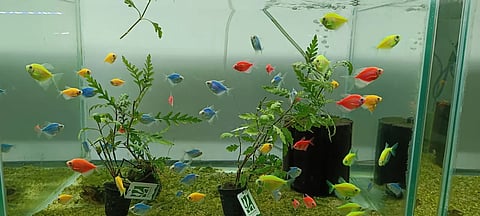
The north-eastern region accounts for nearly 85% of total freshwater indigenous ornamental fish exported from in India, but lack of growth in commercial captive production presents a striking paradox that highlights persistent disconnect between abundance of natural resource and deriving sustainable economic gain from it. With 6000 aquarium shops and over 10 lakh aquarium hobbyists, the domestic market of ornamental fish is quite large, yet official data highlights the region accounts for only 3% of total production units across the country. West Bengal is the largest ornamental fish producer, followed by Tamil Nadu (30%) and Maharashtra (7%), while Kerala accounts for 5%. Ambiguity over endangered and protected ornamental fish species leading to seizure of fish supplies by forest officials is a major disincentive for commercial rearing. A recent order passed by the Gauhati High Court is expected to remove legal ambiguity over fishing, cultivation, trade, or business in respect of ornamental fish species except the endangered species which are included in the Schedule of the Wildlife (Protection) Act, 1972. Even though the high court judgement is in respect to certain species of ornamental fish, it making the distinction between endangered species notified under the Wildlife (Protection) Act and non-listed species has brought legal clarity for fishing, cultivation, trade, or business of unprotected ornamental fish found in the region. "There is no prohibition subject to compliance of the necessary provisions of law upon the petitioners from carrying on fishing, cultivation, trade, or business in respect to the species of fishes, namely, Channa stewartii; Channa bleheri and Channa aurantimaculata. However, the petitioners shall not carry on any fishing, cultivation, trade, or business in respect to the fish species namely, Channa barca, as the said species is an endangered species and is included in the Schedule of the Wildlife (Protection) Act, 1972," states the judgment by the Single Bench of Justice Devashis Baruah. Channa barca is known in Assam as Pipli Cheng or Cheng Garaka. Another key reason behind commercial ornamental fish production not gaining momentum in the region is attributed to the practice of wild capture rather than captive breeding. As majority of ornamental fish exported from India is sourced from the region, the prevalent practice of wild capture by local suppliers has led to alarming decrease in population of certain ornamental fish species due to over extraction. The high court judgment, however, clarified that its observation on legal permissibility of carrying on fishing, cultivation, trade, or business in respect to the species of Channa stewartii; Channa bleheri and Channa aurantimaculata ornamental fish species shall remain subject to the provisions of the Wildlife (Protection) Act, 1972, the Biological Diversity Act, 2002, and the Rules framed there under. The petition arose from seizure of ornamental fish supplies due to similarity with the protected species. The Biological Diversity Act, 2002 insists on "sustainable use" which means the use of components of biological diversity in such manner and at such rate that does not lead to the long-term decline of the biological diversity, thereby maintaining its potential to meet the needs and aspirations of present and future generations. As legal safeguards against over exploitation of components of biological diversity such as ornamental fish are firmly in place, commercial ornamental fish production through captive breeding is both feasible and sustainable. When only source populations are collected from the wild for captive breeding purposes, it can substantially curb the prevalent practice of indiscriminate harvesting of ornamental fish from natural habitats. The Central government and north-eastern states providing more fund to universities and research institutions to carry out extensive research work on captive breeding of ornamental fish species found in the region can go a long way in promoting commercial production of various ornamental fish species and help the region derive maximum benefit by tapping the expanding aquarium industry of the country. It will also be effective in curbing illegal capture and smuggling of protected ornamental fish species in the region. Two key objectives of the Action Plan for Development of Ornamental Fisheries in India: AQUARAINBOW VISION-2030 are to promote private sector investment, augment export of ornamental fish from country and achieve a leading position in global ornamental fish trade, besides promoting the hobby of aquarium keeping to help the people of country to live a stress-free healthy life and improve the quality of life. The NE states can leverage this vision document to seek adequate financial and infrastructural support for promotion of freshwater ornamental fisheries in the region. Building awareness and capacity of local fishermen on sustainable use, legal and environmental aspects of harvesting ornamental fish species is essential to promote conservation-oriented harvesting from natural habitat and facilitate transition to a commercially viable and sustainable captive-breeding in the region.
