
- Home
- Live Blog
- Breaking News
- Top Headlines
- Cities
- NE News
- Sentinel Media
- Sports
- Education
- Jobs
Pallab Bhattacharyya
(Pallab Bhattacharyya is a former director-general of police, Special Branch and erstwhile Chairman, APSC. Views expressed by him is personal. He can be reached at pallab1959@hotmail.com)
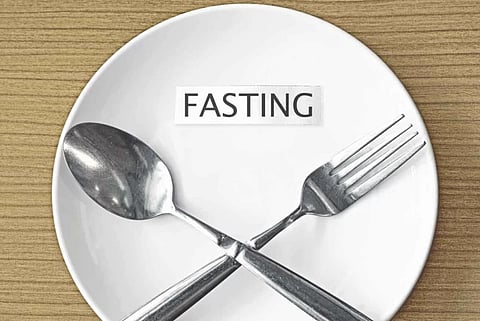
In a world increasingly fractured by religious identities, where faith is often invoked to divide rather than to heal, it is easy to forget that the same religions accused of fostering difference also nurture some of humanity’s most profound common practices. Among them, fasting stands out as a quiet yet powerful thread that runs through almost every major religious tradition. Far from being a marginal ritual, fasting represents a shared moral vocabulary—one that speaks of self-restraint, compassion, humility, and a deeper search for meaning. At a time when religious differences seem to rule the roost, this ancient practice offers a compelling ground for unity.
Across faiths and continents, fasting has been embraced as a means of disciplining the self and elevating the spirit. Muslims observe the month of Ramadan by abstaining from food and drink from dawn to dusk, not merely as an act of obedience but as a path to righteousness and empathy for the poor. Christians undertake fasting during Lent, recalling the forty days of Jesus in the wilderness and using abstinence as a way to prepare the heart for renewal and repentance. Jews fast on Yom Kippur, the Day of Atonement, setting aside physical needs to focus entirely on forgiveness, reconciliation, and moral renewal. Hindus practise a wide range of vrats, or fasting vows, believing that restraint purifies both body and mind and strengthens self-control. Jainism places fasting at the very centre of spiritual life, seeing it as a way to shed karmic bonds and cultivate non-violence and forgiveness. Buddhists fast on sacred days to sharpen mindfulness and loosen attachment to desire, while followers of the Bahá’í Faith observe a nineteen-day fast as spiritual preparation for the New Year. Even Sikhism, which rejects ritual fasting, upholds the same inner goal by emphasising mental discipline and control over desire rather than physical deprivation.
What is striking is not merely the universality of fasting but the similarity of its purpose across traditions. Everywhere, fasting seeks to curb excess, humble the ego and remind the individual that life is sustained by more than material consumption. Hunger becomes a teacher. By voluntarily experiencing what millions endure involuntarily, the faster learns compassion in a way no sermon can impart. This is why fasting in many religions is inseparable from charity. Ramadan emphasises generosity and almsgiving, Christian Lent calls for special care for the poor, Jewish tradition links atonement with justice, and Hindu and Jain practices often combine fasting with acts of giving. The message is consistent: spiritual discipline that does not open the heart to others is incomplete.
In this shared moral vision lies fasting’s potential as a bridge in a divided world. When people of different faiths recognise that their neighbours too know the ache of hunger for a higher purpose, suspicion begins to soften. Interfaith gatherings around fasting—such as shared iftar meals during Ramadan—have shown how easily dialogue flows when people meet not to debate doctrine but to share experience. Sitting together at the moment of breaking the fast, participants discover that what they seek through restraint is remarkably similar: peace of mind, moral clarity and a sense of connection to something greater than themselves. Such encounters humanise the “other” and weaken the narratives of fear and hostility that thrive on ignorance. Fasting also challenges the modern culture of excess that cuts across religious boundaries. In societies driven by consumption and instant gratification, the deliberate act of saying “enough” becomes a countercultural statement. When embraced collectively across faiths, it can foster a shared ethic of moderation, care for the vulnerable and responsibility towards the planet. In this sense, fasting is not only a spiritual act but a social one, reminding humanity that restraint can be a source of strength rather than deprivation.
None of this requires religions to blur their theological distinctions. Unity does not demand uniformity. The power of fasting as a unifying force lies precisely in the fact that it allows believers to remain rooted in their own traditions while recognising a shared human aspiration. Each religion interprets fasting through its own sacred texts and philosophies, yet the lived experience converges in ways that are immediately recognisable across boundaries. As religious tensions continue to shape politics and social life, rediscovering such common ground is no longer a matter of idealism but of necessity. Fasting offers a rare opportunity: a practice deeply respected within traditions, yet open enough to be shared as a point of connection. When hunger is embraced not as a weapon of exclusion but as a reminder of shared vulnerability and hope, it becomes a language everyone understands. In that language, faith ceases to be a fault line and begins to look, once again, like a bridge.
