
- Home
- Live Blog
- Breaking News
- Top Headlines
- Cities
- NE News
- Sentinel Media
- Sports
- Education
- Jobs
Dr Samudra Gupta Kashyap
(sgkashyap@gmail.com)
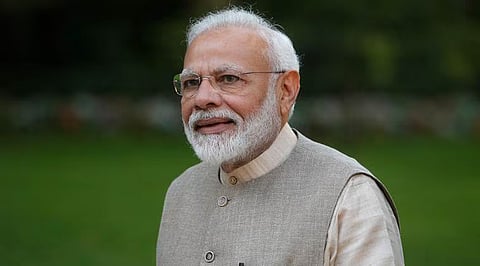
Prime Minister Narendra Modi’s visit to Namrup on Sunday to lay the foundation stone of the Namrup IV fertilizer plant holds a lot of significance from various angles. First and foremost, it signals a new lease of life to a premier industrial hub of the region.
Namrup had come to prominence in the 1960s when the Government of India decided to establish the country’s first natural gas-based fertilizer plant there. Alongside, the Government of Assam set up the Namrup Thermal Power Station (NTPS), which also happens to be the country’s first gas-based power plant. In 1971, the country’s first petrochemical plant (Assam Petrochemicals Ltd) also came up at Namrup, thus providing the industrial town a unique distinction.
Important to note, it was in 1826 that a British army officer engaged in flushing out the Burmese invaders from Assam had first recorded the presence of petroleum at Namchik in the upper reaches of the Burhi-Dehing river, not very far away from Namrup. Assam’s first coal reserve was also discovered on the bank of the Disang River at Namrup, which became the first coal mine of the region.
It was at Joypur, adjoining Namrup, that the first organised tea garden of India using the Assamese jat of tea saplings was established by Charles Alexander Bruce in 1836. The Joypur tea estate, incidentally, was established a few months before the Chabua tea estate was started in the same year. Joypur was also where the American Baptist Mission had set up base after fleeing from Sadiya in the backdrop of the Khamti uprising of 1839.
Looking further back into history, one would find that way back in 1228 CE, a young Tai prince named Siukapha crossed the Patkai mountains and arrived at Namrup after travelling for 16 years from the Mong Mao region (near present-day Kunming), and exclaimed, “Myun Dung Chun Kham,” meaning “This is the land of gold.” While historians have ascertained that date as December 2, it was also the date when the story of the Ahom Kingdom began, with its first capital at Tipam, about 10 km from Namrup.
Namrup was also considered a safe haven for the Ahom royalty on several occasions when the Mughals invaded Assam. It was on January 23, 1663, that Ahom king Jayadhwaj Singha signed the Treaty of Ghilajharighat at Tipam, 10 km away from Namrup, with Mughal invader Mir Jumla, a tactical move which saved Assam from being occupied by the Mughals despite a defeat. That was a major turning point in the history of Assam.
In 1952, the first petroleum discovery was made in independent India, when oil and gas were struck at Naharkatiya, 16 km from Namrup. That discovery, in fact, was the turning point in Assam’s industrial history, which was so long confined only to the small oilfield around Digboi and the equally small refinery, apart from a few plywood factories and coalmines in the Dibrugarh subdivision of the erstwhile Lakhimpur district.
The Namrup fertilizer factory, whose parent identity had changed twice, from Fertilizer Corporation of India (FCI Ltd) to Hindustan Fertilizer Corporation (HFC Ltd) to Brahmaputra Valley Fertilizer Corporation (BVFCL), had in the past two decades also suffered a serious downside. While timely steps were not taken for technology upgradation and renewal of vital machinery in a highly corrosion-prone chemical factory, the establishment of the Brahmaputra Cracker & Polymer Ltd at Lepetkata (near Dibrugarh) led to the non-availability of enough gas to make the revival of the Namrup fertilizer factory. In such a situation the Government of India considered disinvestment as the only way to get rid of what it thought had become a liability. A couple of private companies had in fact tried to acquire it but subsequently withdrew their attempts.
Public demand for the revival of Namrup fertilizer with fresh government investment, however, continued for the past three decades. While successive regimes at the Centre had only viewed revival and reinvestment in Namrup as an unviable proposition, the present government must be given full marks for taking the much-awaited decision to set up a new state-of-the-art fertilizer plant here. The Government of Assam too deserves all praise for taking the initiative to establish a new company called Assam Valley Fertilizer and Chemical Company (AVFCCL) for the purpose.
Incorporated on July 25, 2025, the new joint venture AVFCCL has several stakeholders, these being the Government of Assam (GoA), National Fertilizers Limited (NFL), Oil India Limited (OIL), Hindustan Urvarak & Rasayan Limited (HURL) and Brahmaputra Valley Fertilizer Corporation Limited (BVFCL).
It was in March 2025 that the Union Cabinet, chaired by the Prime Minister Narendra Modi, approved the proposal for setting up a new Brownfield Ammonia-Urea Complex of 12.7 Lakh Metric Tonnes (LMT) annual capacity of Urea production at Namrup. The estimated total project cost is Rs.10,601.40 Crore with a debt-equity ratio of 70:30 through a Joint Venture (JV), under the New Investment Policy, 2012, with a tentative overall time schedule for commissioning of 48 months.
With this, the Namrup fertilizer factory was saved from being scrapped, as was done in the case of the HPCL paper mill at Jagiroad. A long-pending demand has also been fulfilled. Being the largest industrial hub of the Northeast, what the government should now do is to also establish an engineering college at Namrup. Students would have the best opportunity for getting hands-on training there. Namrup also now deserves to be connected by a four-lane highway.
