
- Home
- Live Blog
- Breaking News
- Top Headlines
- Cities
- NE News
- Sentinel Media
- Sports
- Education
- Jobs
Heramba Nath
(herambanath2222@gmail.com)
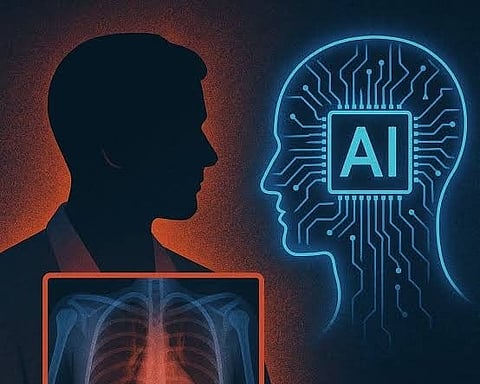
Artificial Intelligence (AI) has become one of the most influential technological developments of modern times. From smartphones and self-driving vehicles to finance, education, and healthcare, AI is transforming the way people live and work. In medicine, one of the fields most affected by AI is radiology. The ability of AI systems to analyse medical images, identify abnormalities, and generate diagnostic reports has led many people to ask a provocative question: Will radiologists become obsolete in the future?
The question is understandable. Recent advances in machine learning and deep learning have enabled computers to recognise patterns in medical images with extraordinary accuracy. Some AI systems can detect certain diseases in X-rays, CT scans, MRI scans, and ultrasounds at a speed that no human can match. As technology continues to advance, concerns have emerged regarding the future role of radiologists and whether AI might eventually replace them.
To understand this issue properly, it is important to examine the nature of radiology, the capabilities of AI, the limitations of current technologies, and the likely future relationship between human expertise and artificial intelligence.
Radiology is a specialised branch of medicine that is concerned with the diagnosis and treatment of diseases through medical imaging techniques. Radiologists use various imaging techniques, including X-rays, ultrasound, computed tomography (CT), magnetic resonance imaging (MRI), mammography, fluoroscopy, and positron emission tomography (PET) scans. These technologies allow physicians to visualise structures within the human body without performing invasive procedures.
For decades, radiologists have played a vital role in modern healthcare. Their responsibilities extend far beyond merely looking at images. They interpret findings, correlate imaging results with clinical information, consult other physicians, guide treatment decisions, perform image-guided procedures, and contribute significantly to patient management. Their expertise often determines whether a disease is diagnosed early or missed entirely.
The emergence of AI has introduced a new dimension to medical imaging. Artificial intelligence refers to computer systems capable of performing tasks that typically require human intelligence. Machine learning, a subset of AI, allows computers to learn from data without being explicitly programmed for every situation. Deep learning, an advanced form of machine learning, uses artificial neural networks inspired by the human brain to identify complex patterns within large datasets.
Medical imaging is particularly suitable for AI applications because images consist of digital data that computers can analyse systematically. By training algorithms on millions of medical images, researchers have developed AI systems capable of recognising features associated with various diseases.
Recently, AI has achieved impressive results. Some systems can detect lung nodules on CT scans, identify breast cancer on mammograms, recognise fractures on X-rays, diagnose diabetic retinopathy from retinal photographs, and detect intracranial haemorrhages on brain scans. In controlled studies, AI has sometimes matched or even exceeded the performance of human specialists in specific tasks.
The speed of AI is one of its most remarkable advantages. A radiologist may spend several minutes carefully examining a complex CT scan containing hundreds or even thousands of images. An AI system can process the same scan within seconds. In emergency situations such as stroke, traumatic injury, or internal bleeding, this rapid analysis can significantly improve patient outcomes by enabling faster treatment.
Another major strength of AI is its ability to work continuously without fatigue. Human radiologists often face heavy workloads, long hours, and increasing demands for imaging services. Fatigue can contribute to diagnostic errors, particularly during overnight shifts or periods of high workload. AI systems do not experience tiredness, distraction, or emotional stress. As a result, they can provide consistent performance around the clock.
Consistency itself represents another important advantage. Human interpretation may vary between radiologists depending on experience, training, and individual judgement. AI algorithms, once validated and deployed, apply the same analytical criteria to every image. This consistency can help reduce variability in diagnostic reporting and improve standardisation across healthcare institutions.
AI may also help address global shortages of radiologists. Many countries face an increasing demand for imaging services due to ageing populations, rising rates of chronic disease, and expanding access to healthcare. In rural and underserved regions, access to specialist radiologists may be limited or entirely unavailable. AI-assisted imaging could help bridge this gap by providing preliminary analysis where specialist expertise is scarce.
The economic benefits of AI are also significant. Automated image analysis may reduce costs associated with diagnostic services, improve efficiency, and allow healthcare systems to manage increasing workloads more effectively. Hospitals may be able to process more scans in less time while maintaining high standards of care.
Despite these advantages, the belief that AI will completely replace radiologists oversimplifies the reality of medical practice. Radiology involves far more than identifying patterns on images. Accurate diagnosis requires the integration of imaging findings with clinical information, laboratory results, patient history, physical examination findings, and ongoing treatment plans.
For example, two patients may have similar findings on a chest CT scan but require entirely different interpretations based on their symptoms, age, medical history, and clinical circumstances. Human radiologists routinely integrate these factors into their decision-making process. Current AI systems remain largely limited to analysing images and cannot fully replicate this broader clinical reasoning.
Another important limitation involves unusual and rare diseases. AI systems learn from examples contained within their training data. If certain conditions are under-represented or absent from those datasets, the algorithm may struggle to recognise them accurately. Human radiologists, by contrast, can draw upon years of medical education, professional experience, and logical reasoning when encountering unfamiliar cases.
Data quality presents another challenge. AI systems are highly dependent on the quality and diversity of the datasets used for training. Biases in training data can lead to unequal performance across different populations. If an AI system is trained primarily on images from one demographic group, it may perform less effectively when applied to patients from different backgrounds. Ensuring fairness and reliability remains an ongoing challenge for AI developers.
Medical imaging is also subject to numerous technical variables. Differences in imaging equipment, scanning protocols, patient positioning, image quality, and anatomical variations can affect interpretation. Human radiologists can adapt to these variations using judgement and experience. AI systems may be more vulnerable to unexpected circumstances that fall outside their training parameters.
Legal and ethical considerations further complicate the prospect of fully autonomous AI diagnosis. When a diagnostic error occurs, determining responsibility becomes challenging. If an AI system misses a cancer diagnosis or incorrectly identifies a serious condition, who should be held accountable? Should the software developer, the hospital, the radiologist, or another party be held accountable? Current legal frameworks generally place responsibility on qualified healthcare professionals rather than algorithms.
Patient trust is another important factor. Many patients feel reassured knowing that a trained physician has reviewed their medical images and participated in their care. While people may accept AI as an assistive tool, complete reliance on automated diagnosis could raise concerns about safety, accountability, and the human aspects of healthcare.
One frequently overlooked aspect of this debate is that many radiologists perform procedures rather than simply interpret images. Interventional radiologists use imaging guidance to perform minimally invasive treatments such as biopsies, tumour ablations, angioplasties, vascular interventions, drain placements, and numerous other procedures. These activities require technical expertise, manual dexterity, clinical judgement, and direct interaction with patients. Such responsibilities remain well beyond the capabilities of current AI systems.
Communication represents another essential function of radiologists. They regularly consult surgeons, oncologists, emergency physicians, orthopaedic specialists, neurologists, and other healthcare professionals. Radiologists often participate in multidisciplinary team meetings where imaging findings Radiologists frequently engage in multidisciplinary team meetings to discuss imaging findings in the context of treatment plans. in relation to treatment plans. These interactions require nuanced communication, collaboration, and professional judgement.
Furthermore, medical practice often involves uncertainty. Images may contain ambiguous findings that require careful interpretation. Human radiologists can weigh probabilities, consider alternative explanations, and recommend additional investigations when necessary. AI systems typically operate within predefined parameters and may struggle with complex situations involving uncertainty and incomplete information.
Rather than replacing radiologists, AI is more likely to redefine their professional role. Many experts envision a future in which AI functions as a highly sophisticated assistant. Routine tasks such as image screening, measurement of anatomical structures, lesion detection, prioritisation of urgent cases, and the generation of preliminary reports may become increasingly automated.
This automation could allow radiologists to focus on higher-value activities requiring human expertise. They may spend more time on complex cases, interdisciplinary consultations, patient communication, quality assurance, and clinical decision-making. In essence, AI may remove repetitive tasks while enhancing the overall effectiveness of radiologists.
Historical examples support this perspective. Throughout history, technological innovations have often generated fears of job displacement. Calculators did not eliminate mathematicians. Computer-aided design software did not eliminate engineers. Automated laboratory equipment did not eliminate laboratory scientists. Instead, technology transformed workflows and enabled professionals to concentrate on more sophisticated aspects of their work.
Aviation offers a particularly useful comparison. Modern aircraft are equipped with advanced autopilot systems capable of performing many aspects of flight. Nevertheless, pilots remain essential because they provide oversight, decision-making, and intervention when unexpected situations arise. Similarly, AI may automate many routine radiological tasks while radiologists continue to provide supervision and clinical judgement.
The future radiologist may therefore become a hybrid professional who combines medical expertise with an understanding of artificial intelligence and data science. Medical education is already beginning to adapt to these changes. Future training programmes may include instruction on AI algorithms, digital health technologies, data interpretation, and human-machine collaboration.
Healthcare systems will also need to establish appropriate regulatory frameworks. Robust validation, quality control, ethical oversight, cybersecurity measures, and transparency standards will be essential to ensure the safe implementation of AI technologies. Human supervision is likely to remain a critical safeguard against potential errors and unforeseen consequences.
Looking ahead over the next several decades, AI will almost certainly become deeply integrated into radiology. Algorithms will continue to improve, computing power will increase, and medical datasets will expand dramatically. Many routine aspects of image interpretation may become highly automated. The number of radiologists required for certain tasks may decrease, and the profession itself will undoubtedly evolve.
However, evolution should not be confused with extinction. The future is more likely to involve collaboration than replacement. AI excels at processing vast quantities of data rapidly and consistently. Human radiologists excel in clinical reasoning, contextual understanding, communication, ethical judgement, and patient-centred care. These strengths are complementary rather than competing.
The central question is therefore not whether AI will replace radiologists but how radiologists will adapt to work alongside increasingly intelligent machines. Those who embrace AI as a tool rather than view it solely as a threat are likely to remain indispensable members of the healthcare team.
The future of radiology will Partnership will shape the future of radiology. by partnership. Artificial intelligence will provide unprecedented analytical power, while radiologists will continue to contribute the wisdom, experience, judgement, and humanity that define medical practice. Far from becoming meaningless, radiologists may become even more important as guides, supervisors, and interpreters in an increasingly technological healthcare environment. The most successful future will be one in which artificial intelligence and human intelligence work together to deliver safer, faster, and more accurate care for patients worldwide.
