
- Home
- Live Blog
- Breaking News
- Top Headlines
- Cities
- NE News
- Sentinel Media
- Sports
- Education
- Jobs
WASHINGTON: A surge in counterfeit prescription pills and emerging synthetic compounds is intensifying the drug crisis, officials have told members of the US Congress, underscoring how quickly the threat is evolving.
At a House Energy and Commerce subcommittee hearing, lawmakers reviewed a package of 14 bills aimed at curbing illicit drug flows, tightening controls on new substances and improving treatment access. Officials and experts described a drug landscape that has shifted sharply from traditional narcotics to highly potent synthetic mixtures, often produced in clandestine labs and disguised as legitimate medication.
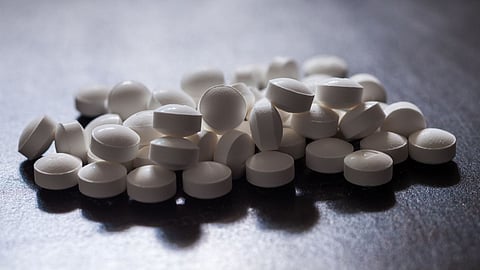
“The most urgent threat today is counterfeit prescription pills,” Scott Oulton, a former Drug Enforcement Administration forensic chief, told lawmakers. These pills, he said, are mass-produced by criminal networks with “no quality control or consistency,” even when they appear identical.
Two pills that look the same “can contain wildly different amounts of deadly drugs such as fentanyl, nitazenes, xylazine,” he added, highlighting the unpredictability that has driven fatal overdoses.
Law enforcement officials said the danger is compounded by the growing mix of substances in the drug supply. Dennis Lemma, sheriff of Seminole County, Florida, said today’s drugs are “more potent, unpredictable, and deceptive” than in previous decades.
Many users, he said, believe they are taking a legitimate prescription drug, only to ingest substances laced with fentanyl or other synthetic compounds. “A single dose is fatal” in some cases, he warned.
One emerging concern is xylazine, a veterinary sedative increasingly found mixed with opioids. Because it is not an opioid, naloxone — widely used to reverse overdoses — “does not reverse its effects,” complicating emergency responses.
Another compound gaining attention is a synthetic substance known as 7OH, which Lemma said is being marketed as a natural product despite significant risks of addiction and overdose.
Lawmakers argued that stronger enforcement tools are needed to keep pace with these changes. Proposed legislation would classify substances such as xylazine and nitazenes under the Controlled Substances Act. But some public health experts urged caution, warning that aggressive scheduling of substances can produce unintended consequences. (IANS)
Also Read: United States nominees stress ASEAN and Africa focus to counter China’s reach
