
- Home
- Live Blog
- Breaking News
- Top Headlines
- Cities
- NE News
- Sentinel Media
- Sports
- Education
- Jobs
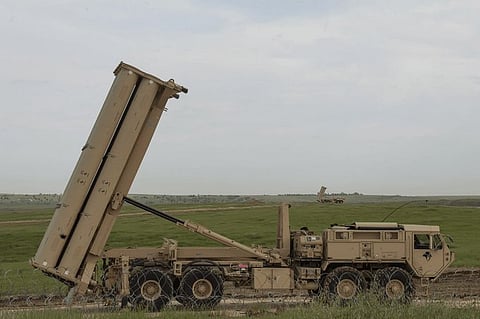
NEW DELHI: Iranian strikes across the region appear to have degraded parts of the US-built Terminal High Altitude Area Defense (THAAD) network after radar systems in multiple West Asian locations were hit, CNN reports. Iranian missiles and drones, according to Iranian media claims, seem to have bypassed Western and Israeli defence systems, including THAAD, and reached targets in Israel.
Satellite imagery and analysis obtained by CNN indicate that radar systems linked to THAAD batteries in Jordan, Saudi Arabia, and the UAE were struck during the opening days of the conflict. These radars assist the US and Israel in detecting and tracking incoming ballistic missiles and drones.
THAAD, described by Lockheed Martin as a highly effective, combat-proven system, defends against short, medium, and intermediate-range ballistic missiles. It is the only US system designed to intercept targets both inside and outside the atmosphere and continues to receive incremental upgrades to counter emerging threats.
The Islamic Revolutionary Guard Corps (IRGC) launched multiple waves of missiles and drones toward Tel Aviv, targeting areas including the Israeli Defense Ministry and Ben Gurion Airport. According to the Times of Israel, eight volleys of ballistic missiles forced millions into shelters. Iranian state media claimed many of the projectiles bypassed regional missile defences.
Satellite images showed a radar system at Jordan’s Muwaffaq Salti Air Base was struck and likely destroyed. The radar, an AN/TPY-2 transportable unit built by Raytheon, is central to THAAD and valued at nearly half a billion dollars. Imagery revealed debris, burn marks, and craters around the radar, suggesting multiple strikes. Other potential strikes were observed near Prince Sultan Air Base in Saudi Arabia and at military sites near Ruwais and Sader in the UAE, all known to host THAAD radars or related infrastructure.
Experts note that damaging a radar does not completely disable a THAAD battery but significantly reduces its effectiveness. “The AN/TPY-2 radar is essentially the heart of the THAAD battery, enabling interceptors and contributing to a networked air defence picture,” said N.R. Jenzen-Jones of Armament Research Services. Satellite images also revealed damage to a radar system in Qatar, likely aimed at weakening the US-Israel missile detection and communication network across the Gulf. (ANI)
Also Read: Chinese Foreign Minister Wang Yi urges India-China cooperation, slams US-Israel strikes on Iran
