
- Home
- Live Blog
- Breaking News
- Top Headlines
- Cities
- NE News
- Sentinel Media
- Sports
- Education
- Jobs
Bobby Ali
(bobby1969.ah@gmail.com)
Meghalaya’s live music and festival economy is transforming tourism, livelihoods, and cultural identity. Global artistes, vibrant local talent, and strong institutional support have together created a high-impact creative ecosystem that generates jobs, revenue, and year-round cultural energy, while reshaping India’s musical landscape. The State’s Autumn Calendar 2025 did more than conclude a successful festival season. It demonstrated how thoughtfully programmed and professionally delivered culture can drive tourism, create livelihoods, and elevate a region’s global profile.
Hotels emerged as major beneficiaries, and the impact extended far beyond. Local cafés and homestays recorded a sharp rise in footfall, while food vendors, taxi drivers, and small businesses across the state experienced renewed growth, underscoring the power of experience-led tourism to drive inclusive development.
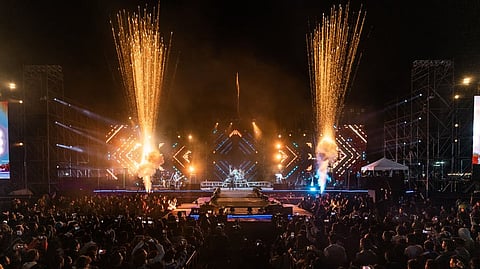
Held on November 14 and 15, 2025, the Shillong Cherry Blossom Festival animated the city, blending international headliners with homegrown talent through vibrant, citywide cultural programming and attracting a footfall of around 60,000. What makes Meghalaya’s festival season notable and widely replicable are two interconnected pillars. A curated lineup consistently draws tourists and strengthens local livelihoods, while a planning and execution model rooted in people-centric policy, community ownership, and a clear brand promise ensures sustainability.
Data from the FY 2024-25 festival season illustrates how concentrated cultural programming translates into measurable economic activity. Reports indicate that investments across flagship festivals and music events in 2024 generated a total economic value of around Rs 133 crore, reflecting a 5.6 times return. These events also created thousands of daily jobs during peak periods, supporting youth, women-led kitchens, artisans, drivers, and small retailers whose livelihoods depend on festival tourism.
Equally important is how these benefits are distributed. Meghalaya’s festivals deliberately move beyond a single-venue model. Citywide pop-ups, market performances, and artisanal stalls ensure that economic gains reach neighbourhoods and rural supply chains. The Me’Gong Festival, for example, drew large crowds to the Garo Hills, demonstrating how well-branded regional events can spread benefits across districts. Similarly, the Shillong Literary Festival strengthened its role as a leading literary platform and economic catalyst, blending global voices with strong regional storytelling.
Meghalaya on the global stage through cultural diplomacy and music
Beyond jobs and hotel revenues, Meghalaya’s festival strategy delivers a deeper and longer-term return by shaping perception and influence. When international artistes perform in the state and engage with local communities through public interactions and shared experiences, they become powerful cultural ambassadors. These exchanges project a plural and creative image of India that complements traditional diplomacy. Festivals spotlight indigenous Khasi, Jaintia, and Garo cultures, along with local cuisine and crafts, offering global audiences an authentic view of the Northeast rather than a curated tourism façade.
Meghalaya’s Autumn Calendar 2025 was not just a seasonal success. It served as a policy template. By combining a curated festival lineup with data-led planning, community ownership, and consistent branding, the state has shown how culture can function as a durable engine of growth. As India searches for models that balance economic returns with cultural integrity, Meghalaya offers a clear, people-first approach. Invest in talent. Measure impact. Design festivals where the entire community, not just headline acts, benefits.
Data-grounded planning and community-led delivery
Meghalaya’s success is intentional, not accidental. It rests on systematic, data-backed planning and sustained investment in local capacity. The Chief Minister’s Meghalaya Grassroots Music Project (CM-MGMP) anchors this ecosystem. Since its launch in 2022, the initiative has supported over 7,750 local artistes, enabled over 13,000 live performances, and generated 6,500+ direct and indirect livelihoods.
A key lesson for other Indian states lies in how Meghalaya designs festivals to remain inclusive, community driven, and locally rooted. Prioritizing local supply chains, homestays, and home kitchens; decentralizing programming across heritage sites; and creating micro-opportunities such as street performances and music cafés allow small entrepreneurs to participate directly in the cultural economy.
Brand consistency and trust as a multiplier effect
Through consistent delivery, Meghalaya has positioned itself as India’s Music Capital. When international artists repeatedly choose Shillong and other destinations in the state, the brand reinforces itself. Artists bring global attention, visitors bring discretionary spending, and local businesses scale to meet growing demand. This reputational capital, once built, reduces the cost and friction of future festivals and attracts media interest, sponsors, and private investment.
The state treats festivals as long-term investments in place branding rather than one-off spectacles. The introduction of RFID wristbands with home delivery before the festival and online top-up via QR codes helped bypass box-office queues and ensured smoother crowd movement at Cherry Blossom 2025, underscoring the attention to detail that made the mega event seamless for visitors and commercially efficient for local vendors.
