
- Home
- Live Blog
- Breaking News
- Top Headlines
- Cities
- NE News
- Sentinel Media
- Sports
- Education
- Jobs
Subhas Bhattacharjee
Abstract
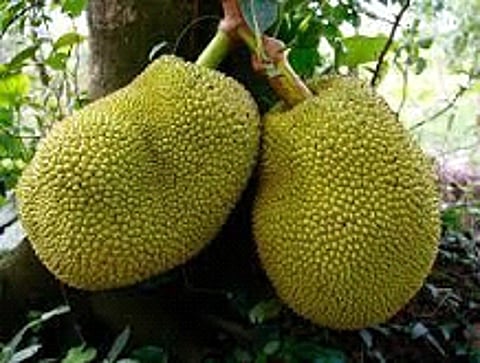
Jackfruit (Artocarpus heterophyllus Lam.) is one of the largest tree-borne fruits in the world and is widely distributed throughout North East India. The region possesses ideal agro-climatic conditions for jackfruit cultivation, yet a significant proportion of production remains underutilized due to inadequate harvesting practices, poor post-harvest management, limited processing infrastructure, and weak market linkages. An estimated 30–40% of jackfruit is wasted annually during the peak season.
With increasing global demand for plant-based foods, natural ingredients, functional foods, and sustainable products, jackfruit offers immense opportunities for value addition. Every component of the fruit—including the immature fruit, ripe bulbs, seeds, rind, latex, leaves, and wood—can be converted into commercially valuable products.
1. Introduction
Jackfruit is regarded as the “Poor Man’s Fruit” because of its abundance and nutritional richness. Today, however, it is emerging as a “Super Food” due to changing dietary preferences and increasing demand for vegan meat alternatives.
North East India, with its high rainfall, fertile soils, and biodiversity, is naturally suited for jackfruit cultivation. Trees are commonly found in all the eight states of north east India. Most trees grow without intensive cultivation, making production almost organic by default. In fact, it is one of the richest jackfruit-producing regions of the country, with most trees growing naturally in homesteads, mixed orchards and agroforestry systems. Commercial orchards are still limited, indicating substantial scope for scientific cultivation and value-chain development. According to horticultural statistics and regional assessments, Assam and Tripura are the major contributors, while Meghalaya, Arunachal Pradesh, Nagaland, Mizoram and Manipur also possess significant untapped potential. The challenge is not production but its utilization.
2. Importance of Jackfruit in Northeast India
Jackfruit contributes significantly to Household nutrition, Food security, Women’s livelihoods, Tribal economy, Climate resilience, Carbon sequestration, Agroforestry systems and more importantly in rural entrepreneurship.
Unlike seasonal vegetables, a mature Jackfruit tree can produce hundreds of kilograms of fruit annually for decades.
3. Nutritional value
Jackfruit is rich in dietary fibre, Vitamin C, Vitamin A, Potassium, Magnesium, Calcium, Iron, Antioxidants, Phytochemicals. Jackfruit seeds contains18–22% starch, 7–8% protein, Minerals, resistant starch beneficial for gut health.
4. Present Status in Northeast India
Major producing areas include:
Assam: Nagaon, Golaghat, Karbi Anglong, Sonitpur, Jorhat, Dibrugarh, Cachar, Sribhumi
Tripura: Almost every district produces jackfruit.
Meghalaya: Ri-Bhoi, East Khasi Hills and Garo Hills.
Mizoram: Entire state possesses wild and cultivated trees.
Nagaland: Peren, Dimapur and Kohima districts.
Arunachal Pradesh: Foothill districts.
Despite its abundance, there is minimal organized marketing, very little processing, heavy seasonal glut and large post-harvest losses.
5. Challenges
It being a bulky fruit of perishable nature has many challenges like Lack of collection centres, Poor transportation, Inadequate cold chain, labour-intensive cutting, seasonal oversupply, limited processing industries and lack of branding.
6. Value Addition
(I) Primary Value Addition
n Primary processing is simple and can be undertaken at village level with steps like Cleaning, Washing, Sanitisation,
n Sorting by size, maturity, variety. Bulb separation, extraction of edible bulbs, Seed Separation, Cleaning and grading, Vacuum Packing etc.
n Fresh bulbs can be packed in: 200 g, 500 g, 1 kg packs
n Frozen Jackfruit are suitable for export.
n Even fresh-cut immature jackfruits are packed for urban retail.
(II) Secondary Value Addition
A. Green Jackfruit Products
Young jackfruit is becoming popular worldwide as a meat substitute. Different products include Ready-to-cook cubes, Vacuum-packed curry pieces, Frozen cubes, Canned jackfruit, Pickles, Retort pouch curry and dehydrated cubes.
B. Ripe Fruit Products
Products like Juice, Nectar, RTS beverage, Squash, Jam, Jelly, Marmalade, Fruit leather, Fruit bars, Ice cream, Candy, Syrup, and Concentrates are made out of ripe fruits.
C. Bakery Products
Jackfruit flour may be incorporated into Bread, Cookies, Cakes, Muffins, Biscuits, Noodles, Pasta etc. very easily.
D. Snack Foods
Snack Foods like Jackfruit chips. Vacuum fried chips, Sweet chips, Salted chips, Spiced chips can be made out of it.
E. Seed-Based Products
Seeds are highly underutilized. Products that are common in NER mainly include Flour, Roasted snacks, Soup powder, Baby food, Breakfast cereal, Protein mix, Extruded snacks etc.
F. Functional Foods
Development of High-fibre flour, Gluten-free products, Low glycemic foods and different Health supplements are notable for this fruit.
7. Waste Utilization
Almost every part of Jack Fruit can be utilized like:
Peels can be converted into: Animal feed, Compost, Vermicompost, Biochar, Biogas, Latex
Industrial applications: Adhesives, Traditional medicines
Leaves can be used as Goat feed, Cattle feed, Compost, Wood
Valuable for: Furniture, Musical instruments, Handicrafts
8. Processing Technologies
Technologies suitable for Northeast India include: Solar drying, Cabinet drying, Freeze drying, Vacuum frying, Retort processing, IQF freezing, Canning, Spray drying. Pulverising and Modified atmosphere packaging
9. Small-Scale Enterprise Opportunities
Potential enterprises can be Jackfruit chips unit, Flour unit, Pickle unit, RTS beverage unit, Frozen vegetable unit, Bakery products, Seed flour unit, Candy manufacturing, Fruit leather production, Ready-to-eat food unit.
Any Women Self Help Groups (SHGs), Farmer Producer Organisations (FPOs), and rural entrepreneurs can establish these enterprises with modest investment.
10. Export Potential
For jackfruit the growing international demand exists in the USA, Canada, UK, Germany, UAE, Singapore, Australia, Japan, etc.
Exportable products are frozen jackfruit, vacuum-packed bulbs, canned green jackfruit, assorted chips, flour, seed flour and ready-to-eat meals.
11. Marketing Strategies
For a better positioning of products from the North East India, it is always recommended to develop a regional brand such as: North East Jackfruit
Marketing channels domestically can be through Supermarkets, E-commerce, Hotels, Restaurants, Institutional buyers, defense establishments.
It can also have export possibilities to different export houses.
Branding should try to emphasize the SOP of Northeast India like naturally grown, chemical-free, sustainable, nutritious and plant-based.
12. Institutional Support
Different Institutes and bodies can support and such supports can be mobilised through Ministry of Food Processing Industries (PMFME Scheme), Ministry of MSME, National Horticulture Board (NHB), Mission for Integrated Development of Horticulture (MIDH), APEDA, NABARD, North Eastern Council (NEC), NERAMAC, State Horticulture Departments, ICAR Research Institutes, CSIR - CFTRI, Mysuru, Assam Agricultural University, Central Agricultural University, Imphal etc.
13. Role of Farmer Producer Organizations (FPOs)
FPOs can undertake the responsibilityof Collection. Aggregation, Primary processing, Packaging, Branding, Marketing and even Export facilitation.
Cluster-based processing centres can substantially reduce post-harvest losses and improve farmer incomes.
14. Employment Potential
A cluster processing unit handling 5–10 tonnes of jackfruit per day can generate:
Direct employment: Up to 40–60 persons
Indirect employment: Up to 150–250 persons
Opportunities include Harvesting, Transport, Processing, Packaging, Quality control, Marketing and Logistics
Women and rural youth are likely to be the primary beneficiaries.
15. Future Research Priorities
Research should focus on: High-yielding and dwarf varieties, shelf-life enhancement, improved processing technologies, seed utilization, functional food development, bioactive compounds, waste valorisation, mechanised cutting equipment and even climate-resilient production systems
16. Export Facilitation
APEDA has already facilitated exports of fresh jackfruit from Tripura to the United Kingdom and Germany through FPOs, pack houses and export partners, demonstrating the viability of export-oriented value chains from the Northeast.
One of the following photos shows the fresh jackfruit after harvest is ready for market while the second photo shows that Jackfruit is ready in Corrugated Fibreboard (CFB) boxes in the Pack-House for export marketing:
Fresh Jackfruit ready for Market Jackfruit ready in CFB Boxes in the Pack-house for export
17. Policy recommendations
Suggested policy recommendations exclusively for jackfruit in Northeast India can be summarized point wise as under:
i. Establish district-level jackfruit processing clusters across Northeast India.
ii. Promote jackfruit as a priority crop under horticulture and food-processing initiatives.
iii. Provide financial incentives for micro-processing units.
iv. Strengthen FPO-led aggregation and marketing.
v. Develop a Geographical Indication (GI) & regional branding strategy for premium jackfruit.
vi. Support research on value-added products and post-harvest technologies.
vii. Facilitate domestic and international market linkages.
viii. Encourage public-private partnerships for processing infrastructure.
ix. Integrate jackfruit processing with eco-tourism and culinary tourism.
x. Promote skill development for rural youth and women in processing and entrepreneurship.
18. Companies / Organizations Interested in Jackfruit Processing & MSME Partnerships
There is an increasing demand from food companies, exporters and retail chains for processed jackfruit products. Micro-enterprises, SHG (Self Help Group)s and FPO (Farmer Producer Organization)s in North East India can collaborate with the following organizations to initiate business and or trade etc.
19. Conclusion
Jackfruit represents one of the most promising underutilized horticultural resources of North East India. Its abundance, nutritional richness, adaptability to agroforestry systems, and versatility in processing make it an ideal crop for promoting sustainable livelihoods, reducing post-harvest losses, and supporting rural industrialization. Studies indicate that organized commercial cultivation is still limited, while the majority of production comes from backyard trees. This creates an excellent opportunity for aggregation through Farmer Producer Organizations (FPOs) and village-level processing units. By adopting integrated value chains from primary processing at the village level to advanced secondary processing and branding, the region can transform jackfruit into a high-value commercial commodity with strong domestic and export potential. A coordinated approach involving government agencies, research institutions, FPOs, entrepreneurs, and private industry will be essential to realize this opportunity. Strategic investment in processing infrastructure, product innovation, quality assurance, and market development can position North East India as a leading hub for premium jackfruit products, contributing significantly to farmers’ incomes, employment generation, nutrition security, and the broader vision of an Atmanirbhar Bharat.
