
- Home
- Live Blog
- Breaking News
- Top Headlines
- Cities
- NE News
- Sentinel Media
- Sports
- Education
- Jobs
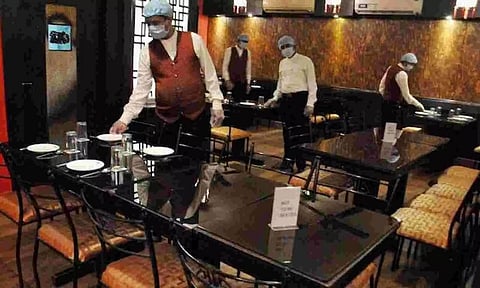
GUWAHATI: Amid the gradual increase in COVID-19 cases and in order to bring into control the pandemic the Assam government has issued new guidelines to be followed by restaurants/bars/banquet halls and other eateries.
Advisory for Restaurants/Bars/Banquet Halls and Other Eateries
1. Protocol for Vulnerable Groups: Persons above 65 years of age, persons with comorbidities, pregnant women, and children below the age of 10 years are advised to take necessary precautions in terms of maintaining physical distancing, wearing masks properly, etc. Restaurant management to advise accordingly.
2. Wearing a Mask: Compulsory wearing of masks by customers/staff/delivery executives.
3. Reduce Seating Capacity: Reduce seating capacity to 50%, by removing/marking tables/stools/chairs that are not to be used.
4 COVID Smart Seating Place: Adopt COVID smart seating place and ensure 6 ft. social distancing between tables.
5. Encourage Online Delivery: Takeaways and home-delivery of food items should be encouraged at all times. The staff for home deliveries shall be screened thermally by the restaurant authorities prior to allowing home deliveries.
6. Follow Govt. Instructions: Keep a check on timings for opening and closing of restaurants, related advisories etc. as per Govt. instructions.
7. Seating Arrangements: Outdoor seating arrangements should also be encouraged as far as feasible.
8. Cashless Payment: Cashless payment modes may be adopted like online payments etc.
9. Maintain Hand Hygiene: Build a culture of safety in the premises by promoting hand hygiene. Wash hands with soap or liquid soap for at least 40-60 seconds or use alcohol-based hand sanitizers for 20 seconds.
10. Respiratory Etiquettes: Maintain a strict practice of covering one's mouth and nose while coughing/sneezing with a tissue/handkerchief/flexed elbow and disposing of used tissues properly. Spitting to be strictly prohibited. If required signage or notice for maintaining such etiquettes by all staff & customers should be reinforced.
11. Use Audio Visual, Print Advisories: Promote Govt. advisories/safety messages for COVID-19 through display/TVs, run audio reminders/messages, etc. if feasible
12. Use a Digital/Disposable Menu: The menu can be displayed in digital forms/display boards instead of circulating menu cards to promote a contactless system. Disposable menus can also be used.
13. Thermal Screening: Thermal screening of all staff and visitors should be ensured at the restaurant entrance. Only asymptomatic persons should be allowed on the restaurant premises.
14. Sanitization: Restaurant premises should be sanitized frequently or at regular intervals.
15. Queue Management: Proper queue management at the entrance and at billing counters should be arranged with specific markings for social distancing measures. The number of persons in the queue at a time can be specified as per the size availability of the restaurant.
16.Management of Parking Lots: Proper crowd management inside the premises, parking lots, and outside the premises - duly following physical distancing norms shall be ensured by the management/any out-sou reed agencies.
17. Valet Parking: Valet parking, if available, shall be operational with operating staff wearing face covers/masks and gloves as appropriate. Proper disinfection of steering, door handles, keys, etc. of the vehicles should be taken up.
18. Use Disposable Napkins: Use good quality disposable paper napkins instead of cloth napkins.
19. Buffet: Buffet service should also follow physical distancing norms.
20. Elevator Safety: The number of people in the elevators shall be restricted, duly maintaining physical distancing norms.
22. Gatherings: Gatherings/congregations related to functions and celebrations should be in accordance with the SOPs issued by the State Government from time to time.
23. Sanitization of Common Areas: Effective and frequent sanitation within the premises sha ll be maintained with a particular focus to lavatories, drinking, and handwashing stations/areas.
24. Disinfection: Cleaning and regular disinfection (using 1% sodium hypochlorite) of frequently touched surfaces (door knobs, elevator buttons, handrails, benches, washroom fixtures, etc.) to be made mandatory in a ll guest service area and common areas.
25. Dining Tables: Every ta ble to be sanitized after every customer.
26. Protective Gears: The restaurant authorities shall provide the serving staff of restaurants with face shield, hand gloves, and face mask to wea r while serving food to the customers
27. Kitchen Management: In the kitchen, the staff should follow physical distancing norms at the workplace. The kitchen a rea must be sanitized at regular interva ls. The area must have a handwashing facility, soaps, and sanitizers for kitchen staff, specifically.
28. Gaming Arcade Protocols: Gaming Arcades/Children play areas (wherever applicable) shall function in accordance with the SOPs of the State Government.
29. Suspected or Confirmed Case: In case of a suspected or confirmed case in the premises, the person should be immediately isolated and immediately inform the nearest medical facility (hospital l/clinic) or call the State or District helpline.
1. Create Distance Markers: Depending on the size of the facility and the nature of the operation, place markers and barriers to ensure social distancing of 6 ft. between staff, visitors, and others in the reception area, parking bays, storage areas, lifting areas, packaging areas, and others. Consider installing transparent barriers where physical distancing is not an option.
2. Augment Hand Washing Facilities: Install paddle operated hand washing stations (soap and water availa ble with proper drainage) at multiple locations convenient for use by forklift operators, truck drivers, material handlers, shipping and receiving staff, office staff, distribution managers, and other wa rehouse sector employees and visitors. Ensure that premise entra nce has hand washing facility with soap or alcohol-based hand sanitizers. Encourage wor kers and visitors to wash their hands before entering the workplace, after contact with others, or with surfaces, others have touched. Be sure to include hand wash before breaks, at shift changes, after making or receiving deliveries, etc. Workers should be trained and frequently motivated on proper hand washing technique and to avoid touching their face.
3. Mandatory Thermal Screening: While making provisions for therma l screening mandatory for all staff and visitors at the entra nce, also put a display of symptoms (including the new ones associated with 2nd wave) for everyone to consider. Assign responsibility to security/staff and train them on both therma l screening and others. Provide a checklist for questions related to symptoms to be asked to each and every visitor/staff entering the premises.
4. Mandatory Use of Masks: Ensure adequate supply of masks in the premises. Always enforce mandatory and proper use of masks by all in the premises as per guidelines by MoHFW.
5. Respiratory Etiquettes- Have everyone practise covering one's mouth and nose while coughing/sneezing with a tissue/ha ndkerchief/flexed elbow a nd disposing off used tissues properly. Display IEC materials at a ppropriate locations within the premises on respiratory etiquettes and mandatory practice of respiratory hygiene.
6. Staggered Lunch Timings: Due care should be taken, particularly during lunch to ensure social distancing. Issue staggered lunch timings for different type of staff and ensure that respiratory hygiene is strictly followed when staff seat for lunch. Limit the staff to 50% in a shift and follow updated advisories of the State Government.
7. Mask Disposal: Ensure that staff follows the guidelines for safe disposa l of masks after use. Closed dustbins should be installed for disposa l. Care should be taken while disposing of the masks.
8. Monitor Symptoms: Encourage the staff to monitor their own symptoms. Provide a list of existing and new symptoms associated with COVID-19.
9. Enforce Staff Guidelines: Keep updating a nd sha re with staff members on the cur rent guidelines issued by the Centra l and State Government.
10. Work from Home: Pregnant women, as well as women with children below 5 years of age should be allowed to work from home. Keep updating systems as per cur rent guidelines availa ble from the State Gover nment.
11. Vaccination: Encourage eligible staff members to get vaccinated. If the staff strength in the eligible category is more tha n 100, off icially request health authorities (Joint Director Health Services) for on-site vaccination camps. Support the necessary logistic in this regard.
12. Telemedicine: If feasible, agree on a common telemedicine support service with a health care provider. Inform staff about telemedicine services available from Government agencies.
13. Mental Health Psychosocial Support: Inform and remind staff about available mental and psycho-socia l support systems and helplines from the Government of Assa m.
14. Staff Hygiene Supplies: Maintain adequate supply of face masks, gloves, hair covers, hand sanitizers, disinfectants and cleaning agents etc. for the staff.
15. Internal Mechanism:Designate a COVID Focal Point from within Senior Management Staff and form a rapid response team within the staff for managing any eventuality during working hours.
16. Avoid Meetings and Gatherings: Discourage any formal/informal meeting within premises/cha mbers. Make provision for meeting outside (if needed) following social distancing norms. Even in open space meetings, the total number sha ll be as allowed by State Gover nment.
17. Considerate workplace policies: Ensure considerate policies to support sick staff members. As fa r as possible pay cuts should be avoided for staff members not being able to work due to COVID related illness or restrictions. As fa r as possible develop and implement wor kplace policy for paid quarantine in case of any staff member or their family member/s are infected, and the staff needs to self-isolate.
18. Disinfection Schedule: Develop a cleaning and disinfection schedule covering different areas/zones within the premises. The frequency shall be more for areas that have higher footfalls. Due attention must be paid for frequently touched surfaces and common areas, such as entrances, counters and washrooms.
19. Sanitize Frequently: Surfaces that come in contact with staff and visitors must be disinfected prior to and after each contact. Pay particular attention to frequently touched surfaces and common areas, such as entrances, handrails, counters, desks, door handles, switches and washrooms.
20. Sanitize Equipment: Clean and disinfect/sanitize equipment such as controls, seats, steering wheels, gear shifts, radio controls, keys, and other equipment between clients/employees. Encourage staff to maintain clean workstations, debit machines, cash registers, counters, and equipment.
21. Sanitize Things in the Warehouse: Increase the cleaning frequency of commonly touched surfaces such as- but not limited to - forklift controls, pump trucks, employee time clocks, handrails and doors.
22. Sanitize Common Things: Clean and disinfect/sterilize equipment such as client keys, tools, and other equipment between clients/employees
23. Review Sanitation Process: Review disinfection practices with your supply chain partners.
24. Sanitise Vehicles: Increase the clea ning frequency of the vehicle, if used. Sanitise the interior and exterior including commonly touched surfaces such as vehicle door handles and frames, windows and controls, clea r hard plastic barriers, keys, seatbelt buckles, steering wheel, gearshift, signa l levers, ventilation and radio controls.
25. Follow the Cleaning and Disinfection Guideline: Follow Cleaning and Disinfection guideline as issued by the Ministry of Health and Family Welfare
26. Use Paddle Operated, Closed Dustbins: Ensure availa bility of paddle operated closed dustbins across the premises with clearing schedule and encourage optimum use.
27. Strictly no Spitting: Prohibit spiting inside and outside premises. Enforce the above through strict monitoring and CC TV surveillance as feasible.
28. Ventilate If Possible: Where a ppropriate, recommend ventilating spaces by opening windows and/or doors.
29. Rearrange: Consider rearranging (wherever feasible} the warehouse floor to allow for one-way flow down aisles and prevent two-way traffic.
30. Remove Unnecessary Items: Any waiting area for customers/visitors with books, service menus, pens and other frequently touched items should be removed. Reception desks should also have unnecessary items removed to restrict touching.
31. Keep a PPE Kit Handy: Ensure availa bility of complete PPE for restricted and need-based use in exigencies. Train staff on the use of PPEs.
32. Advertise Preventive Measures: Posters/standees/AV media on preventive measures about COVID-19 to be displayed prominently.
33. Crowd Management: Proper crowd management in the parking lots and outside the premises - duly following social distancing norms be ensured.
34. Lift Usage Restricted: If applicable, the number of people in the elevators should be restricted, duly maintaining social distancing norms, frequent cleaning, and disinfection of elevators as per guidelines shall be ensured.
35. Air Conditioning Regulations: In case air-conditioning/ventilation is used, the guidelines of CPWD shall be followed which inter alia emphasizes that the temperature setting of all air conditioning devices should be in the range of 24-30oC, relative humidity should be in the range of 40- 70%, intake of fresh air should be as much as possible and cross ventilation should be adequate.
36. Rules in the Canteen: If the premises have cafeteria/canteen/dining halls, the following shall be ensured:
a. Adequate crowd and queue management to be ensured to ensure social distancing norms
b. Staff/waiters to wear mask and hand gloves and ta ke other required precautionary measures.
c. 6 feet of distancing in seating arrangements to be made.
d. All food safety protocols issued by Government to be followed.
37. COVID Awareness Posters: Awareness posters on COVID appropriate behaviors shall be placed at multiple locations such as steps of handwashing near hand washing stations, social distancing posters in the seating area, posters related to respiratory etiquettes at multiple locations.
38. Availability of a Sick Room: Designate a sick room within the pre. mises exclusively for COVID-related contingent scenarios.
39. In case of a Suspected/confirmed COVID patient: Follow all guidelines related to management of sick in the workplace issued by MoHFW, Goi. available here.
Some of the instant actions are:
a. Place the ill person in a room or area where they are isolated from others at the workplace. Provide a mask/face cover till such time he/she is examined by a doctor.
b. Immediately inform the nearest medical facility (hospital/clinic) or call the State or District helpline.
c. Risk assessment will be undertaken by the designated public health authority (district RRT/treating physician) and accordingly further advice shall be made regarding management of case, his/her contacts and need for disinfection.
d. The suspect case, if reporting very mild/mild symptoms on assessment by the health authorities would be placed under home isolation.
e. Suspect case, if assessed by health authorities as moderate to severe, will be treated as per health
