
- Home
- Live Blog
- Breaking News
- Top Headlines
- Cities
- NE News
- Sentinel Media
- Sports
- Education
- Jobs
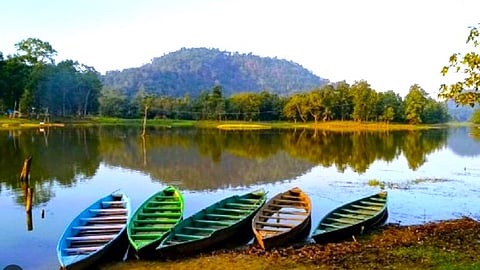
Assam: Nestled quietly along the foothills of the Garo Hills on the Assam-Meghalaya border, Chandubi Lake is experiencing a massive revival in footfall. The tranquil natural lagoon, formed unexpectedly overnight during the devastating 1897 Assam earthquake, has firmly established itself as a cornerstone of the region's sustainable tourism blueprint.
Driven by the overwhelming success of its annual community-led gatherings and expanding infrastructure, this geological wonder has successfully transformed from a standard weekend getaway into a major eco-tourism and cultural sanctuary.
The local indigenous Rabha and Garo communities have successfully leveraged the lake's rich biodiversity to drive rural economic growth. Central to this effort is the Chandubi Festival, organized annually from January 1 to 5 by the Borduar–Bholagaon Regional Rabha Students' Union and the Chandubi Festival Celebration Committee under the Rabha Hasong Autonomous Council (RHAC).
Operating under the long-standing theme "Save Chandubi, Save Heritage," the most recent editions of the festival have drawn record-breaking crowds from across India and abroad. The event showcases traditional Bhela (bamboo rafting) across the calm lake waters, indigenous sports, ethnic gastronomy like Chakhow sticky rice, and vibrant Rabha Farkhanti harvest dances. A major emotional highlight has been the permanent establishment of a memorial Tongighar (traditional stilt hut) built to honour the legacy of iconic Assamese cultural figures.
"Our main goal is to present an incredibly well-organized festival that reflects both our rich cultural heritage and our strict responsibility towards nature," stated Pranjal Rabha, Vice-President of the Festival Committee. "We want to raise immediate global awareness about protecting the fragile wetland ecosystem of Chandubi Lake, ensuring that development never comes at the cost of conservation."
Outside of festival windows, the lake continues to serve as an untouched haven for leisure travelers and environmentalists alike:
Rowing and Traditional Boating: Travelers flock to the site to rent local country boats, rowing past submerged tree trunks that remain preserved beneath the water line since the 1897 tectonic shift.
Biodiversity Hub: The 448-hectare core lake area forms a highly active wetland ecosystem, acting as a vital winter breeding ground for diverse migratory and resident birds.
Thriving Eco-Camping: A network of locally managed eco-camps and private resorts now dot the shoreline, providing immersive stilt-house accommodation and guided nature walks to nearby hidden waterfalls.
Located roughly 64 kilometres from Guwahati (about a 2-hour drive via National Highway 37 and Kukurmara), Chandubi is accessible via private cabs or self-drive cars, as direct public transit options remain sparse.
The prime visiting window runs from October to March, when the weather cools and clear blue skies frame the surrounding Sal forests. For a seamless day trip, city travelers are advised to start early in the morning and coordinate meals directly with local eco-camps to enjoy authentic tribal cuisine while respecting the plastic-free boundaries of the wetland preserve.
