
- Home
- Live Blog
- Breaking News
- Top Headlines
- Cities
- NE News
- Sentinel Media
- Sports
- Education
- Jobs
There is a tendency, whenever a World Cup arrives, to focus on the players furthest from the goalkeeper.
The goalscorers naturally command attention. A curling strike from twenty yards, a decisive header in stoppage time, a dazzling dribble through crowded defences; these are the moments replayed endlessly. Yet every tournament develops its own personality, and the character of the 2026 FIFA World Cup has been shaped as much by resistance as by invention.
Across stadiums in North America, this has become a tournament in which goalkeepers have refused to accept the script written for them.
Perhaps that is why this tournament has resonated with me more than most. I am a goalkeeper myself, although only in the modest sense that countless football lovers across the world understand. Every weekend, when work permits and life slows down for a few hours, I pull on a pair of gloves and join my friends on a football field. There are no trophies at stake and no television cameras. Yet every goalkeeper, regardless of level, recognizes the peculiar mixture of responsibility and solitude that comes with the position. When a striker misses, the game moves on. When a goalkeeper errs, the moment lingers.
Goalkeeping remains football's most peculiar position. It demands confidence bordering on stubbornness, patience bordering on isolation, and resilience bordering on defiance. A striker can disappear for eighty minutes and become a hero with one touch. A goalkeeper must remain alert every second because one mistake can erase ninety minutes of excellence. This World Cup has celebrated that reality.
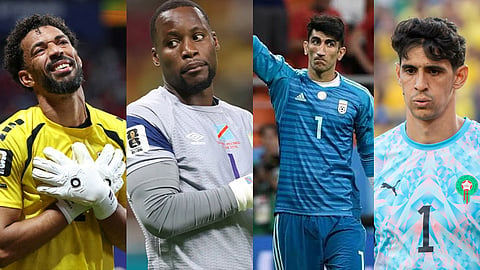
From Cabo Verde's remarkable Vozinha to DR Congo's Lionel Mpasi, from Iran's Alireza Beiranvand to Morocco's ever-reliable Yassine Bounou and Mexico's enduring Guillermo Ochoa, the tournament has offered a series of goalkeeping masterclasses that have been about far more than saves. In many ways, they have been stories about human endurance.
Vozinha and the dignity of persistence: The image that may endure long after this World Cup concludes is not necessarily of a trophy being lifted. It may instead be that of a 40-year-old goalkeeper standing in front of Lionel Messi and refusing to blink.
Josimar José Évora Dias, known universally as Vozinha, arrived at this World Cup carrying little international recognition despite a long professional journey through Portugal, Angola, Moldova, Cyprus and Slovakia. He was already a respected figure within Cabo Verdean football circles, but globally he was largely unknown. That changed within a few breathtaking weeks. His story begins long before football. Raised largely by his grandparents while his parents worked and served in the military, he inherited the nickname "Vozinha" from his childhood. Rather than abandoning it as his career progressed, he carried it proudly across continents and leagues.
There is something fitting about that. Goalkeepers often preserve parts of themselves others are encouraged to leave behind. When Cabo Verde stepped onto the World Cup stage for the first time, they represented one of the smallest populations ever to compete at the tournament. Conventional wisdom suggested they would struggle. Instead, they became one of the competition's most captivating stories, drawing with Spain, Uruguay and Saudi Arabia before reaching the knockout rounds. The foundation of that achievement was Vozinha.
Against Spain, he seemed to transform frustration into an art form. Seven saves and a Player of the Match performance enabled Cabo Verde to secure a famous goalless draw against the European champions. The tears visible after the final whistle were not simply about a result. They reflected a lifetime spent waiting for a moment such as this. Yet his defining performance came against Argentina.
Cabo Verde eventually lost 3-2 after extra time, but football occasionally celebrates the defeated. Vozinha made eight saves, several of them against Messi himself. One stunning free-kick stop looked almost impossible. Another late intervention extended hope beyond what seemed reasonable. Argentina eventually prevailed, but the goalkeeper emerged with his reputation transformed. Jonathan Wilson often writes that football is ultimately shaped by context. A save is never just a save. It matters who makes it, against whom, and under what circumstances. Viewed through that lens, Vozinha's World Cup belongs among the tournament's most compelling individual stories.
Lionel Mpasi and football's quieter heroism: If Vozinha was the tournament's revelation, Lionel Mpasi was perhaps its most underappreciated protagonist. Born in France to Congolese parents, Mpasi progressed through the French football structure before choosing to represent the Democratic Republic of Congo internationally. It was a decision rooted in heritage rather than convenience and one that has come to define an important chapter in Congolese football. For decades, DR Congo's World Cup history consisted largely of memories from 1974, when the country competed as Zaire. The 2026 edition represented an opportunity to write something different. Mpasi was central to that effort.
Even in defeat against Colombia, his performance bordered on extraordinary. During one remarkable first-half spell, he produced five saves within the opening twenty minutes, repeatedly denying a side packed with attacking quality. What might have become a comfortable Colombian victory instead evolved into a test of patience and persistence.
Then came England. The scoreline records a 2-1 victory for the Three Lions. The memory tells a more nuanced story. For long stretches, Mpasi seemed determined to inflict one of the great World Cup upsets. He denied Jude Bellingham repeatedly. He frustrated Harry Kane. He threw his body into danger with the sort of abandon that goalkeepers understand instinctively. After one save, Bellingham's reaction reportedly conveyed not frustration but admiration. Following the match, Mpasi remarked that he had "offered my body to science." It was an expression both humorous and revealing. Every goalkeeper knows precisely what he meant. There are matches when preserving hope requires sacrificing comfort. Mpasi spent ninety minutes doing exactly that. The result ultimately favoured England. The respect earned belonged to Mpasi.
Beiranvand and the road from hardship: Among all the goalkeepers at this tournament, no personal journey is more remarkable than that of Alireza Beiranvand. Before he became Iran's national goalkeeper, before he accumulated international appearances and Guinness World Records, he was simply a teenager chasing a dream in Tehran with little financial security and few guarantees. He worked in a car wash, a factory and a pizza shop while pursuing football. At times, he was homeless. Football loves stories of talent. Beiranvand's career is fundamentally a story of endurance.
Representing Team Melli at his third World Cup, the veteran goalkeeper once again became Iran's emotional anchor. The tournament may not have ended with qualification for the knockout rounds, but his performances embodied the resilience that has characterized his career. His finest display came against Belgium.
Faced with relentless pressure, Beiranvand produced seven saves in a goalless draw that preserved Iran's hopes at the time. What made the performance more impressive was the physical setback he suffered early in the match following a heavy collision. Lesser players might have struggled to continue. Beiranvand simply continued his work. Observers often focus on his Guinness World Records for the longest throw and longest drop-kick in football. They are impressive achievements. Yet they are ultimately secondary to what makes him such an admired figure. The real achievement lies in the distance travelled not by the football, but by the man himself.
Bounou and the value of consistency: Not every goalkeeper requires a dramatic backstory to command appreciation. Sometimes sustained excellence is compelling enough. Yassine Bounou arrived at the 2026 World Cup carrying the legacy of Morocco's magnificent 2022 campaign. Goalkeepers who produce one exceptional tournament are often celebrated. Goalkeepers who sustain those standards across multiple cycles deserve even greater respect. That is what Bounou has accomplished.
The Moroccan goalkeeper's defining quality has never been flamboyance. In fact, much of his brilliance derives from how little drama surrounds his work. He reads attacks exceptionally well, understands angles instinctively and positions himself with remarkable intelligence. Many goalkeepers make difficult saves look spectacular. Bounou frequently makes difficult saves appear routine. That distinction matters. Watching him throughout this World Cup, one sees a goalkeeper operating with complete clarity. There is rarely panic. Rarely uncertainty. Rarely a sense that events are unfolding faster than he can process. Instead, there is calm, judgement and timing. The qualities that helped Morocco reach unprecedented heights in 2022 remain fully intact. If anything, experience has refined them further.
Ochoa and the beauty of a long farewell: Every World Cup introduces us to new heroes. It also asks us to say goodbye. For Mexico, that farewell belongs to Guillermo Ochoa. Few players become so closely associated with a tournament that they seem inseparable from it. Ochoa achieved precisely that. Across multiple editions of the World Cup, he repeatedly produced performances that elevated him beyond the boundaries of nationality into a genuinely global football figure.
The saves against Brazil in 2014 remain iconic. His displays against Germany in 2018 reinforced his reputation. Across successive tournaments, he established a remarkable pattern: whenever the World Cup arrived, Ochoa somehow became even better. He elevated himself to the occasion. He embraced the stage.
Longevity in football is often discussed but rarely appreciated properly. To remain relevant for a decade is difficult. To remain relevant across multiple football generations is extraordinary. Ochoa has done exactly that. Now, as his final World Cup unfolds, there is an understandable temptation toward nostalgia. Yet perhaps the most fitting tribute is simpler. Rather than focusing solely on the past, we should recognise what his career has demonstrated: professionalism, adaptability and an enduring capacity to meet the highest standards for an astonishing length of time. Not every football story requires a dramatic conclusion. Sometimes grace is enough.
The tournament that belonged to goalkeepers: Years from now, the statistics of the 2026 World Cup will be reduced to tables, results and records. What people are likely to remember, however, are faces and moments. They will remember Vozinha crying after holding Spain to a draw and standing tall against Messi. They will remember Mpasi's resistance against England. They will remember Beiranvand's journey from hardship to international acclaim. They will remember Bounou's continuing excellence and Ochoa's elegant farewell.
Collectively, these goalkeepers have reminded us that football is not merely a game of attack. It is also a game of refusal. For every goal that enters the history books, there is usually a goalkeeper who almost prevented it. The position demands courage without certainty and responsibility without guarantees. That is what makes it unique.
As somebody who still spends weekends diving on local grounds with friends, I recognise only a tiny fraction of what these men experience at the highest level. Yet the emotional connection remains familiar. Every goalkeeper understands the satisfaction of a save, the burden of concentration and the quiet pride that comes from helping a team survive. This World Cup has belonged to many outstanding footballers. But in a tournament rich with stories, some of the finest have been written by the men wearing gloves.
Written by
Harsha Hazarika
Insta ID
Harsha_hazarika
