
- Home
- Live Blog
- Breaking News
- Top Headlines
- Cities
- NE News
- Sentinel Media
- Sports
- Education
- Jobs
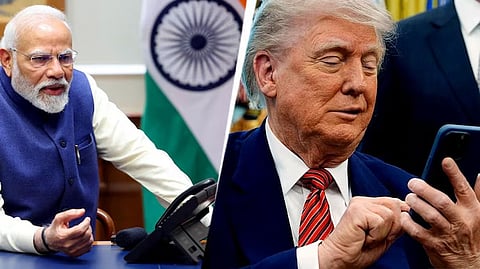
Prime Minister Narendra Modi held a telephonic conversation with US President Donald Trump on Tuesday to discuss the escalating conflict in West Asia, with the critical Strait of Hormuz at the centre of both diplomatic and energy security concerns.
The call came as regional tensions continue to rattle global energy markets and put pressure on key maritime shipping routes.
Also Read: Iran imposes $2 million transit fee on select ships in Strait of Hormuz
PM Modi shared details of the exchange on X, stating that India supports de-escalation and the earliest possible restoration of peace in the region.
He specifically flagged the Strait of Hormuz — the narrow waterway through which a significant share of the world's oil and gas passes — as a global concern, saying keeping it "open, secure and accessible is essential for the whole world."
US envoy Sergio Gor confirmed the call, noting it covered the ongoing situation in the region, including the importance of keeping the strait open for international shipping.
The Modi-Trump call followed signals from Washington of a potential easing of tensions between the US and Iran.
Trump indicated on Monday that his administration was engaged in what he described as "productive" talks with Tehran. He also extended his deadline for potential strikes on Iranian power plants by five days, citing Iran's position over the Strait of Hormuz as a key factor.
Iranian officials claimed Trump had backed down following firm warnings from Tehran, though internal messaging from Iran remains cautious. Reports suggest Tehran has received points from the US through intermediaries and is reviewing them.
Speaking in Parliament on Tuesday, PM Modi outlined India's active engagement with all sides in the conflict.
He said he has held two rounds of phone calls with heads of state across West Asia since the war began, and that India remains in continuous contact with Gulf nations, Iran, Israel, and the United States.
Modi also stressed that India is using its diplomatic relationships to protect Indian ships operating in the region, and reiterated that the safety of the Indian community in West Asia remains a top priority for New Delhi.
In a significant operational development, two Indian LPG carriers — Jag Vasant and Pine Gas — have successfully transited the Strait of Hormuz.
The vessels were carrying a combined cargo of 92,612.59 MT of LPG, with 33 and 27 Indian seafarers onboard respectively. The Union Government confirmed both ships are expected to reach Indian shores within 48 hours of Monday.
The two tankers travelled in close proximity after departing the Persian Gulf on Monday morning. They were part of a group of 22 Indian-flagged vessels that had been stranded in the region following the conflict's escalation.
Their transit follows the earlier safe return of MT Shivalik and MT Nanda Devi, which carried approximately 92,712 tonnes of LPG — described by officials as roughly equivalent to a full day's cooking gas consumption across India.
Rajesh Sinha, Special Secretary in the Ministry of Shipping, dismissed concerns over transit rights through the strait, clarifying that it is an international waterway requiring no permission from any state to pass through — though situational safety assessments remain necessary.
He confirmed that securing safe passage for all stranded Indian vessels in the region remains the government's priority.
