
- Home
- Live Blog
- Breaking News
- Top Headlines
- Cities
- NE News
- Sentinel Media
- Sports
- Education
- Jobs
WITH EYES WIDE OPEN
D. N. Bezboruah
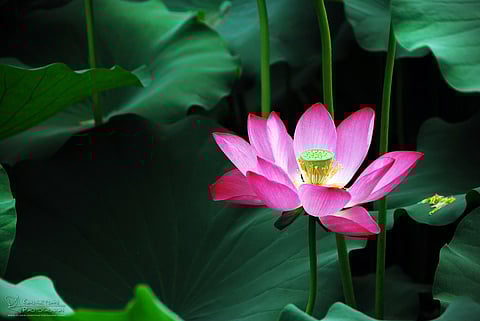
Apart from being a passage in the Odyssey, perhaps it was Tennyson who first used the expression lotus-eaters. I am not quite sure. Does it really matter very much? What does matter perhaps is that such a beautiful expression should have been used to refer to a breed of indulgent people who think no end of themselves mainly because of what they can get away with. And what is it that they can get away with? That is precisely what I intend to talk about: what they can get away with, how unfair this is for any society and how we have tolerated an undesirable gesture of tolerance for generations. The expression lotus-eater means a person who gives indulgence to pleasure and luxury. And can one really help talking about them in a State like Assam where lotus-eaters abound in the upper echelons of our administration and are seen as the people who really matter because they take all the important decisions of the State—including their status.
The crucial difference between the lotus-eater and the ideal citizen is actually based on their attitude to work. The ideal citizen believes in hard, honest and purposeful work and its importance for a developing society. In Assam, the good citizen is dejected to find that real, purposeful work gets rarer and rarer as one goes up higher in the administrative ladder. Up there at the top, all that is needed in Assam is a lot of talk about work and the creation of institutions that are designed to promote and develop skills. Tonnes of paper are wasted on producing seminar papers on work or skills that nobody is ever going to read. There is very little that is geared to the generation and completion of productive work that is undeniably important for any society. This is best seen in the output and worthwhile achievements of our various government departments. In fact, we now have a situation where any dedicated worker in any government department is viewed as an adversary because his work might be held up as some kind of an example by an ‘over-enthusiastic’ departmental boss and might lead to the expectation of similar work by other individuals as well. This would be a disaster, considering how much planning, scheming and conniving over the years has gone into securing the El Dorado (literally, the ‘gilded one’, but meaning ‘a place of great abundance and wealth’) that ensures influential people hefty salaries with practically no work. I am not aware of how many countries in the world have managed to achieve this, but I know that there are a substantial number of them both in Africa and South America. And I have no doubts in my mind that senior bureaucrats of Assam can teach bureaucrats of these countries a thing or two about how to do little and earn more by improving the gift of the gab. What is indeed astonishing is that the Centre has been able to do so little in disciplining the administration in Assam in getting senior officers to pull up their socks and deliver some productive work instead of mere seminar papers.
Assam is generally regarded as an agricultural State mainly because there is so little to talk about its other areas of development. This is not to suggest, even remotely, that Assam is still an agricultural State. It has ceased to demonstrate any remarkable development even in the realm of agriculture. This drawback can be attributed to the failure of the State in respect of irrigation. For years together, the Department of Irrigation has failed miserably in its task of providing irrigation in the State. According to documents provided by the Irrigation Department, the department’s irrigation potential is put at 804,335 hectares of land. However, it continues to miss realization of its full potential by colossal margins every year. In 2016-17, the department was able to irrigate only 227,822 hectares of land against its irrigation potential of 804,335 hectares. In other words, its performance turned out to be just 28.32 per cent, or less than a third of the department’s full potential. The worst performance of the department was in Dhemaji district where only 1.25 per cent of the arable land had been covered under irrigation. Other districts where the department had also fared badly are Karimganj (1.29 per cent), Dhubri (1.33 per cent), Dibrugarh (1.44 per cent), Jorhat (2.29 per cent), Nalbari (3.05 per cent), Lakhimpur (4.73 per cent), Morigaon (4.75 per cent), Golaghat (5.21 per cent), Tinsukia (5.45 per cent), Hailakandi (5.57 per cent), Cachar (6.01 per cent) and Sivasagar (7.47 per cent). The department is reported to have as many as 3,033 irrigation projects/schemes and only 20 of them are major/medium ones. The remaining 3013 projects and schemes are minor ones. It is important for our readers to see for themselves how the best performance in respect of irrigation in a so-called agricultural State like Assam is only 7.47 per cent (even in an advanced district like Sivasagar). The composite picture is that no district is really interested in irrigation any more, regardless of the outcome of such lack of interest for the development of the State. This sad aspect of the development activities of the State (especially in respect of irrigation) clearly indicates that neither the political executive nor the bureaucracy is keen on revitalizing irrigation in the State. And yet we cannot run away from the fact that efficient irrigation alone will ensure that the full potential of Assam’s agriculture is realized. This has become very important at a time when Assam Chief Minister Sarbananda Sonowal is contemplating the doubling of the agricultural potential of Assam in the next three or four years.
What has suddenly become very important for senior bureaucrats is finding ways of ensuring that they can continue with their accustomed style of functioning and yet ensure that their jobs, status and manipulative abilities in service remain unaffected. This is an irrational expectation in an administrative culture where the change to constantly improved performance is beginning to be far more important for survival than it ever was. In the days to come, the terms for survival in the system are going to get even tougher. There is going to be less tolerance for lotus-eaters with the gift of the gab than we have hitherto encountered. This change is precisely what the people of the State need and what is good for the system. What it does to the colourful lotus-eater is something that will be observed with keen interest. But the high degree of irrational tolerance for the lotus-eater that we have experienced over the years is likely to become an aberration of the past. We must await the passing of the lotus-eater with trumpets and drums. And we must make sure that he has no way of returning.