
- Home
- Live Blog
- Breaking News
- Top Headlines
- Cities
- NE News
- Sentinel Media
- Sports
- Education
- Jobs
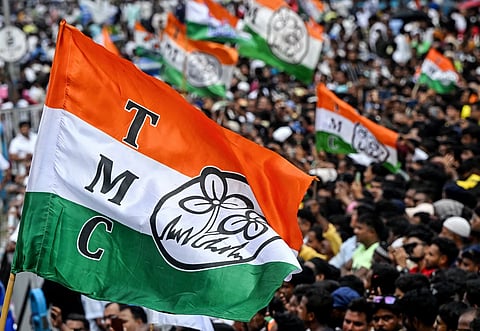
Guwahati: The political tremors shaking the Trinamool Congress (TMC) in its bastion of West Bengal are now being felt in neighbouring Assam. The resignation of Rajya Sabha MP Sushmita Dev from the TMC and growing speculation about her possible entry into the Bharatiya Janata Party (BJP) point towards a significant realignment of political loyalties in the state.
The daughter of late Santosh Mohan Dev, one of the tallest political figures to emerge from Assam's Barak Valley, Sushmita Dev's political trajectory over the past few years has mirrored the fluid nature of contemporary politics. Having left the Congress in 2021 to join Mamata Banerjee's TMC amid much fanfare, she now appears poised for yet another shift, this time towards the BJP.
Her political lineage carries considerable weight in Assam. Santosh Mohan Dev, a former Union Minister and Congress stalwart, commanded immense influence in the Barak Valley and was regarded as one of the region's most powerful political voices. Such was his stature that political folklore in Assam recounts how, during his ministerial tenure, he would often fly directly from Kolkata to Silchar, bypassing Guwahati altogether—a symbolic reflection of the distinct political identity that the Barak Valley maintained from the Brahmaputra Valley.
Historically, the two valleys have shared a complex relationship shaped by linguistic, cultural and political differences. While leaders on both sides sought to bridge the divide, competing regional aspirations often widened the gulf. Critics argue that Sushmita Dev, during her years in opposition politics, occasionally reinforced these distinctions by positioning herself as a voice independent of what many in Barak Valley perceived as Guwahati-centric politics.
Yet politics, as always, is a story of evolving equations.
In recent months, Dev's tone towards Assam Chief Minister Himanta Biswa Sarma has undergone a noticeable transformation. The sharp criticism that once characterised her political engagements has given way to praise for the BJP government's developmental initiatives. Such a shift has only strengthened speculation that she is preparing for a new political chapter within the ruling party.
If the move materialises, it would represent more than just the defection of a prominent leader. It would symbolise the changing nature of Assam's political landscape, where old ideological boundaries and regional divides are increasingly giving way to political pragmatism and electoral calculations.
For the BJP, the induction of a leader with deep roots in the Barak Valley could further strengthen its hold over a region that plays a crucial role in Assam's electoral arithmetic. For Sushmita Dev, it would mark yet another reinvention in a career that has witnessed multiple political transitions.
Whether her possible move to the BJP helps narrow the historical distance between the Barak and Brahmaputra valleys remains to be seen. Political symbolism alone cannot erase decades of regional sentiment. However, her journey from Congress to TMC and now potentially to the BJP underscores a timeless truth about politics: there are rarely permanent friends or permanent enemies—only shifting interests and changing alignments.
As Assam heads towards another crucial electoral cycle, Sushmita Dev's next move may well become a defining marker of the state's evolving political narrative and the continuing consolidation of power around Guwahati's political centre.
