
- Home
- Live Blog
- Breaking News
- Top Headlines
- Cities
- NE News
- Sentinel Media
- Sports
- Education
- Jobs
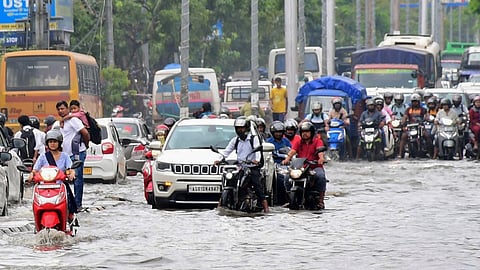
Guwahati: Nearly 16,000 people were affected by severe urban flooding across Guwahati during April 19–20.
According to the Assam State Disaster Management Authority, the floods impacted two key revenue circles—Guwahati and Dispur—within Kamrup (Metro) district. A total of 11 villages and several urban wards were inundated, with nine villages under Guwahati circle and two under Dispur reporting significant flooding.
Several low-lying and densely populated localities, including Ulubari, Maligaon, Bamunimaidan and Rukminigaon, bore the brunt of the waterlogging, with streets turning into stagnant pools and disrupting normal life.
Residents reported water entering homes, halting traffic movement, and affecting essential services.
The ASDMA report stated that 15,900 people were affected by the deluge, comprising 8,500 males, 4,700 females and 2,700 children. Authorities also confirmed one fatality during the period, though details surrounding the incident remain limited.
The sudden flooding, triggered by intense pre-monsoon showers, has once again brought into focus Guwahati’s long-standing urban planning challenges.
Rapid and often unregulated urban expansion, encroachment on natural wetlands, and an overburdened drainage network have compounded the city’s susceptibility to flash floods.
Civic authorities and disaster response teams were deployed to the worst-hit areas, working to clear clogged drains and assist affected residents.
However, recurring incidents of urban flooding have led to growing public frustration, with many questioning the effectiveness of mitigation measures despite repeated warnings over the years.
With the monsoon season approaching, concerns are mounting over the city’s preparedness to handle more intense and prolonged spells of rainfall, raising the urgency for sustainable urban planning and robust flood management systems.
