
- Home
- Live Blog
- Breaking News
- Top Headlines
- Cities
- NE News
- Sentinel Media
- Sports
- Education
- Jobs
STAFF REPORTER
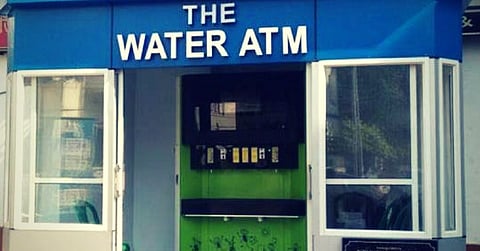
GUWAHATI: The water ATM project launched under the Guwahati Smart City initiative to provide affordable and safe drinking water in public places has largely failed to serve its purpose, with several units across the city now lying defunct, damaged, or abandoned.
The project included installation of 20 water ATM units in areas such as Bhangagarh, Chandmari, Dighalipukhuri, Fancy Bazaar, Nabagraha, Jail Road, Lachit Nagar, Kalakshetra and Sarania Hills.
Each machine was equipped with a 2,000-litre raw water storage tank, a 250-litre treated water tank, and purification systems based on reverse osmosis and UV technology to provide safe drinking water as per prescribed standards. The units were designed to dispense water in quantities ranging from 250 millilitres to 20 litres at affordable prices.
Despite the infrastructure being put in place, many of the machines today remain locked or non-operational. In several locations, the facilities have reportedly fallen into neglect, leaving commuters and residents without the service that had been promised under the smart city vision.
Residents in Sarania Hills said they had initially welcomed the installation of the water ATM, expecting it would become a reliable source of purified drinking water in the locality. However, the machine reportedly stopped functioning after a brief period and has remained unusable since then.
Expressing disappointment, a resident of Chandmari said, “The government spent money to install these machines, but now most of them are not working. It feels like another public project that started with promises but ended without proper maintenance.”
A daily commuter near Dighalipukhuri said, “During summer, people need safe drinking water in public places. Instead of helping citizens, these machines are standing idle and collecting dust. Authorities should either repair them properly or remove them.”
Another resident from Lachit Nagar criticised the condition of the project and said, “The idea behind the water ATMs was actually good, but there has been no follow-up. A smart city project should benefit the public continuously, not become useless after a few months.” A senior official from Guwahati Smart City Limited admitted that the project faced operational challenges due to low public usage and weak revenue generation.
“Out of the 20 water ATM units installed, 11 were repaired. These machines had a one-year warranty period and a three-year maintenance responsibility,” the official said.
Officials further acknowledged that poor revenue recovery affected the long-term sustainability of the project, making maintenance difficult over time.
With several units remaining non-functional across prominent public areas, the condition of the water ATMs has now raised concerns over the execution and upkeep of urban infrastructure projects implemented under the Smart City programme in Guwahati.
