
- Home
- Live Blog
- Breaking News
- Top Headlines
- Cities
- NE News
- Sentinel Media
- Sports
- Education
- Jobs
STAFF REPORTER
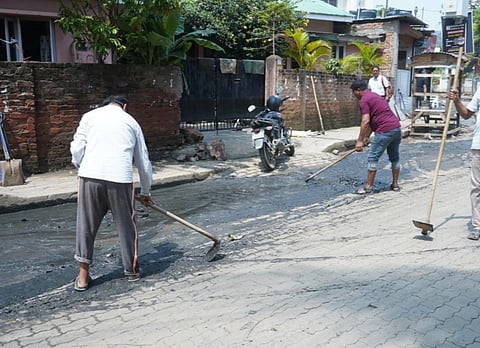
GUWAHATI — The Guwahati Municipal Corporation (GMC) has launched cleanliness and disinfection drives across flood-affected wards in the city, with workers applying bleaching powder in waterlogged areas, clearing debris, and spraying disinfectants to reduce disease risk and foul odour.
Officials said the initiative was aimed at curbing the spread of illness and improving sanitation in localities still recovering from days of stagnant water following the April 19 flooding.
But for many residents, the response has arrived too late — and addresses too little.
The frustration on the ground is palpable.
"This should have been done immediately after the flooding began. What is the use of acting now when the damage is already done?" said one agitated resident from an affected area.
Others pointed to the familiar cycle of crisis and inadequate response. "Every year we face the same situation. Cleaning now is just a temporary fix — where is the long-term solution?" said another local.
A third resident cut to the core of the issue: "Applying bleaching powder now will not solve the bigger problem. Authorities need to fix the drainage system instead of reacting after the crisis."
Also Read: Property tax payment deadline extended till April 2
The post-flood disinfection drive, while necessary as an immediate public health measure, has once again shone a light on Guwahati's persistent failure to build urban infrastructure that prevents flooding in the first place.
Residents are not asking for more bleaching powder — they are asking for drainage systems that work, planning that anticipates monsoon rainfall, and accountability from the agencies responsible for the city's waterways.
GMC has urged citizens to cooperate with field teams and maintain cleanliness in their surroundings. That appeal, for many, rings hollow until the deeper infrastructure failures are addressed.
