
- Home
- Live Blog
- Breaking News
- Top Headlines
- Cities
- NE News
- Sentinel Media
- Sports
- Education
- Jobs
STAFF REPORTER
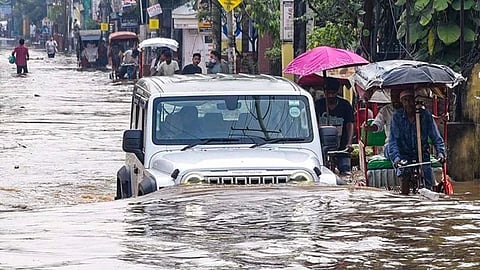
GUWAHATI: Thirty minutes of heavy rain is enough to expose how ill-prepared Guwahati remains to handle its own growth. Roads turn into waterways, traffic grinds to a halt, homes and shops are inundated and commuters are stranded - raising serious questions over the city's claim of becoming a "Smart City" while its basic storm-water drainage system remains inadequate.
The recurring waterlogging is no longer merely a monsoon problem. It is increasingly becoming a sign of a deeper urban planning failure, with Guwahati expanding rapidly through flyovers, widened roads, elevated corridors and dense construction without a drainage network capable of keeping pace.
Now, the Assam Government has directed consultants to revise the proposed Comprehensive Drainage Master Plan and the Detailed Project Report for the Bahini-Bharalu Basin, citing the need to plug gaps and strengthen measures to tackle chronic waterlogging.
But the move also brings an uncomfortable question to the forefront: why is Guwahati still struggling to drain rainwater after decades of urban expansion and repeated anti-flood projects?
Sources in Dispur point to unplanned development and infrastructure expansion as major hurdles, with roads, flyovers and new settlements often being developed without a sufficiently integrated assessment of the city's natural drainage channels and water-flow patterns.
The result is a city that is building faster than it can drain.
Also Read: Heavy rain floods Guwahati; Zoo wall collapses; schools shut
