
- Home
- Live Blog
- Breaking News
- Top Headlines
- Cities
- NE News
- Sentinel Media
- Sports
- Education
- Jobs
STAFF REPORTER
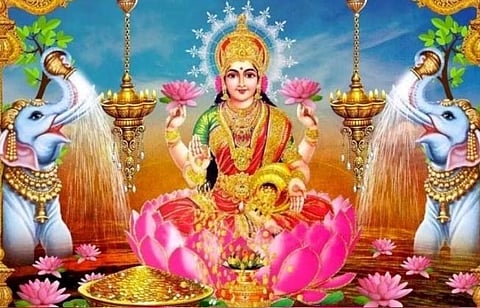
GUWAHATI: Assam celebrated Sri Sri Lakshmi Puja on Sunday with religious fervour and devotion, as temples and community prayer venues across the state witnessed gatherings of devotees seeking the blessings of Goddess Lakshmi, the deity of wealth and prosperity.
Chief Minister Dr Himanta Biswa Sarma extended his wishes on X, saying, "On this auspicious occasion of Lakshmi Puja, I pray to Maa Lakshmi to bless every household in Assam with happiness, peace and prosperity. May no home be short of hope, no family be short of opportunities, and may our beloved Assam continue to flourish." From Majuli to Nazira, Teok, Nalbari, Mangaldai and Guwahati, people marked the occasion with prayers and traditional rituals, seeking wealth, prosperity, happiness and peace. In Upper Barpamua village under Jengraimukh in Majuli, residents organised Lakshmi Puja collectively. As part of the celebrations, villagers lit 101 earthen lamps in a field and offered prayers to the goddess.
In Doulbagan under Nazira in Sivasagar district, a devotional atmosphere prevailed at the local Maa Lakshmi temple, where young men and women came together to organise the puja with enthusiasm and religious fervour.
At Majgaon Namghar in Teok, women gathered to worship Goddess Lakshmi. In Gandhia village in Nalbari district, the three-day Lakshmi Puja celebrations attracted devotees. In Guwahati, devotees thronged the Lakshmi temple in Beltola. Special arrangements were also made at the Lakshmi Narayan Temple in Krishnapur, Beltola, where conch shells, cymbals and traditional drums accompanied devotional hymns in praise of the goddess. In Mangaldai, the Baruwapara Lakshmi Temple also organised special worship on the occasion.
Markets across Guwahati and other parts of the state witnessed demand for traditional puja items, including paddy, earthen lamps, coconuts and idols of Goddess Lakshmi, as households and community organisers prepared for the festival. Meanwhile, the 135th Sri Sri Lakshmi Puja and Mela began in Bijni in western Assam on Sunday, marking the start of 14 days of devotion, music and festivities. The celebration will continue until November 7.
The annual festival is believed to have originated under the patronage of Koch king Bijit Narayan. Over the years, it has evolved into a major religious and cultural gathering for Bijni and neighbouring districts, attracting devotees, traders and visitors. Besides religious observances, the festival features cultural programmes and commercial attractions, bringing together people from different communities to celebrate the region's traditions. The annual fair remains an important part of Bijni's cultural heritage, combining religious devotion with community participation and local economic activity.
