
- Home
- Live Blog
- Breaking News
- Top Headlines
- Cities
- NE News
- Sentinel Media
- Sports
- Education
- Jobs
Assam’s global moment will find its true meaning only when its benefits are felt across villages, towns, and communities, shaping a future that is inclusive, sustainable, and dignified – Heramba Nath
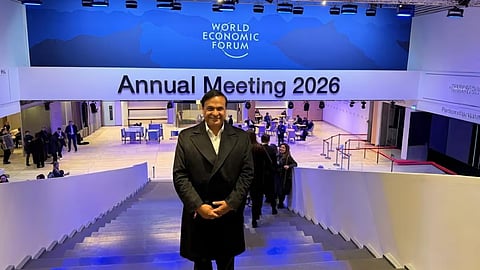
Assam Chief Minister Dr Himanta Biswa Sarma’s departure for Davos, Swit- zerland, on January 18, 2026, to attend the World Economic Forum (WEF) Annual Meeting 2026 is not merely a routine foreign visit by a state leader. It represents a significant political and economic moment for Assam, a state that for decades has struggled to find sustained visibility in global economic conversations despite its immense natural wealth, strategic location, and cultural depth. Davos, often seen as a distant symbol of global power and elite decision-making, becomes in this context a platform where Assam seeks to present its aspirations, articulate its challenges, and negotiate its place in a rapidly changing world.
The World Economic Forum has long evolved beyond a conventional conference. It is a space where global narratives are framed, where ideas about growth, governance, technology, climate, and inequality are debated and refined, and where informal conversations often shape formal outcomes. Heads of state, ministers, chief executives of multinational corporations, economists, innovators, and civil society leaders gather in Davos not merely to exchange views but to influence the direction of global economic and political thought. For a Chief Minister from India’s Northeast to participate in such a forum signals a deliberate attempt to move beyond regional constraints and engage with global currents of change.
Assam’s presence at Davos must be understood against the backdrop of its complex development story. Rich in oil, natural gas, tea, fertile land, forests, rivers, and biodiversity, the state has paradoxically remained economically underdeveloped compared to many other regions of India. Historical neglect, difficult terrain, inadequate infrastructure, political instability in earlier decades, and limited industrialisation have all contributed to this reality. For a long time, Assam and the broader Northeast were spoken of in terms of potential rather than performance. Global platforms like WEF offer an opportunity to challenge this narrative and to present Assam as a state that is ready to convert potential into progress.
Dr Himanta Biswa Sarma has demonstrated assertive governance, rapid administrative action, and a strong emphasis on projecting Assam as a state undergoing transformation. His visit to Davos aligns with this broader political approach. In recent years, the Assam government has highlighted initiatives aimed at improving infrastructure, strengthening law and order, simplifying administrative procedures, and attracting investment. Roads, bridges, airports, medical colleges, and urban development projects have been showcased as symbols of a changing Assam. At Davos, these narratives gain global exposure, allowing the state to speak directly to international investors and institutions.
Investment attraction is often the central objective of participation in global economic forums. For Assam, the need for investment is not merely about increasing capital inflows but about creating sustainable employment opportunities for its growing youth population. Agriculture and traditional sectors alone cannot absorb the aspirations of young people entering the workforce each year. Diversification into manufacturing, services, renewable energy, tourism, healthcare, and digital industries has become a necessity. Davos offers a rare opportunity to engage directly with global investors who are increasingly looking beyond traditional markets in search of new growth destinations.
However, investment decisions today are influenced by factors that go beyond fiscal incentives. Political stability, governance credibility, regulatory predictability, environmental responsibility, and social harmony play crucial roles. A chief minister’s personal engagement at WEF allows for direct dialogue on these issues, helping to build trust and confidence. Dr Sarma’s presence enables Assam to present its reform agenda not as abstract policy but as a commitment backed by political will.
Assam’s strategic geographical location further enhances the significance of this global outreach. Situated as the gateway to Northeast India and close to Southeast Asia, the state occupies a critical position in regional connectivity frameworks. As global supply chains are reconfigured and companies seek to diversify manufacturing and logistics bases, regions that offer connectivity and access to emerging markets gain importance. Assam’s proximity to Bangladesh, Bhutan, Myanmar, and the wider ASEAN region positions it as a potential hub for trade and logistics. Conversations at WEF around resilient supply chains and regional integration naturally intersect with Assam’s long-term strategic interests.
The Davos visit also carries deep relevance in the context of climate change and environmental sustainability. Assam is among India’s most climate-vulnerable states, facing recurrent floods, riverbank erosion, and ecological degradation. Climate change is not a distant concern here; it is a lived reality affecting livelihoods, agriculture, infrastructure, and public health. The World Economic Forum has increasingly focused on climate action, sustainable finance, renewable energy, and disaster resilience. Participation in these discussions allows Assam to frame its environmental challenges within a global context and to seek partnerships that support adaptation and mitigation without compromising development goals.
Tourism is another sector where global engagement can have a long-term impact. Assam’s wildlife sanctuaries, national parks, rivers, tea gardens, and cultural heritage offer immense potential for sustainable tourism. Yet, this potential remains underutilized on the global stage. Davos provides an opportunity to present Assam as a destination that offers authentic experiences rooted in nature and culture, while emphasising responsible and community-based tourism models. Such an approach can generate employment while preserving ecological and cultural integrity.
Beyond economics and environment, the visit also has symbolic and psychological significance. For many in Assam, the region has long felt marginalized within national and global narratives. The image of their Chief Minister participating in a global forum of leaders and decision-makers can instill a sense of pride and belonging. It sends a message that Assam is no longer content to remain at the margins but seeks to engage confidently with the world.
At the same time, international visits often invite scepticism. Critics question whether such engagements yield tangible outcomes or merely generate publicity. This scepticism serves as an important reminder that global exposure must be matched by local delivery. The real value of a Davos visit lies not in speeches or photographs but in outcomes measured over time. Investment proposals must translate into projects on the ground. Policy dialogues must result in reforms that improve everyday life. Transparency in sharing outcomes and accountability in implementation are essential to maintain public trust.
Dr Himanta Biswa Sarma’s visit also reflects a broader transformation in India’s federal dynamics. Economic diplomacy is no longer the exclusive domain of the Union government. States are increasingly recognised as active actors in attracting investment, fostering innovation, and shaping development strategies. Assam’s participation at WEF underscores this shift towards cooperative federalism, where states complement national efforts by engaging directly with global stakeholders.
The political implications of such global engagement are equally significant. International visibility can enhance a leader’s stature and reinforce a narrative of development-orientated governance. However, it also raises expectations among citizens. When global partnerships and investments are discussed, people expect improvements in infrastructure, healthcare, education, employment, and social security. Global ambition must therefore remain grounded in local realities.
Inclusivity remains a critical concern in Assam’s development journey. Economic growth driven by investment must benefit rural communities, indigenous groups, tea garden workers, and marginalized sections of society. Development strategies discussed at global forums must be adapted to Assam’s unique social and cultural context. Growth that excludes or displaces vulnerable communities risks undermining social harmony and long-term sustainability.
For Assam’s youth, the Davos visit holds particular importance. A young population represents both potential and pressure. Without adequate opportunities, migration becomes a compulsion rather than a choice. International investment, technology partnerships, and skill development initiatives discussed at WEF have the potential to create ecosystems that retain talent within the state. The challenge lies in ensuring that these opportunities are accessible and aligned with local needs and capacities.
The visit also intersects with India’s broader global narrative. As India positions itself as a major economic power, balanced regional development becomes crucial. Assam’s engagement at Davos contributes to this national narrative by highlighting the role of regions that were once considered peripheral. It reinforces the idea that India’s growth story is incomplete without the progress of its northeastern states.
Cultural identity forms another subtle yet important dimension of global engagement. Assam’s literature, music, festivals, and traditions constitute a rich cultural heritage that complements its economic potential. While WEF is primarily an economic forum, it also offers opportunities to project soft power. Presenting Assam as a state with a strong cultural soul alongside economic ambition can enhance its global appeal.
The global context in which WEF 2026 is being held further underscores the relevance of Assam’s participation. The world is grappling with geopolitical tensions, technological disruption, economic uncertainty, and climate crises. Regions that demonstrate adaptability, clarity of vision, and governance stability are likely to attract attention and investment. Assam’s engagement at Davos reflects an attempt to align its development trajectory with these global realities.
Ultimately, Dr Himanta Biswa Sarma’s participation in the World Economic Forum Annual Meeting 2026 represents a convergence of aspiration, opportunity, and responsibility. It is a moment where Assam seeks to connect its local strengths with global possibilities, to learn from international experiences, and to present itself as a serious and reliable partner in the global economy.
The true test of this global outreach will unfold in the months and years ahead. Investments realised, partnerships implemented, policies refined, and livelihoods improved will determine whether Davos marks a turning point or remains a symbolic milestone. For the people of Assam, the hope is that this global engagement translates into tangible progress on the ground, strengthening infrastructure, creating employment, improving public services, and enhancing environmental resilience.
In bridging Dispur and Davos, Assam signals a desire to move beyond historical limitations and to participate actively in shaping its future. The challenge lies in ensuring that global ambition strengthens local realities, grounding international engagement in the everyday lives of ordinary citizens. Davos, in this sense, is not an end in itself but a beginning, a space where conversations start and responsibilities deepen. Assam’s global moment will find its true meaning only when its benefits are felt across villages, towns, and communities, shaping a future that is inclusive, sustainable, and dignified.
(The writer can be reached at herambanath2222@gmail.com.)
