
- Home
- Live Blog
- Breaking News
- Top Headlines
- Cities
- NE News
- Sentinel Media
- Sports
- Education
- Jobs
Sabir Nishat
(sabirnishat554@gmail.com)
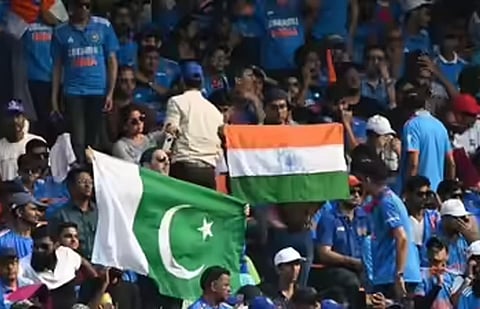
The controversy surrounding Pakistan’s reported reluctance to play India in the ICC T20 World Cup has once again brought cricket to an uncomfortable crossroads. What should have been a celebration of the shortest and most vibrant format of the game now risks being overshadowed by political posturing, selective participation, and uncertainty that hurts not just marquee teams but the global cricketing ecosystem as a whole.
At the heart of the issue lies a simple but fundamental question: should international sport be held hostage to politics?
A dangerous precedent
By signalling that it may play some group matches while avoiding the India fixture, the Pakistan Cricket Board risks opening the door to a precedent that international cricket can ill afford. Tournaments are built on the principle that all qualified teams agree to play all scheduled matches under a common set of rules. Once selective participation is normalised, the credibility of global competitions begins to erode.
Cricket has always existed in a politically sensitive space, particularly in South Asia. Yet, for decades, administrators have attempted — often imperfectly — to insulate the sport from diplomatic tensions. Allowing a team to opt out of a specific match without withdrawing from the tournament altogether undermines that effort and introduces a grey area that will be difficult to police in the future.
Why consistency from
the ICC matters
The spotlight now firmly rests on the International Cricket Council. The ICC’s authority depends not just on its regulations but also on how consistently they are applied. In recent times, the governing body has taken a tough stance when teams have sought to avoid fixtures for reasons that go beyond verifiable security concerns. That approach, whether popular or not, created an expectation of uniform enforcement.
If the ICC hesitates now, it risks sending out a damaging message — that some boards are subject to strict discipline while others can negotiate exceptions. Such an outcome would weaken the institution at a time when it needs to be stronger than ever, especially as cricket expands into new markets and formats.
Keep sport separate
from state politics
Cricket boards are sporting bodies, not foreign ministries. While governments may influence decision-making, tournaments like the T20 World Cup are governed by sporting logic, commercial commitments, and the interests of players and fans. Using a global sporting event to make political points rarely produces winners; instead, it burdens players with pressures they should not have to carry and deprives supporters of contests they eagerly anticipate.
India-Pakistan matches, in particular, are among the most watched sporting events in the world. Their importance goes beyond rivalry; they underpin broadcast revenues that sustain international cricket, including funding for associate nations. Undermining such fixtures has consequences far beyond the two teams involved.
The Bangladesh example
and the need for parity
The ICC’s earlier handling of Bangladesh’s reluctance to participate under altered conditions demonstrated a willingness to prioritise tournament integrity over accommodation. That decision was controversial, but it was rooted in the belief that once a competition begins, the schedule cannot be reshaped at will.
Applying a different standard now would invite accusations of double standards. For the ICC, the issue is no longer just about one match — it is about defending the principle that international competitions operate on equal obligations for all participants.
Why smaller nations
are watching closely
While attention naturally gravitates towards heavyweights like India and Pakistan, the fallout from uncertainty often hits smaller nations hardest. Teams such as Scotland, which fight for limited spots on the global stage, rely on clarity and stability in tournament structures.
Strict enforcement of participation rules does more than discipline errant boards — it preserves pathways for associate teams. If a full member withdraws or is sanctioned for failing to meet obligations, it can create opportunities for emerging sides to step in, compete, and gain invaluable exposure. That is how the game grows.
Commercial reality cannot
be ignored
Beyond principles and precedents lies a hard commercial truth. Global tournaments are financed by broadcasters and sponsors who invest on the assumption that scheduled matches will be played. Disruptions to marquee games place those contracts at risk and, by extension, threaten the financial model that sustains international cricket.
When revenues shrink, development programmes are often the first casualties. Grassroots cricket, women’s cricket, and associate nation funding all depend on the stability of flagship events. Allowing political considerations to derail fixtures therefore harms the very future of the sport.
What decisive action
should look like
The ICC does not need to be confrontational, but it does need to be firm. Any claim related to player safety must be assessed transparently and independently. If such concerns are validated, accommodations can and should be made. But if a refusal to play is driven by political considerations rather than genuine security risks, the response must be clear and consistent with established regulations.
That may include penalties, points forfeiture, or even replacement — outcomes that are unpleasant but necessary to protect the integrity of competition.
A moment of choice
for world cricket
The Pakistan episode has placed world cricket at a defining moment. Either the ICC reinforces the idea that sport operates above politics, or it allows selective participation to become an accepted tool of leverage. The former path may invite short-term criticism; the latter risks long-term damage.
Cricket’s greatest strength lies in its universality—the idea that once teams step onto the field, they compete under the same rules, regardless of flags or frontiers. Preserving that ideal is now the ICC’s responsibility.
If the T20 World Cup is to remain a true global spectacle, the message must be unambiguous: international cricket is not a battleground for political disputes, and no team is bigger than the game itself.
