
- Home
- Live Blog
- Breaking News
- Top Headlines
- Cities
- NE News
- Sentinel Media
- Sports
- Education
- Jobs
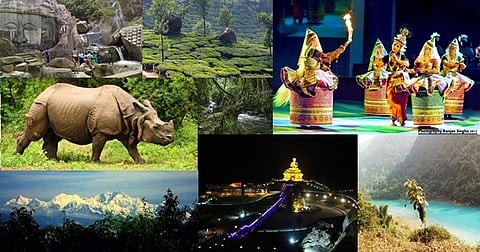
The gradual retreat of the monsoon has set the stage for a new tourism season to begin across the Northeast region. The focus has now shifted from disaster management to sustainable growth, community tourism, and industry readiness to welcome guests arriving in the region after the monsoon season ends. The record footfall in iconic tourism spots such as Kaziranga National Park and Manas National Park last year is a reminder for the park authorities to gear up for facilitating smooth visits for tourists throughout the season. The European Union’s lifting of the restrictive travel advisory for Assam is expected to boost foreign tourist arrivals to the state this tourism season, raising hopes for higher tourism revenue. The ecological fragility of the region is a constant reminder for tourism stakeholders and policymakers to keep focusing on the sustainability of tourism activities. This challenge is also an opportunity to strengthen community tourism through homestays. Homestays are a pragmatic alternative in ecologically fragile regions where establishing large hotels is not sustainable. Furthermore, the community tourism model plays a crucial role in strengthening the local economy through the creation of local livelihoods in the tourism value chain, provided the communities are prepared to tap the opportunities. Poorly maintained highways contribute to fatal road accidents; the safe travel of tourists in their favourite circuits remains a top priority for the industry. Tourism activities involving movement of domestic tourists from different states and foreign tourists from different countries require strong coordination between the central and state governments to facilitate their smooth, safe and hassle-free movement. Connectivity infrastructures such as modern airports, faster railway movement, comfortable bus rides, and reliable tourist taxi services form the backbone of tourism. While the authority and responsibility of constructing new airports, modernising existing airports, the expansion of railway networks, the construction of new highways, the expansion of existing highways and the maintenance of these assets lie with the central government, the state government plays a vital role in the acquisition of land for these infrastructure projects. The Parliamentary Standing Committee on Transport, Tourism and Culture, while dealing with the question of whether tourism is the responsibility of the Centre or the states, made a pertinent observation that tourism is neither in the Union List, the State List, nor the Concurrent List of the Constitution and is treated as a residual subject. The Committee Members believe that this situation creates inherent coordination difficulties between the Centre and the States. The Committee’s recommendation that the Tourism Ministry should prepare a comprehensive policy note, in consultation with NITI Aayog, for examining mechanisms to strengthen Centre-State coordination for tourism, including the feasibility of including tourism in the Concurrent List or establishing a statutory National Tourism Authority with defined roles, responsibilities, and enforcement powers, highlights a structural ambiguity that remains unaddressed. Strengthening Centre-State coordination may provide a realistic way for states in the region, which have limited revenues and resources for promoting tourism in global markets, to unlock their tourism potential by increasing their visibility. Ironically, despite the establishment of the North Eastern Council and the creation of the North Eastern Region Ministry aimed at promoting coordinated planning and development for the region, the adoption of a unified regional tourism strategy is still limited due to differing priorities, uneven institutional and infrastructural capacities, and a lack of integrated circuits. Overcoming this challenge can significantly boost confidence among major tourism players in the South and Southeast Asian region, encouraging them to view the entire area as an integrated market and tourism circuit. Creating seamlessly navigable tourism destinations across the region will ease the difficulties faced by tourism players who currently have to negotiate with eight different state markets for multi-state tourist circuits. In addition to stronger coordination between the central government and the states, the region also requires enhanced collaboration among the eight states to eliminate obstacles caused by the lack of uniformity in basic tourism policies related to regulating tourist accommodation, transportation, and travel regimes to establish a unified regional tourism circuit that enables each state to fully realise its tourism potential. An integrated tourism market will also help India articulate clear bilateral tourism cooperation agreements, especially with South Asian and Southeast Asian countries, focusing on the northeast region as the hub of tourism activities in the neighbourhood. In the tourism sector, private enterprises serve as the primary engine of growth, while the government’s role is primarily focused on facilitation, regulation, creating an enabling structure, and signing bilateral or multilateral tourism agreements. Therefore, private tourism stakeholders must play the primary role in creating a unified regional tourism market for the northeast by strengthening coordination. The NEC or the DoNER Ministry can enable tourism stakeholders to reach consensus and articulate policy suggestions by facilitating frequent consultations on aspects of the unified tourism market. The new tourism season brings an opportunity to explore the scope of a unified tourism strategy for the Northeast.
