
- Home
- Live Blog
- Breaking News
- Top Headlines
- Cities
- NE News
- Sentinel Media
- Sports
- Education
- Jobs
DHAKA: Bangladesh Prime Minister Tarique Rahman is unsettled by the widespread public response to recent strikes and shutdowns called by the Awami League ahead of former Prime Minister Sheikh Hasina's proposed return to the country, according to a recent report.
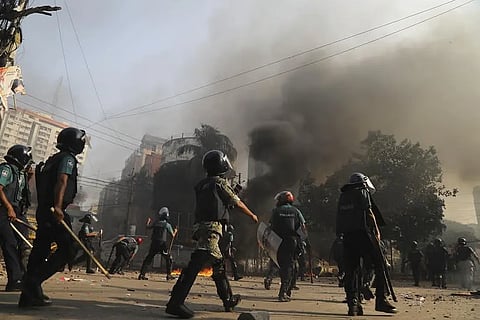
The country has witnessed renewed political unrest, including widespread violence, arson attacks, crude bomb explosions and deadly clashes, amid protests organised by supporters of ousted former Prime Minister Sheikh Hasina ahead of her planned return from exile in India.
"The Prime Minister (Tarique Rahman), barely into his ninth month in office, is clearly unnerved by the widespread public response to recent strikes and lockdowns by the Awami League ahead of their supremo's planned return to Bangladesh to face justice," Subir Bhaumik wrote in an opinion article published in Eurasia Review. According to the article, the Awami League, which remains one of the country's largest political parties, has been banned since it was removed from power in August 2024.
The interim government led by Nobel laureate Muhammad Yunus had imposed restrictions on the party's political activities, a decision that the article said went beyond the mandate of the interim administration. However, the newly elected Bangladesh Nationalist Party (BNP) government went a step further by formalising the ban through Parliament, further deepening the political confrontation, the report said. With Hasina's proposed return approaching, a development that sceptics continue to view with uncertainty, the Awami League has announced a sustained programme of protests and political agitation. According to the article, the BNP government missed an opportunity for political reconciliation that could have emerged had it lifted the ban on the Awami League. Instead, it chose a confrontational approach towards the opposition party.
The article also alleged that the BNP government had allowed its party cadres to resort to large-scale violence, citing the unrest that rocked Narail on Friday as an example. It also warned that the Awami League, which is fighting for its political survival, could retaliate with whatever means available to it. Such an escalation, the report cautioned, could push Bangladesh towards prolonged political instability, recurring violence and a state of sustained disorder, making reconciliation increasingly difficult.
Meanwhile, local media reports indicated that clashes and retaliatory attacks continued through the weekend, as tensions remained high across several parts of the country.(IANS)
Also Read: Benjamin Netanyahu’s Likud demands keeping security zones ahead of unity govt talks
