
- Home
- Live Blog
- Breaking News
- Top Headlines
- Cities
- NE News
- Sentinel Media
- Sports
- Education
- Jobs
NEW DELHI: Amid the ongoing Middle East tension, Pakistan is facing a fertiliser crisis that is exposing deep structural vulnerabilities in Pakistan’s agricultural economy, a report has said.
While Pakistan has long touted near self-sufficiency in urea production, the ongoing geopolitical disruption has highlighted its heavy reliance on imported phosphate fertilisers, particularly Di-Ammonium Phosphate (DAP), the report from Daily Mirror said.
The report said that Pakistan’s fertiliser policy has historically focused on subsidising natural gas for domestic producers, enabling large-scale urea production.
As a result, the country now meets most of its nitrogenous fertiliser demand locally. However, similar policy support was never extended to phosphate fertilisers, creating a dual system in which urea is abundant but DAP remains dependent on imports, the report stated.
DAP accounts for roughly 15–18 per cent of Pakistan’s total fertiliser consumption and is vital for key crops such as wheat, rice and cotton.
Unlike urea, its production depends on rock phosphate, a resource Pakistan lacks, the report stated.
Domestic output is largely limited to a single facility operated by Fauji Fertiliser Company at Port Qasim, which produces about 800,000 tonnes annually, far short of national demand that ranges between 1.3 million and 2.3 million tonnes, the report stated.
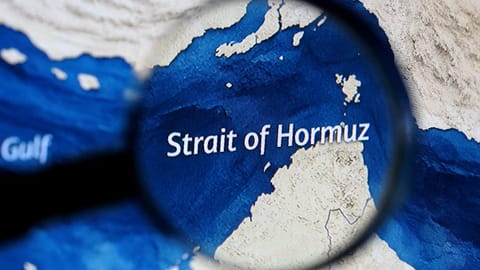
This supply gap has now collided with geopolitical realities. Nearly 20 per cent of global phosphate trade passes through the Strait of Hormuz, and its closure has disrupted shipments, pushing international DAP prices sharply higher.
For Pakistan, which imports nearly half of its requirement mainly from the Middle East, the disruption has translated into soaring costs and tightening supplies. The impact is already being felt on the ground. DAP sales dropped by 23 per cent during the October-January period of the current Rabi season as prices climbed to around Rs 14,000 per 50-kg bag. Faced with rising costs, many farmers are reducing DAP usage or substituting it with urea, a shift that experts warn is agronomically unsound, the report stated. (IANS)
Also Read: Iran releases footage of IRGC seizing cargo ships in Strait of Hormuz
