
- Home
- Live Blog
- Breaking News
- Top Headlines
- Cities
- NE News
- Sentinel Media
- Sports
- Education
- Jobs
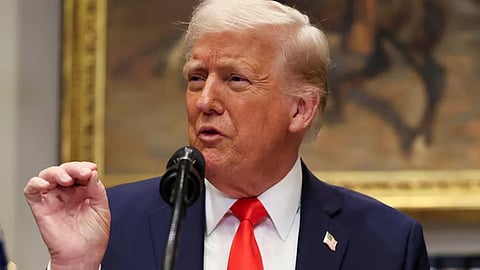
WASHINGTON: US President Donald Trump unveiled a multi-billion-dollar farm relief package while intensifying criticism of agricultural imports from India and other Asian suppliers, telling a White House roundtable that tariffs would be used aggressively to protect American producers. Opening the session with farmers, lawmakers, and top cabinet members, Trump said the administration would direct $12 billion in assistance to U.S. farmers, funded by tariff revenues collected from trading partners. He argued that countries "took advantage of us like nobody's ever seen" and framed the aid as essential to stabilizing the farm economy amid inflation and depressed commodity prices.
India featured prominently during a discussion on rice imports, which a Louisiana producer described as devastating for southern growers. Meryl Kennedy, CEO of Kennedy Rice Mill, told Trump that countries were "dumping rice into this country," identifying India, Thailand and China's shipments into Puerto Rico as major sources of subsidized imports. She urged the administration to "double down" on tariffs and noted that two of the largest U.S. retail rice brands were owned by Indian firms. Trump responded that the issue could be solved quickly with tariffs and instructed Treasury Secretary Scott Bessent to examine potential actions.
Tariffs also dominated broader conversations about global competition in soybeans and other crops. Trump said he had recently spoken with Chinese President Xi Jinping and expected significantly increased purchases of U.S. soybeans. Bessent added that the Busan framework negotiated with China included commitments for Beijing to buy at least 12 million metric tons of U.S. soybeans this season and a minimum of 25 million tons annually for the next three years. He described the $11-12 billion farm package as crucial for providing liquidity and claimed Trump was "ushering in a new golden age for agriculture."
Several farmers pressed for quicker policy action. Iowa producer Cordt Holub thanked Trump for the "bridge payment" and said ethanol policies such as E15 could strengthen domestic markets.
India-U.S. agricultural trade has grown over the past decade, though disputes over subsidies, market access and WTO cases-especially involving rice and sugar-continue to strain negotiations. China remains the largest buyer of U.S. soybeans, and Trump's renewed reliance on tariffs signals potential turbulence ahead for Asian agricultural exporters. (IANS)
Also Read: President Donald Trump outlines sweeping ‘America First’ agenda in security strategy
