
- Home
- Live Blog
- Breaking News
- Top Headlines
- Cities
- NE News
- Sentinel Media
- Sports
- Education
- Jobs
Dr. Anurag Borthakur
(anuragborthakur@yahoo.com)
The Iran-Israel-US conflict has laid bare some of the major faultlines in the geopolitical framework, exposing vulnerabilities that has hitherto remained obscured in the cacophony of rhetoric and grandstanding. The United States finds itself trapped in the much uncalled for confrontation with Iran, beleaguered by multiple forces to hammer out compromises with Iran without seeming weak or cornered. Israel inveigled the Trump administration into joining a war that had very little for the US to gain from, failing to secure any of the objectives it had set out to achieve in Iran such as regime change, elimination of Iran’s weapons grade uranium through a Venezuela styled coup.
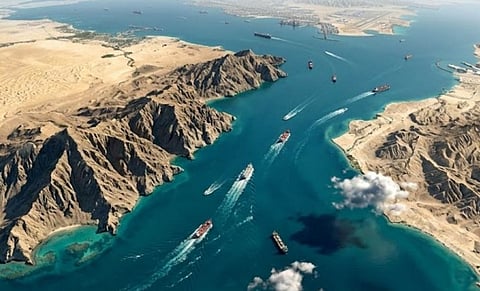
The Iran conflagration has also accentuated the need for India to adopt measures to facilitate its timely transition into electric mobility and clean energy, reducing its dependence on crude oil from West Asia. Iran’s leverage has been the “choke points” in the Strait of Hormuz through which 20 percent of global oil supplies flow, giving it enough space to wangle asymmetric strategic power. The geopolitical tension has also stripped away any complacency that India could have afforded itself in terms of the urgency for alternative sources of renewable energy, the foundations of which are built through the availability of critical minerals. India’s refining sector has proved its mettle in adapting quicky and promptly, processing “Non-Hormuz” crude oil from the Americas, the Atlantic basins, West Africa and Russia to meet the increasing demand.
The United States has little appetite now to focus on the Indo-Pacific, given the quagmire it finds itself in trying to extricate from a long-drawn conflict with Iran which has not just sapped America’s patience but also put a tremendous amount of pressure on Trump to save face and bring about its denouement. US is in a neck and neck competition with China as both nations embark on the fourth leap-techno-capitalism built around AI, advanced semi-conductors, cloud computing and biotechnology. China is deeply engaged with major economies of the Indo- Pacific region and major manufacturing supply chains remain tethered to the Chinese industry. United States has now become a little cautious not to unnecessarily provoke Beijing, having been restrained on the Taiwan issue and soft paddling the Quad as well.
India now finds itself in an increasingly complex strategic environment as other players in South Asia have sensed that India is no longer a stable anchor that could delineate the strategic space and exert the necessary heft to stave off Chinese influence in the Indo-Pacific region. United States continues to deepen defense, maritime, digital and infrastructure cooperation with South Asian countries. This strategic competition has provided countries such as Bangladesh, Nepal, Pakistan, Sri Lanka, and the Maldives with ample space for strategic hedging, enabling them to balance relations with India, the United States, and China to maximize their economic and security interests. In the 16th India-Japan Annual Summit, Japanese Prime Minister Sanae Takaichi met PM Modi while on a state visit to India reaffirming that a Free and Open Indo Pacific (FOIP) remains a shared strategic priority for both countries. The summit emphasized the importance of rule-based regional order which entails managing national and international level action as per global conventions like UNCLOS for maritime boundary disputes. The summit provided space for the two sides to enhance cooperation in priority sectors such as manufacturing, artificial intelligence, semiconductors, critical minerals, defense production and other advanced industries while creating a shared framework for coordinated response to counter any attempts of coercion in the Indo-Pacific region. Prime Minister Modi has embarked on a six-day Indo-Pacific tour where he will visit Indonesia, Australia and New Zealand to strengthen India’s strategic presence in the Indo-Pacific region. Indonesia is rich in nickel, cobalt, bauxite, tin and rare earth which are key drivers in facilitating India’s smooth transition to clean energy.
The US- Iran confrontation has had a direct impact on India’s economy as energy cooperation with Iran remains strategically important. India shares historical and cultural links with Iran and is dependent on it for energy security and regional stability. At the same time, Israel has emerged as one of India’s key strategic partners, providing advanced defence technology, military equipment, and intelligence cooperation. Israel was among the first counties to condemn the terrorist attack in Pahalgam perpetrated by Pakistan. India is now forced to navigate a complex labyrinth of diplomatic maneuvering in which India’s trade priorities with US must be weighed against its strategic calculus in West Asia. Donald Trump has criticized Prime Minister Benjamin Netanyahu on several occasions bringing to the fore political differences between the two allies in the face of shifting strategic need. America’s reputation as a security guarantor has been severely dented following attacks in its military bases in the Gulf countries. Pakistan, the world’s only nuclear armed Muslim country has tried to strengthen its diplomatic profile, having played a small albeit meaningful role in mediating the conflict between Iran, Israel and the US. Pakistan’s engagement with the United States is further underpinned by its ability to engage Sunni states (Saudi Arabia, UAE, Qatar, Kuwait, and Turkey) with Iran which is primarily a Shia state. At a time when both China and USA have strengthened their partnership with Pakistan, India’s position in the South Asian strategic space becomes challenging.
For India, the diplomatic balancing act lies in enhancing its energy security, protecting maritime interests, and forging strategic partnerships while maintaining strategic autonomy. At the same time, India’s transition towards clean energy and electric mobility must be expedited to cushion further import of the geopolitical upheavals and enhance long-term energy security.
