
- Home
- Live Blog
- Breaking News
- Top Headlines
- Cities
- NE News
- Sentinel Media
- Sports
- Education
- Jobs
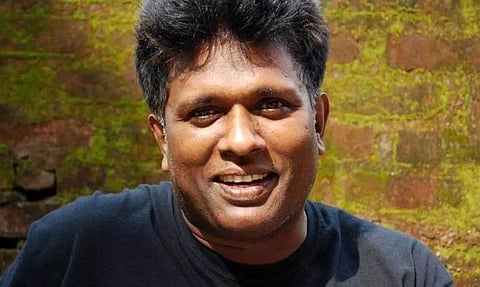
Recipient of Manohar Singh Award 2005 instituted by National School of Drama, Baharul Islam has made a mark in the theatre and film industry of Assam and Indiaportraying varied charactersin his inimitable style in more than 80 plays. He was the first actor from Assam to have enacted roles on the global stage through Tara Art of London. Baharul Islam has also written and published five books on drama. For hisSea Gull Theatrehas designed and directed more than 30 plays, the last being KissaMurgi Ka under his wife Bhagirathi's direction. A playwright and composer Baharul Islam is one of the busiest actors of our times. Excerpts from an interview:
I was born in Rongjuli in Goalpara but our family shifted to Guwahati in 1971 when my father who was a staff in the Forest department was transferred to Dispur from Shillong. In Guwahati my father was attached to the Zoological Gardens and we moved into his official quarter here from the village. Guwahati was less populated then and I grew up in its dusty alleys and lanes.
My early education was Bhaskar Vidyapeeth and Arya Vidyapeeth.I learnt about theatre music from B V Karanth and Bhaskar Chandarvakar,I met my wife Bhagirathi Bai while both of us were studying in the National School of Drama, New Delhi from 1987 to 1990. Bhagirathi is an actress and national awardee. I am a Muslim and Bhagirathi is from Karnatakaand a Hindu. We have no religious differences and respect each other's religions. Our house has a puja room where I perform puja with her and my wife also keeps roza during the holy month of Ramzan. There is no conflict. Our two daughters have not been brought up to follow any religious beliefand have their own thoughts on the subject while remaining focused on what is important in their lives. Neither of them filled in the `Religion' column in their college forms. In fact the present generation I believe is no longer swayed by politics based on religion.
My elder daughter, BarkhaBahar, is an alumnus of Christ University, Bangalorewith triple major in English, Psychology and Dramatic Arts. At present she is enrolled in the the prestigious Royal Academy of Dramatic Arts, London, This is an achievement in itself as there are only about 20-22 seats. Barkha also writes stories and composes music. We converted one of her stories, Seven Streams into a movie.
My younger daughter Jiya Bahar studied for two years on a scholarship in Seattle, USA but was forced to return due to the pandemic. At present she is studying at Christ University, Bangalore with triple major in English, Psychology and Theatre Studies. For the past thirty years my wife and I have been running Sea Gull which has five wings.
The Sea Gull Theatre was founded thirty years ago and has five wings – publishing, a workshop, a wing for special children to perform, a studio, an auditorium with stage where my wife and I have produced more than 30 plays.
I accidentally entered this field. There is no one in my family remotely connected with the Arts and Culture. It all began with the holding of Durga Puja and Lakshmi Puja at Zoo Road where we lived. At the end of the pujas, short plays were staged at the venue. I decided to participate once and enacted the role of a would be groom among several, who had gone to see a prospective bride as was the norm back in those days. The next day people recognized me-- the backbencher at Aryapeeth School -- as Baharul, who had essayed a part in a play and the people of the locality smiled and praised me. This recognition thrilled me to the core. My next foray was when Karuna Deka, a teacher of our schooland a playwright started a drama group called AbastabGushti. At that time a competition, the Jyotirupa one act competition was started by The Assam Tribune Group and our group of which I was a member, always competed in it. I won several prizes as Best actor and second. AbastabGushti also staged plays in Nalbari, Barpeta, Biswanath and other places.One play which I acted in Ghoraapaak written by Karuna Deka gave me a lot of fame. It was a seven-to-eight minute scene without dialogue in an angling scene. My talent as an actor came io fore and I could show that I was an actor who could emote in silence. At that time director PulakGogoi's daughter and my friend Antara noticed me and introduced me to her father.The natural corollary was that I entered the world of cinema– with Suruj being my fist movie in Assamese, directed by PulakGogoi.
I have also been associated with four Mobile theater groups,Bhagyadevi,Kohinoor, Meghdoot (no longer exists), Anirban for about four years. I have performed almost 1200 shows in 16 plays for Bhramyaman theatre.In 1992 I was invited to join Tara Art, an Asian drama troupe, whichregularly performed in London. The group produced the play HeerRanhja in which I enacted two roles—one being the personification of the Chenab river and the other being that of a King.
We presented the drama all over UK and in Japan. My association continued for about one year before returning home. I was the first actor from Assam to act in dramas abroad.
I have received the Manohar Singh Award in 2005. The award was instituted by the National School of Drama and approved by the Ministry of Culture, government of India for path-breaking work in theatre. Some of the other awards I have received are Sanskriti Samman from Eka EbongKoekjonPublication, Guwahati,Natyaprobor Award from SharadakantaBordoloiSmriti Committee, Nagaon in 2011, BishnuBasu Smriti Samman by Bratyajon theatre, Kolkata in 2012 and Badal Sircar Rang Ratan Award 2015 from FACT Rang Mahoul,Begusarai, Bihar. Other awards include HarishankarParsaiRashtriya Rang Samman 2016 by Vibechana Rang Mandal, Jabalpur, MP, Habib Tanvir Ras Rang Samman 2016 from Ras Kala Manch, Rohtak, NatyaratnaUgra Mena Award 2017 from Ankuran, Assam and NatasuryaPhani Sharma National Award 2017 from National Performing Art Association of India.
Yes, I do. Mobile theatre has a vibrant future. Of course, they will have to equip themselves with modern technology and present plays which the upcoming generation can relate to. They are doing a good job by way of entertainment but I feel that mobile theatre is loud.They have to change.
Theatre is my priority. In drama the acting is in the present in front of an audience watching you live. There are no retakes. In films and teleserials you can have as many retakes and perfect the act. Dialogues can also be said in different tones and then the director has the option of selecting the best delivered one. In theatre there are no props or special effects like applying vicks to ensure that the tears fall. It is emotion all the way, Of course acting is of importance in both but the glamour quotient is more forcine actors whose skills may be minimal but are endowed with beauty or oomph. In cinema a dumb post can also achieve superstar heights. In theatre it is acting and emoting which is all important that is why it is more challenging and tougher. Theatre also has no fixed notation and it depends on mood,time,situation audience and ambience. The same play andsame dialogue may be presented differently ondifferent days by an actor, depending on all these factors.
Naseeruddin Shah said that he went to London to do a small part in a play directed by Peter Brooks so that he could remain connected to the actor in him.
Theatre actors remain more grounded, more mentally and physically fit.
All my roles are memorable but if I were to pick only one that would be the character of Nibaran in Arun Sharma's play of the same name, `Nibaran Bhattacharya'.Nibaran is a theatre artist who had seen his heydays but he had to perform on his 60th birthday. When the character comes on stage he finds the hall empty of an audience. Nobody wanted to see an ageing and has been actor. Nibaran, however, enacts his part and says whatever he has to say. I could feeland hear the crying and tears rolling down the eyes and hear the sniffles of the audience as I spoke Nibaran's monologue that night on stage in a theatre in Jorhat. It was a heart to heart communication. It was my most memorable performance till date. Another was when a Vice Chancellor in Ujjain come an praised me after my performance in Anton Chekov's play The Boring Story. a festival in Ujjain
One of the challenges is that there is no suchconcept as theatre economy in the minds of the people nor the government. There is no department dedicated to theatre like PWD, Health or any other. We arenot encouraged nor supported, as this is also a challenge for the government because itthinks that if it supports theartsand theatre, the shows presented may be against the government.
Apart from the economic aspect there is the bigger challenge being faced by those who write for theatre in the true sense,those who do theatre for society, for the bright future of the nation will always present a true picture of the happenings around them -- hold up the truth. We talk about our roots --jaati, maatibheti-- buthow much do we give to our roots and traditions and how much to the corporate sector. Culturally no growth -- how much do we see programmes on TV and radio on classical songs and dance.
In fact,we are being diverted from our roots. Of late the arts, theatre, movies – the creative people, journalists and intellectuals -- have all fallen silent. But in silence also there is power.
We are being diverted from our roots by the divisive and other diversionary tactics in the name of religion and other policies of the present political dispensation running this country.
I am not talking about diplomacy. I question myself that as a theatre artist if I feel suffocated then in what way should I react, I cannot remain blind to the goings on around me, bypass the issues in society nor remain a silent spectator -- and this is what I am attempting to bring out.
And herein lies another challenge for the theatre and film industry-- that of not upsetting the powers that be so that we do not face harassment and bringing in audience that is fearless and on who we are dependent.
I like to play all types of all roles but prefer the realistic ones over those based on folk themes. I like Guwahati's urban pollution, urban mentality, urban corruption, urban pace, all of which are deeply ingrained in me. Ilike to discover the multiple faces in the town.If I am put in the darkness of a rural milieu I will not be comfortable. I like to explore the complexities of situations and characters. The realistic approach and realism is what I thrive on.
The so called rhythmic folk theatre-- black and white characters, I don't like much. People and characters should have multiple identities,. From morning till night I perform all the time wearing different masks which I take off only when I go to bed. We all wear masks and adopt different identities,
I have published five books -- AkantoMonere, Simar Sipare, Beyond the Obvious and KhirikiKhuliyei These four books have been published by Seagull Theatre Publication wing. Another book Kisu KathaKisu Natak -- a collection of six plays and their production processes, has been published by Publication Board of Assam, government of Assam in 2012.I write regularly in Satsori.
As a film actor I have acted in films made in different Indian languages. Suruj directed by PulakGogoi is my first film in Assamese. I have acted in Sangkalpadirected by Hem Bora, BhaiBhaidirected by Biju Phukan, Pita Putra, Nayak, Barood, Dinobandhudirected by Munin Baruah, RongaModar by Timothy Hanse, AntheenJatradirected by Munna Ahmed, Raktbeez, Ezakjonakirjilmil, Bahnimaan, Phehujali directed by Biswajit Bora and in Hindi I have played a part in `83 directed by Kabir Khan and Bhediya directed by Amar Kaushik; in Kannada films I have acted in Hoomale directed by NagathihelliChandrashekhar and in Kotta directed by M S Satthyu. The Bengali movies are Alifa directed by Deep Choudhury, Five Days with A Terroristby Arijit Mukhopadhyay.There are several more.
What are the projects you are doing at present?
The projects I am working in now are mostly Hindi movies but they are yet to be released. One is Maidanwith Ajay Devgan, the other is Sector 36. I am shooting for Anoushka Sharma's production Afghani Snow and will also be seen in a major role in a film directed by Vishal Bharadwaj.I am also shooting for the Assamese movie Path Upapathby Riju Borah. I have also acted in The Woodcutter, a feature film directed by an Assamese based in Mumbai, Prakash Deka, who is also an international awardee. For the film I reduced eight kilos to fit into the role of a woodcutter. It is a very good movie and I would say that is the best role I have essayed in a movie till date.I am confident that this movie will make a mark. The story is very simple but has a depth just like Hiruda's poetry.
The Seven Stream was my own movie which was released on December 2.
Recently I presented three plays in a festival in Ujjain named after me. Rang Baharul was held on January 16, 17 and 18. One Assamese, one Hindi and the other Anton Chekov's The Boring Story.
Nothing can replace practice. Those who practise and rehearsecontinuously will never cry in the future. The present day actors are talented but there are no shortcuts. Just learning dialogues by rote and shooting in a hurry for episodes in serials and movies does not constitute real acting. They should focus on their capabilities and stay away from the addiction of mobile phones. Assamese actors have a lot of talent and will always go places.
Also Read: Live Life on Your Own Terms
Also Watch:
