
- Home
- Live Blog
- Breaking News
- Top Headlines
- Cities
- NE News
- Sentinel Media
- Sports
- Education
- Jobs
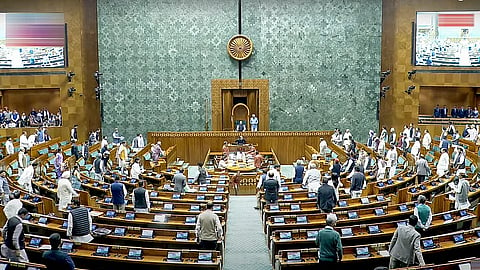
New Delhi: With the passing of the Public Examinations (Prevention of Unfair Means) Amendment Bill, 2026, in Lok Sabha on Wednesday, the Union government has moved closer to further tighten the legal framework governing examinations in India.
The Bill builds upon the original 2024 Act, which was the country's first comprehensive attempt to criminalise unfair practices in public examinations.
The move for amendments followed the NEET 2026 paper leak and widespread outrage over it. Thus, the Union government sought to restore public confidence in examinations by introducing stronger deterrents and faster mechanisms for justice.
Among key features in the 2026 Amendment is the proposed increase in penalties. It increases the quantum of imprisonment and fines for various offences.
Individuals caught using unfair means will now face imprisonment of five to 10 years, compared to the earlier three to five years, and fines have been raised from Rs 10 lakh to Rs 50 lakh.
Service providers -- such as exam-conducting agencies or technology firms -- if involved in dubious exercises are now subject to fines of up to Rs 5 crore and can be debarred from conducting examinations for eight years, double of the 2024 Act.
Persons-in-charge of a service provider involved in unfair means earlier faced imprisonment between three and 10 years, and a fine of Rs 1 crore. The amended Bill proposes minimum imprisonment for such people be increased to five years, and fine to Rs 5 crore.
Organised crime syndicates, often found orchestrating leaks and mass cheating operations, are now targeted with fines increased to Rs 10 crore from at least Rs 1 crore prescribed in the 2024 ACT, while extending minimum prison terms.
These escalations reflect the Union government's intent to treat exam fraud not as petty misconduct but as a serious economic and social crime. Beyond punishment, the 2026 Bill introduces institutional mechanisms for enforcement. It provides that an officer not below the rank of Deputy Superintendent of Police (DSP) or Assistant Commissioner of Police (ACP) will investigate an offence under the Act.
The Union government is also empowered to refer investigation to any central investigating agency, while a Special Task Force (STF) can now be constituted by the Centre to investigate paper leaks and organised crimes related to examinations.
As pledged by Prime Minister Narendra Modi himself earlier, the Bill addresses the problem of judicial delays by mandating fast-track justice. As per the Bill, trial has to be conducted on a day-to-day basis till all witnesses are examined and must be completed within three months from the date of filing of the chargesheet. While a trial is on, the Special Fast Track Courts will also try any connected offences under the Bharatiya Nyaya Sanhita, 2023, or other laws.
States, in consultation with their High Courts, must designate such special courts for these cases, supported by Special Public Prosecutors.
This framework is designed to ensure that justice is not only done but seen to be done swiftly, thereby restoring faith in the system. Another important aspect of the Amendment Bill is its emphasis on institutional accountability. It explicitly covers public examination authorities such as UPSC, SSC, Railway Recruitment Boards, IBPS, and the NTA.
It thus seeks to hold not just individuals but also institutions and their senior officials accountable for malpractice. This is a crucial step, given that recent scandals have often involved lapses at the institutional level, whether through negligence or collusion. (IANS)
Also Read: Union Minister Kiren Rijiju urges opposition to debate Exam Reform Bill
