
- Home
- Live Blog
- Breaking News
- Top Headlines
- Cities
- NE News
- Sentinel Media
- Sports
- Education
- Jobs
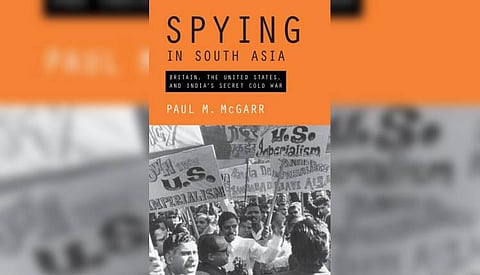
NEW DELHI: Rahul Gandhi’s criticism of the government over the trade and tariff agreement with the United States has drawn attention to historical accounts that examine the Congress party’s own past engagement with Western intelligence agencies. A recent book by historian Paul M. McGarr, Spying in South Asia: Britain, the United States, and India’s Secret Cold War (2024), explores alleged instances of cooperation between Indian leaders and Western intelligence during the Cold War.
McGarr cites Daniel Patrick Moynihan, former US ambassador to India under President Richard Nixon, who wrote in his 1978 memoir A Dangerous Place that the CIA had intervened twice in Indian politics. According to Moynihan, the agency channelled funds to the ruling Congress party to prevent communist governments from coming to power in Kerala and West Bengal. In one instance, he claimed that CIA funds were passed directly to Indira Gandhi in her role as Congress party president. McGarr suggests that Indira Gandhi, despite her public posture, had few reservations about cooperating with foreign intelligence agencies when it aligned with her political interests.
The book argues that even while Western agencies were assisting the Indian government in monitoring Left-wing forces domestically, New Delhi maintained cordial diplomatic relations with communist countries. McGarr, a lecturer in Intelligence Studies at King’s College London and former Principal Investigator of a British Academy-funded research project (2017–19), provides a detailed account of India’s “Secret Cold War,” examining the involvement of politicians, activists, and journalists in shaping attitudes toward Western intelligence.
On Indira Gandhi, McGarr contends that given her close association with Nehru and later role as a cabinet minister, it is unlikely she was unaware of joint initiatives with the CIA sanctioned by the Indian government. Overall, Spying in South Asia examines the complex relationship between intelligence operations and statecraft in post-independence India. While India officially upheld a non-aligned, anti-imperialist stance, the book suggests that pragmatic collaboration with Western intelligence agencies occurred more extensively than publicly acknowledged. (IANS)
Also Read: Grandma, you are my ideal: Priyanka on Indira Gandhi’s birth anniversary
