
- Home
- Live Blog
- Breaking News
- Top Headlines
- Cities
- NE News
- Sentinel Media
- Sports
- Education
- Jobs
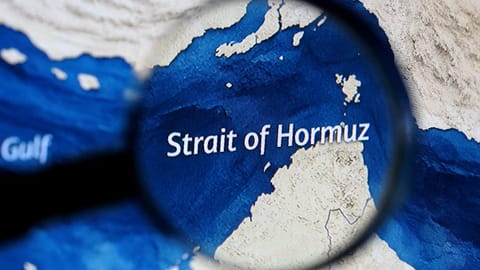
NEW DELHI: The duration of the disruption in the Strait of Hormuz remains the "single most consequential variable" for India's external sector and inflation outlook, according to the Finance Ministry's Monthly Economic Review for May 2026, which warned that prolonged energy supply disruptions could amplify price pressures and could also impact the growth trajectory.
The review, released by the Department of Economic Affairs (DEA), said India's near-term economic outlook remains one of "cautious resilience," supported by stable domestic fundamentals, strong services exports, resilient labour markets and comfortable foreign exchange reserves.
However, it cautioned that the global environment has become significantly more challenging following the West Asia conflict.
"Looking further ahead, the duration of the Strait of Hormuz disruption remains the single most consequential variable for India's external and price outlook," the review said. It added that if normalisation occurs soon, "the conditions for a broader-based recovery, supported by strong services exports and sustained investment commitments, are in place."
The Finance Ministry also flagged inflation risks, saying the gap between retail and wholesale inflation suggests that cost pressures are building up in the economy.
"The current divergence between retail inflation and wholesale prices signals that upstream cost pressures are building, and the pass-through to consumers, while limited so far, may not be far behind," the review said.
According to the report, recent increases in petrol and diesel prices could trigger both direct and indirect inflationary effects, while any further escalation in energy prices may erode the current inflation cushion faster than expected. It also warned that a deficient monsoon could add food price pressures on top of energy-driven inflation.
The review further noted that the global outlook remains heavily dependent on developments in the Strait of Hormuz and the restoration of Gulf energy infrastructure. It said higher projected crude oil production disruptions have increased the risk of supply-chain disruptions and sustained pressure on energy and shipping costs. Such developments could delay global disinflation, postpone monetary easing by central banks and weaken global growth, particularly for energy-importing emerging economies such as India. (ANI)
Also Read: US Secretary of State Marco Rubio warns against Iran’s Strait of Hormuz toll setup
