
- Home
- Live Blog
- Breaking News
- Top Headlines
- Cities
- NE News
- Sentinel Media
- Sports
- Education
- Jobs
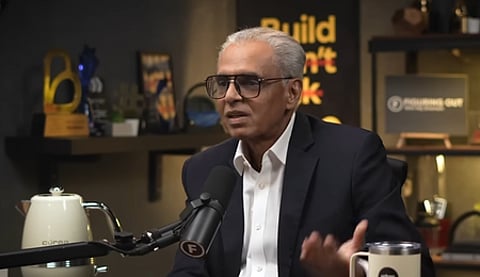
NEW DELHI: Syed Akbaruddin, India’s former Permanent Representative to the United Nations, said the country’s foreign policy is increasingly shaped by the aspirations of its young population and the everyday concerns of ordinary citizens. Speaking on the YouTube channel of entrepreneur and podcaster Raj Shamani, he explained that diplomacy today is evolving to reflect practical needs rather than purely ideological positions.
Akbaruddin noted that younger Indians now expect tangible outcomes from foreign policy, such as job opportunities, easier visa access, and improved avenues for remittances. This marks a shift from earlier decades, when foreign policy was often driven by ideological alignment and global positioning. According to him, these changing expectations are now influencing how India engages with the world.
He contrasted today’s approach with that of the 1980s, when India was more vocal and reactive on international issues, often quick to comment or condemn global developments. However, India’s significantly increased economic integration with the world has altered this stance. While global economic engagement was around 15–17% in earlier decades, it has now risen to nearly 50%, making India more cautious and measured in its responses, as global events have a direct impact on domestic interests. Akbaruddin emphasized that while India’s global importance has grown, the country must also recognize its dependence on the international system. This mutual interdependence, he said, requires a balanced and strategic approach rather than impulsive reactions.
Discussing geopolitical realities, he highlighted that countries operate based on leverage. He cited examples such as China’s influence over Iran due to energy ties, noting that different nations wield varying degrees of power in global affairs. He stressed that foreign policy outcomes should not be judged solely by immediate or visible actions, as diplomacy is often gradual and process-driven.
Highlighting India’s strengths, Akbaruddin pointed to its significant influence in the Gulf region, which has helped safeguard national interests. He concluded that India’s foreign policy should be assessed based on its leverage, long-term outcomes, and ability to deliver practical benefits to its citizens, rather than on how frequently it publicly comments on global issues. (IANS)
Also Read: Congress Gaining Ground in Assam, BJP Decade Marked by Corruption and Division: Syed Naseer Hussain
