
- Home
- Live Blog
- Breaking News
- Top Headlines
- Cities
- NE News
- Sentinel Media
- Sports
- Education
- Jobs
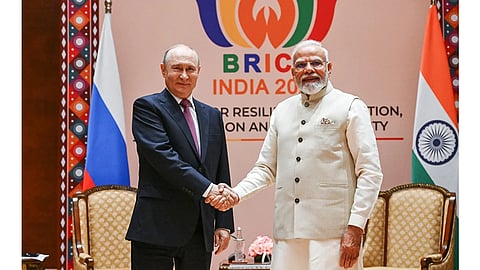
NEW DELHI: India's grand strategy delivered a significant diplomatic success at the 18th BRICS Summit, where New Delhi managed to align diverse interests, promote pragmatism in multilateralism, and reinforce its position as a rising global power, according to a report by India Narrative.
India's approach reflected a clear effort to advance its strategic objectives while ensuring that the BRICS platform did not become a stage for geopolitical confrontation or a contest for influence between major powers, particularly Russia and China.
The report identified three key shifts needed to strengthen India's strategic autonomy. First, India must make multilateralism more practical by pursuing institutional and structural reforms in global governance rather than supporting bloc politics. Second, it should promote its BRICS vision by acting as a strategic enabler that strengthens cooperation and resilience. Third, India should project itself as a major global player by offering sustainable alternatives to global crises and strengthening economic and supply-chain security through diversification and inclusivity.
Hectic backroom negotiations reportedly demonstrated a combination of strategic de-hyphenation and strategic autonomy. India used de-hyphenation to keep BRICS focused on cooperation rather than geopolitical conflicts, while strategic autonomy helped it encourage convergence among members, place economics at the centre of discussions, and advance its priorities.
This approach helped ease political tensions and create space for consensus, particularly by ensuring greater representation of the Global South. A similar strategy had worked during India's G20 presidency three years earlier amid the Russia-Ukraine conflict.
There were concerns that the BRICS summit might fail to produce a joint declaration. However, India succeeded in shifting the narrative, balancing national and global interests, and ensuring that the Global South remained central to the discussions.
A major diplomatic gain was the strong condemnation of terrorism, including the April 2025 Pahalgam terror attack in Jammu and Kashmir, in which 26 people were killed. The declaration condemned the attack in the "strongest terms" and highlighted concerns over cross-border terrorism, terror financing and safe havens. It also reaffirmed BRICS' commitment to combating terrorism in "all its forms and manifestations" and rejected double standards in counter-terrorism.
The summit demonstrated India's ability to use strategic autonomy and pragmatic diplomacy to strengthen its global relevance while advancing its national interests. (IANS)
Also Read: PM Narendra Modi Hails BRICS as ‘Ecosystem of Solutions’ at New Delhi Summit
