
- Home
- Live Blog
- Breaking News
- Top Headlines
- Cities
- NE News
- Sentinel Media
- Sports
- Education
- Jobs
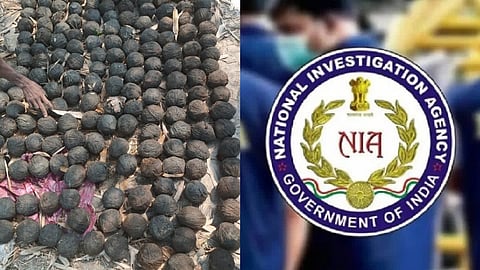
NEW DELHI: The recovery of 79 crude bombs in Bhangar, located in West Bengal's South 24 Parganas district, has once again brought the state's illegal bomb-making networks into sharp focus. The investigation has now been handed over to the National Investigation Agency (NIA), which is expected to examine whether the incident is part of a larger, organized pattern rather than an isolated case.
Officials note that the timing of the seizure-just days before the final phase of the West Bengal Assembly elections-raises serious concerns. The use of crude bombs during elections is not new in the state, where such weapons have historically been deployed as tools of political intimidation and violence. According to intelligence sources, multiple clandestine units across West Bengal are involved in manufacturing these explosives, with production typically increasing during election periods, including both state and national polls.
These illegal factories often operate under the cover of firecracker manufacturing units, allowing them to evade scrutiny. Authorities suggest that political connections sometimes enable these operations to continue unchecked. However, officials also clarified that not all bombs produced are intended solely for electoral violence. Some are linked to broader criminal or extremist activities.
The investigation is also revisiting the Burdwan blast case, where more than 1,000 bombs were discovered. That case revealed connections to the extremist group Jamaat-ul-Mujahideen Bangladesh (JMB), which had allegedly ordered explosives for planned attacks in Bangladesh. Investigators believe similar networks may still be active and supplying materials to both local criminal groups and terror outfits.
Authorities further allege that these factories employ illegal immigrants from neighboring countries like Bangladesh and Myanmar, paying them minimal wages to assemble explosives. There are also concerns about possible links between such networks and foreign intelligence-backed groups, including alleged direction from Pakistan's Inter-Services Intelligence (ISI), though these claims require deeper verification.
The NIA's probe will focus on supply chains, financial backing, and the protection networks that allow these factories to function. Officials emphasize that these operations are active year-round, catering not just to political actors but also to gangs and extremist groups. Understanding how these networks operate and evade law enforcement will be central to the investigation. (IANS)
