
- Home
- Live Blog
- Breaking News
- Top Headlines
- Cities
- NE News
- Sentinel Media
- Sports
- Education
- Jobs
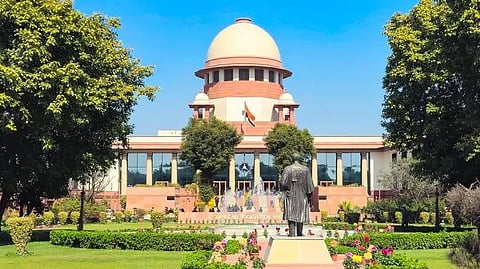
NEW DELHI: The Supreme Court on Thursday expressed concern over increasing judicial intervention in religious matters, warning that frequent challenges to religious practices before constitutional courts could affect India’s civilisational and cultural fabric. A nine-judge Constitution Bench headed by Chief Justice of India Surya Kant was hearing the Sabarimala reference matter, which raises broader constitutional questions on religious freedom, denominational rights under Articles 25 and 26, and the extent of judicial review in religious affairs.
During the hearing, Justice B. V. Nagarathna observed that religion is deeply connected with Indian society and cautioned against courts routinely entertaining petitions challenging religious practices. She remarked that if every aspect of religion were questioned before constitutional courts, there could be endless litigation over issues such as temple entry, temple closures, and other religious customs. According to her, India’s uniqueness lies in being a civilisation that has maintained unity despite immense diversity and plurality, with religion remaining one of the constants binding society together.
Justice M. M. Sundresh echoed similar concerns, stating that excessive judicial scrutiny of religious matters could destabilise religions themselves. He orally observed that if every practice were questioned, “every religion will break.”
The Bench was hearing submissions by senior advocate Raju Ramachandran, appearing for the Central Board of the Dawoodi Bohra Community. Ramachandran challenged the authority of the Dai, the community’s religious head, to excommunicate members. He argued that the practice had allegedly been used arbitrarily in several cases, leading to social ostracism and what he described as the “civil death” of individuals. (IANS)
Also Read: Can courts direct Parliament to include CJI in EC selection panel, asks Supreme Court
