
- Home
- Live Blog
- Breaking News
- Top Headlines
- Cities
- NE News
- Sentinel Media
- Sports
- Education
- Jobs
A CORRESPONDENT
HAFLONG: Busu or Bisu, the prime festival of the people belonging to the Dimasa community, is being celebrated throughout the district of Dima Hasao district with great enthusiasm but with Covid protocol from January 27.
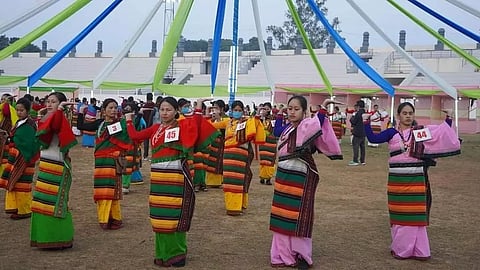
At Haflong, Busu was celebrated in several places like Dibarai, Digrik, Govinda Chandra Raji, Sambudhan Rajee etc. with traditional fervour. This year, Hangsao Busu - the biggest form of Busu -will be celebrated at Gujung in February. On January 30, greater Busu celebration committee organized Busu at N L Daolagupu Sports Complex Haflong which was inaugurated by Chief Executive Member, N C Hills Autonomous Council, Debolal Gorlosa in presence of MLA Nanduta Gorlosa, chairperson Ranu Langthasa and all the Executive Members.
Busu is one of most important and biggest festivals celebrated by the Dimasa people. 'Busu' means the festival of eating newly-grown autumnal rice, and so it could be considered as the harvesting festival too, which mirrors the rich culture and tradition of the Dimasa community. Dimasa people observe Busu by arranging feasts and various cultural functions. Busu is celebrated in three different ways, namely Jidab, Surem, and Hangsaomanouba. Jidab is the simplest form of Busu. Surem is a celebration which lasts for three nights. Surem Busu is celebrated frequently whereas Hangsaoinanaoba is celebrated occasionally as it requires large amount of money and manpower. Generally, the expenses of the Busu are borne by the villagers. There is a custom in Dimasa community where the people collectively help others in cultivation without taking wages for the work. But they collect rice or paddy after harvesting to celebrate Busu.
When the community decides to celebrate Hangsaomanaoba, a separate plot of land is cultivated and from which the expenses for the celebration is taken. The Surem Busu lasts for three days while the Hangsaomanaoba lasts for seven days.
On Bususataiba, the first day of the Busu, meat is distributed to every household. Busuma, the second day, the boys with older men sing Bagaoba, welcoming the guests. The Kunang, village headman, sings a devotional song, seeking blessings on behalf of the villagers from Lord Siva so that the villagers could spend the festive days with joy and merry-making. Traditional games and sports are also organized during the Busu.
The boys and girls perform dances and sing songs during these days. They beat drums named Khram, play pipes called murri, flutes-supin and Khram dubung. Playing of murri should be continued from the beginning of Busu till the last day of the festival. Judima (rice beer) pork, chicken, fish are enjoyed during the Busu. Thus, the Busu symbolizes the unity and coexistence among the people of Dima Hasao.
Also watch:
