
- Home
- Live Blog
- Breaking News
- Top Headlines
- Cities
- NE News
- Sentinel Media
- Sports
- Education
- Jobs
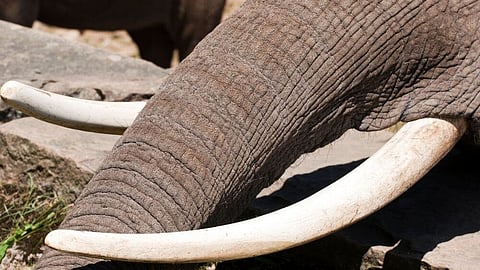
DIGBOI — Interrogations are intensifying in the case of a captive elephant whose tusks were allegedly hacked off in Dulijan, with forest officials pursuing multiple leads — even as the investigation faces uncomfortable questions over early procedural failures.
Divisional Forest Officer (DFO) Rohini Kumar Das, speaking to The Sentinel on Wednesday, confirmed that a dedicated team is working across all possible angles. "Sustained interrogation is underway. We are committed to an early breakthrough," he said.
Sources said at least ten individuals have been questioned over the past five days, with investigators indicating that crucial leads have begun to emerge.
Significantly, the probe is not ruling out insider involvement or possible links to organised wildlife crime networks — a line of inquiry that suggests authorities believe the attack may have been more than an opportunistic act.
Also Read: Assam: Customs Seize Elephant Tusks in Darrang District
The investigation, however, is operating under a cloud.
No urine test was conducted within the critical 24-hour window that would have detected the possible use of anaesthetic agents — a lapse that wildlife experts say is particularly significant given that the tusks of the elephant, named Mangal Singh, appear to have been hacked off alive and deep at the root.
Experts have expressed scepticism that such a precise and brutal act could have been carried out without tranquilizers, pointing to a level of planning and technical knowledge that strengthens the suspicion of organised involvement.
The Forest Department reportedly became aware of the incident only on April 16 — nearly two days after it occurred on the night of April 14, when unidentified miscreants targeted the elephant under the Lakhipathar Forest Range of Digboi Forest Division in Tinsukia district.
A separate controversy has emerged around the actions of Wildlife SOS, an NGO active in the Doomdooma division.
Sources alleged that the organisation administered treatment to the injured elephant within less than 12 hours of the incident — without conducting a urine test and without obtaining official consent from any Divisional Forest Officer. Critics say this may have further compromised the forensic evidence available to investigators.
The allegations, if confirmed, raise serious questions about protocol adherence in wildlife crime cases where the preservation of physical evidence is essential to prosecution.
