
- Home
- Live Blog
- Breaking News
- Top Headlines
- Cities
- NE News
- Sentinel Media
- Sports
- Education
- Jobs
Albino Monkeys Spotted in Bokakhat
A CORRESPONDENT
BOKAKHAT: The departmental census of Rhesus Macaques, commonly known as rhesus monkeys, which was conducted in four districts of Assam from November 16, concluded today following the completion of departmental arrangements and training.
In the Golaghat district, the census was carried out in the habitats and human settlements of rhesus macaques under the leadership of the Golaghat Forest Division. The exercise began on the morning of November 16 under the supervision of Golaghat Divisional Forest Officer Mukut Das.
Forest personnel, along with teachers and students from Dergaon Rajabari College, Chandra Nath Bezbaruah College, Eastern Regional College of Golaghat and Birangana Sati Sadhani Rajyik Vishwavidyalaya, participated in the census. The participating students had earlier received specialised training in monkey census techniques at the Assam Forest School in Jalukbari, Guwahati.
Over the past two days, the census was conducted from the morning hours in various areas of Golaghat district, including Bokakhat, Numaligarh, Dergaon, Golaghat and areas adjoining Nambor.
In Bokakhat, the census was conducted under the supervision of environmental activist Uttam Saikia, with the assistance of forest officer Bastab Sharbarni Borkataki. The team was led by Dilip Bora, a faculty member in life sciences at Chandra Nath Bezbaruah College, along with trained students Abhinav Baruah, Bhargav Medhi and Vineet Gupta.
On November 16, besides counting monkeys in their identified habitats, the census teams interacted with local residents and collected information regarding the animals’ food habits, behaviour, activities, damage caused to human settlements, accidents involving primates and their food sources.
On November 17, the enumerators also gathered information about locations that had been left out during the initial survey, as well as places where rhesus macaques take shelter and rest at night.
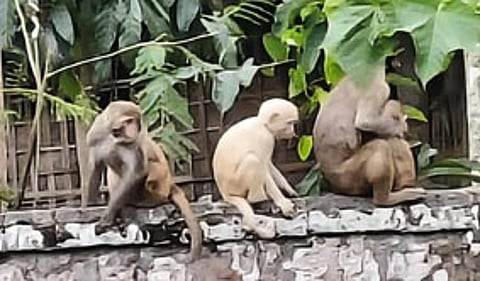
The census teams observed that the population of rhesus macaques was comparatively higher in the urban areas of Bokakhat than in the adjoining rural areas. They also spotted two albino, or white, monkeys at two different locations within the Bokakhat urban area.
The information collected by 12 census teams across different parts of Golaghat district over the two days was submitted to the Golaghat Forest Division office for analysis. The compiled data will subsequently be forwarded to the office of the Principal Chief Conservator of Forests (Wildlife), according to sources.
