
- Home
- Live Blog
- Breaking News
- Top Headlines
- Cities
- NE News
- Sentinel Media
- Sports
- Education
- Jobs
CORRESPONDENT
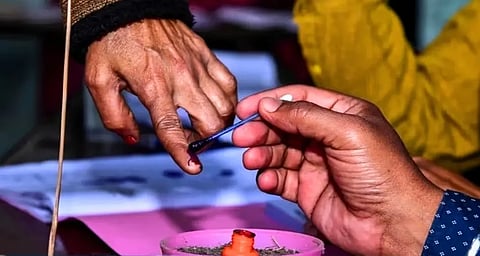
AGARTALA: The electoral process for the 587 Village Committees in the Tripura Tribal Areas Autonomous District Council (TTAADC) areas has started, with electoral workers casting their votes through postal ballots, while political parties have also geared up their campaigns for the September 28 election. TIPRA Motha, which currently holds power in the council, has been campaigning actively from the beginning, while other parties had maintained a low-key approach. However, over the last two days, they have also started campaigning to make their presence felt on the ground.
Although TIPRA Motha had been campaigning from the beginning, its workers were missing the party's main attraction, Pradyot Bikram Kishor Debbarma. He arrived here two days ago but could not take part in the campaign as he was not physically well. On Tuesday evening, he left for Delhi for medical reasons.
Reports from different parts of the ADC indicate that with only five days left for polling, the election tempo is gaining momentum in certain areas, where opposition political parties have appeared on the field. Although the BJP has formed an alliance with TIPRA Motha and the IPFT at the top level, this alliance has hardly been reflected at the ground level. There have been no reports of joint meetings involving the two or three alliance partners.
The BJP was absent in most areas of the ADC, but over the last two days, it has been trying to make its presence felt in places such as Chawmanu, Teliamura and a few other areas.
The CPI(M) has also been in the field but is maintaining a low-key approach as part of its strategy. The party is organising some public meetings but is mostly focusing on door-to-door campaigning and small meetings.
The Congress is also trying its best with limited resources. However, in some areas of North Tripura, Dhalai and Unakoti districts, especially in Kailashahar, the party is putting up a strong show, largely due to the influence of local MLA Birajit Sinha.
Also Read: Tawang strengthens preparedness against GLOF risks in vulnerable areas
