
- Home
- Live Blog
- Breaking News
- Top Headlines
- Cities
- NE News
- Sentinel Media
- Sports
- Education
- Jobs
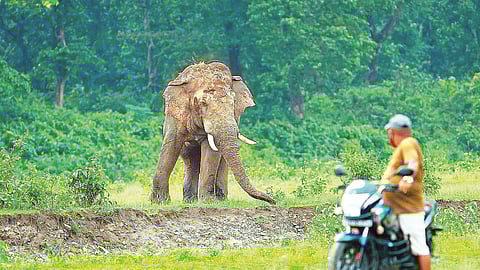
Assam has recorded 502 human deaths due to elephant attacks over six years — from 2019-20 to 2024-25 — making it the fourth most affected state in India in terms of human-elephant conflict fatalities, according to official data.
The numbers tell a grim story: far from improving, the situation has been getting worse year on year, raising serious questions about the effectiveness of the state's response.
The Assam Forest Department has maintained that it has been actively implementing measures to reduce human-elephant conflict (HEC). But the data contradicts that claim.
Human fatalities stood at 75 in 2019-20. By 2024-25, that figure had risen to 119 — a 59 per cent increase over six years.
The year-wise breakdown shows little consistency in any downward trend: 91 deaths in 2020-21, 63 in 2021-22, 80 in 2022-23, and 74 in 2023-24, before the sharp spike to 119 in the most recent year.
Also Read: TEZPUR: Gajamitra scheme reduces human-elephant conflict in Sonitpur
Across India, Odisha recorded the highest number of HEC-related human deaths in the same six-year period, with 767 fatalities.
Jharkhand followed with 555 deaths, and West Bengal recorded 515. Assam, at 502, ranks fourth — but its sharply rising trend in recent years sets it apart from some of the states ahead of it.
According to the Union Ministry of Environment, Forestry, and Climate Change, the primary responsibility for managing wildlife conflict lies with individual state governments and Union Territory administrations. States are designated as the first responders to any conflict situation and are required to maintain detailed records of incidents, including the species involved.
The Central government provides financial support to states under the centrally sponsored scheme of Integrated Development of Wildlife Habitats, which covers compensation for crop damage, cattle lifting, and loss of human life and property caused by wild animals.
In December 2023, the ministry doubled the ex-gratia relief amount for deaths or permanent incapacitation caused by wild animal attacks — raising it from Rs 5 lakh to Rs 10 lakh — though the payment remains subject to fund availability and state-specific guidelines.
With fatalities climbing to their highest point in 2024-25, the gap between official assurances and ground reality in Assam is becoming harder to ignore.
Conservation experts and affected communities have long called for more robust, long-term solutions — better corridor protection, early warning systems, and faster compensation disbursal — rather than reactive measures that the numbers suggest are falling short.
