
- Home
- Live Blog
- Breaking News
- Top Headlines
- Cities
- NE News
- Sentinel Media
- Sports
- Education
- Jobs
Staff Reporter
GUWAHATI: The man-monkey conflict in Assam finally crept onto the floor of the Assam Assembly today, after being eclipsed by the man-elephant clashes over the years.
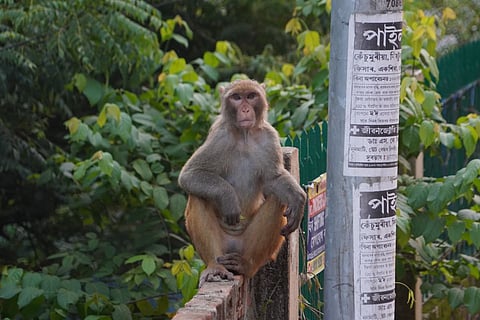
AGP MLA Prakash Chandra Das depicted the tale of monkeys damaging household goods, besides damaging orchards on the floor of the House, and wanted to know measures taken by the government to secure the public from the monkey menace.
In his written reply to the query, Forest Minister Jayanta Mallabaruah said, "The government has taken several measures, like planting fruit-bearing plants in forested areas, so that monkeys do not have to frequent human-inhabited areas. The public should avoid offering fruits and other edibles to monkeys when they come to houses. This practice encourages monkeys to develop a habit of frequently visiting human-inhabited areas in search of food."
The minister said that the government has not yet considered the sterilisation and rehabilitation of monkeys. "Our efforts are on to mitigate the situation with frontline forest staff. We're also carrying out awareness programmes in the affected areas on how to tackle the menace," he said.
The minister said that in 2023, the central government issued guidelines to mitigate the man-and-Rhesus macaque conflict. "Based on those guidelines, the Assam government took up a human-simian conflict mitigation project in 2025-26 and allocated Rs 3 crore for it. The project included eight forest divisions of the state. However, the assembly election last year delayed the project's implementation. We will implement that project now."
According to experts, fragmentation of habitats due to construction of roads, power lines and cleared corridors occasionally forces some troops to frequent small forest fragments surrounded by villages and plantations. Experts also say monkeys can transmit a variety of zoonotic diseases-infections that spread from animals to humans. The most serious and common of these include the deadly Herpes B virus, monkeypox, rabies, tuberculosis, and haemorrhagic fevers like Ebola. Transmission typically occurs through bites, scratches, contact with bodily fluids, or airborne exposure to respiratory droplets.
Also Read: India-UK Free Trade Agreement Comes Into Force Today, Boosting Bilateral Trade
